



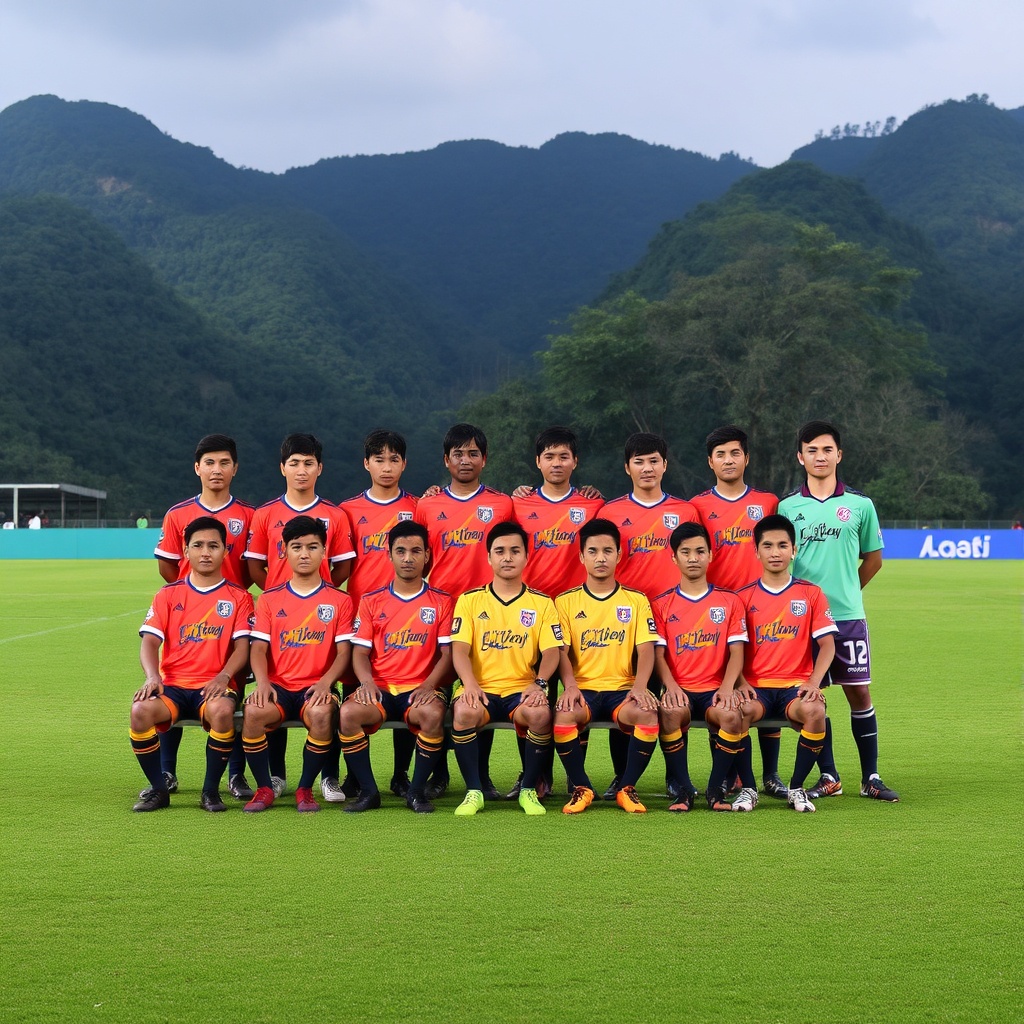
On the banks of the imposing Mekong River, where morning mist often shrouds the golden temples of Vientiane, football survives in a state of perpetual and silent resistance. To the casual observer of international football, the Laos national team — affectionately nicknamed Thim Xad (The National Team) — represents little more than a bit player in Asian qualifying draws, a team historically destined to suffer merciless thrashings from powerhouses like Japan, South Korea, or Australia. However, behind the dry statistics and the lowest rungs of the FIFA Ranking, lies one of the richest, most complex, and dramatic chronicles of the sport in Asia. It is a narrative shaped by French colonial heritage, the deep scars of the American "Secret War," the complexities of a single-party regime, and, more recently, devastating match-fixing scandals that nearly decimated the integrity of the sport in the country. Analyzing Laotian football is not just about examining tactical schemes or squad lists; it is about unraveling how a landlocked country, squeezed between geopolitical giants, seeks its own identity through a football.
1. Origins and the Formation of National Identity
The introduction of football in Laos is a direct byproduct of French colonialism in Indochina. In the early 20th century, French colonial officials, military personnel, and merchants brought the sport to the plains of Vientiane and the royal capital of Luang Prabang. Initially, the game was an exclusive privilege of the colonial elite and a small portion of the Laotian aristocracy that collaborated with the French administration. Clubs like L'Union Sportive Laotienne were founded to provide entertainment for the settlers, while the local population observed the sport with a mixture of curiosity and detachment, accustomed to traditional games like kataw (a variant of footvolley played with a rattan ball).
As the 1930s progressed, football began to timidly democratize. French colonial schools started including physical education in their curricula, and young Laotians quickly demonstrated a natural aptitude for the sport, characterized by extreme agility and speed. The founding of the Football Federation of Laos (LFF) in 1951 shortly preceded the country's full independence from France, achieved in 1953. In that moment of nationalist fervor, football was seen by the newly established constitutional monarchy as a crucial tool for building a unified national identity in a country fragmented by ethnic and geographic divisions.
However, the dream of peaceful sporting development was abruptly interrupted. Laos was swallowed by the turmoil of the Laotian Civil War (1959-1975), a conflict closely linked to the Vietnam War and often called the "Secret War" due to the clandestine involvement of the American CIA. During this dark period, the country became the most heavily bombed nation per capita in human history. Under the constant terror of aerial bombardment and chronic political instability, the development of any serious sporting infrastructure became impossible. Football survived in a fragmented form, with matches played on makeshift pitches, often interrupted by air raid sirens.
In 1975, the Pathet Lao communist movement took power, abolishing the monarchy and establishing the Lao People's Democratic Republic (LPDR). Under the new single-party regime, strongly aligned with Vietnam and the Soviet Union, sport was nationalized and reorganized through the lens of state socialism. Professionalism was banned, and football came to be seen as a means to promote the physical health of the working class and solidarity among socialist nations. For nearly two decades, Laos remained in almost complete isolation from Western international football, limiting its rare appearances to friendly tournaments within the communist bloc or strictly amateur regional competitions.
Only in the late 1980s, with the implementation of the Chintanakan Mai (New Thinking) economic policy, similar to the Soviet Perestroika, did Laos begin to open its borders to the outside world. The LFF's official affiliation with FIFA in 1994 marked the beginning of a new era. For the first time, the red, blue, and white flag with the central white disc would be hoisted in major official competitions, beginning a painful but fascinating process of integration into globalized football.
2. Golden Era, Great Campaigns, and Eternal Idols
Speaking of a "Golden Era" for Laotian football requires a calibration of expectations. For a nation that often struggles to avoid heavy defeats, moments of glory are not measured in continental trophies, but in heroic victories against regional rivals and campaigns of dignity that defied Asia's expectations.
The most prolific period for Laotian football occurred between the late 1990s and the early 2000s. Under the command of foreign coaches who brought tactical rigor, the national team began to take its first significant steps in the Tiger Cup (now the AFF Championship). In the 1997 edition, held in Jakarta, Laos achieved a historic 1-0 victory over the Philippines, a result that echoed in Vientiane like a world title win. That generation was led by players who compensated for the lack of structure with impressive physical commitment and refined technique in ball control in tight spaces.
The greatest icon of this period — and arguably the greatest player in the country's history — is striker Visay Phaphouvanin. With an international career that spanned over a decade, Phaphouvanin became the top scorer in the national team's history, netting crucial goals in World Cup qualifiers and regional tournaments. His speed, dribbling ability at pace, and finishing precision made him a constant danger, even when isolated in attack against much more physically robust defenses. His legend was cemented in the 2002 World Cup qualifiers, when Laos managed to record significant victories against teams of a similar level, showing that the country was no longer just a punching bag.
Another name that transcended national borders was midfielder Soukaphone Vongchiengkham, nicknamed by the Southeast Asian press as "The Laotian Messi." Standing only 1.56m tall, Vongchiengkham defied the laws of physics in modern football with his extremely low center of gravity, peripheral vision, and an almost hypnotic ability to retain possession under pressure. He was one of the few Laotian players to build a solid and respected professional career abroad, shining in the competitive Thai league for clubs like Sisaket, Sukhothai, and PT Prachuap. His presence on the pitch gave the national team a creative identity that had long been missing.
The Saga of Billy Ketkeophomphone
No chapter in the modern history of Laotian football is as fascinating and revealing as the saga of Billy Ketkeophomphone. Born in France to Laotian refugees who fled the communist regime in the 1980s, Ketkeophomphone followed the path of elite European football. He reached the pinnacle of his career playing in the French Ligue 1 for Angers SCO, where he scored goals against traditional teams and faced world superstars.
For years, the Football Federation of Laos tried, without success, to overcome the immense bureaucratic and political obstacles to naturalize Ketkeophomphone. Laotian law is extremely strict regarding dual citizenship, not allowing it in most cases. However, in 2021, after an intense public relations campaign and direct intervention at the highest levels of the government in Vientiane, special authorization was granted for Billy to wear the Thim Xad jersey at the 2020 AFF Championship (held in 2021 due to the pandemic).
Billy's arrival in Singapore to join the delegation was treated as a messianic event by Laotian fans. For the first time, a player with real Champions League and Ligue 1 experience would defend the country's colors. However, the tournament served as a cruel reality check. Despite the visible technical and tactical gulf that separated him positively from his teammates, Billy found himself isolated in a fragile defensive system. Without receiving quality passes and visibly worn down by the humid Southeast Asian climate, he could not prevent Laos from losing all its group stage matches. Even so, his commitment on the pitch and the pride with which he wore the Laos crest on his chest inspired a new generation of young players in the country.
3. Rivalries, Crises, and Behind-the-Scenes Power
The geopolitics of Southeast Asia are reflected directly and intensely in Laotian football. The country shares borders with five nations, and each of these borders carries historical tensions that manifest within the four lines. The greatest sporting and cultural rivalry is with Thailand.
Laotians and the inhabitants of northeastern Thailand (the Isan region) share an almost identical language, similar cuisine, and deep family ties. However, on the political and economic level, the relationship is marked by deep asymmetry, with Thailand exerting overwhelming cultural and economic influence over its smaller neighbor. In football, this asymmetry is even more pronounced. Thailand is one of the region's superpowers, and every clash between the two teams is seen by Laos as a David vs. Goliath battle. A victory for Laos over Thailand — something extremely rare in history — is celebrated in Vientiane as an act of national affirmation against the historical condescension of its western neighbor.
On the other hand, the relationship with Vietnam is of a different political nature. Since 1975, the governments of Hanoi and Vientiane have maintained an unbreakable ideological and military alliance, often described as a "blood brothers" relationship. However, in football, Vietnam has developed much faster, becoming a continental force under coaches like Park Hang-seo. For Laotian fans, facing Vietnam is always a test of pride, where political friendship is set aside in an attempt to prove that Laos can compete on equal terms with its ideological mentor.
The Shadow of Corruption and FIFA Bans
If geopolitical rivalries add spice to Laotian football, internal crises almost destroyed it completely. In the last decade, Laos became the epicenter of one of the largest and most tragic match-fixing scandals in the history of world football. The socioeconomic vulnerability of local players, combined with the lack of professionalism in the national league and the infiltration of illegal betting syndicates based in Singapore, Malaysia, and China, created the perfect storm.
In 2017, a joint investigation by the Asian Football Confederation (AFC) and the integrity agency Sportradar revealed a systemic corruption network operating within the Laos national team and clubs like Lao Toyota FC. Players were bribed with sums of money that far exceeded their annual salaries to ensure their teams lost by specific scores or conceded a certain number of goals in specific periods of matches.
The final blow came in 2020, when the FIFA Ethics Committee banned no fewer than 45 Laotian players from football for life for direct involvement in match-fixing. Among those banned were experienced athletes, absolute starters for the national team, and young prospects who represented the country's future. The impact of this moral purge was devastating:
- Talent Vacuum: The national team lost almost two full generations of players in their physical and technical prime.
- Destruction of Credibility: Local and international sponsors withdrew their investments from the Football Federation of Laos, fearing having their brands associated with corruption.
- Collapse of the Local League: The Lao League 1 was hollowed out, with several clubs closing their doors due to loss of revenue and public distrust.
The federation was forced to restart the country's football from absolute zero, resorting to squads composed almost exclusively of U-23 and U-21 athletes, without any prior international experience, in a desperate attempt to rebuild the sport's reputation under a new lens of integrity.
4. The Current Moment: Tactics, Generation, and Challenges
Contemporary Laotian football lives under the sign of tactical reconstruction and forced youth. After the purge resulting from the match-fixing scandals, the national team's coaching staff, often led by foreign coaches with a developmental profile, had to design a new style of play that suited the physical and technical reality of their athletes.
Historically, Laos has always been a team that used a low defensive block (the famous "parking the bus") as a survival tactic. Under the leadership of coaches like the German Michael Weiß, who managed the team between 2022 and 2023, and subsequently under coaching staffs influenced by the South Korean school, there has been a deliberate attempt to modernize the country's style of play. The focus shifted from a purely passive defense to a rapid transition system structured in a 4-5-1 or 5-4-1, prioritizing line compactness and pressure on the ball carrier in specific zones of the midfield.
Tactical Analysis and Physical Limitations
Laos's great tactical challenge lies in the transition between the defensive and offensive phases. When the team regains possession, the lack of midfielders with the ability to retain the ball under physical pressure often results in long, inaccurate passes, returning the initiative to the opponent. Furthermore, physical conditioning remains the Achilles' heel of Thim Xad. In high-intensity matches against physically dominant teams like Indonesia or Malaysia, Laos often manages to maintain tactical organization and dignity on the scoreboard until the 60th or 70th minute; after this period, severe physical fatigue leads to catastrophic individual errors and goals conceded in succession in the final minutes.
The crown jewel of this new generation is the young attacking midfielder Bounphachan Bounkong. Voted the most valuable player of the AFF Youth Championship in youth categories, Bounkong embodies the hope for smarter and more creative football for the country. Gifted with excellent vision, acceleration in the final third of the pitch, and remarkable precision in free kicks, he has taken on the responsibility of being the technical leader of an extremely young national team.
Alongside him stands striker Chony Wenpaserth, a player of unusual physical strength by Laotian standards, capable of playing with his back to the goal and serving as a reference for the runs of fast wingers. However, the lack of high-intensity competitive minutes in the local league limits the tactical development of these athletes, who often appear lost when confronted with modern pressing systems applied by higher-ranked national teams.
5. Talent Development, Structure, and Future
For Laotian football to aspire to a sustainable and competitive future, the answer does not lie in hiring renowned foreign coaches for the senior team, but in a deep structural reform of its foundations. The current landscape of athlete development in the country is precarious but shows encouraging signs of change thanks to international support.
The Lao League 1 is one of the weakest leagues in Asia. Composed often of only six to eight active clubs, the championship suffers from a lack of professionalism and an extensive calendar. Most players in the league do not live exclusively from football, balancing their training routine with jobs in the service sector, agriculture, or the civil service. Salaries are low and often unstable, which perpetuates the athletes' vulnerability to offers from illegal gamblers.
In this desert landscape, the Football Federation of Laos, with crucial financial aid from the FIFA Forward program and development grants from the Asian Football Confederation (AFC), inaugurated the National Training Center in Vientiane. This modern complex serves as the beating heart of youth talent development in the country, housing the men's and women's youth national teams in a boarding school system. It is here that the future of Laotian football is being designed, with a focus on:
- Nutrition and Physical Development: Correction of historical nutritional deficiencies that affected the height and muscle mass of athletes compared to their Asian peers.
- Early Tactical Education: Introduction of modern concepts of positioning, transition, and video analysis from the U-13 category.
- Certification of Local Coaches: Training courses promoted by the AFC to ensure that coaches working in the country's provinces have the appropriate methodological knowledge to train young players.
The Export Route and the Diaspora
The export of players is seen as the only viable way to raise the individual competitive level of Laotian athletes. With the local league unable to provide the necessary level of demand, the federation actively encourages its best talents to seek opportunities in Thailand, even if in secondary divisions (Thai League 2 or 3). Geographic and cultural proximity facilitates adaptation, and exposure to a professionalized training structure in Thailand radically transforms the performance of these athletes when they return to defend the national team.
Furthermore, the LFF's scouting department has turned its eyes back to the Laotian diaspora, especially in France, the United States, and Canada. Inspired by the precedent set by Billy Ketkeophomphone, federation scouts are looking for young people with Laotian ancestry who are training in European club academies or North American university football. The integration of these dual-nationality athletes, raised under much more developed football cultures, is seen as a strategic shortcut to provide the national team with greater physical competitiveness and tactical intelligence in the short term.
The road for Laos is long, steep, and full of obstacles that go far beyond the four lines of a football pitch. It is a struggle against economic underdevelopment, against the ghost of corruption that once destroyed the sport's credibility in the country, and against the very geography that isolates them. However, as long as there is a ball rolling on the banks of the Mekong and young people willing to wear the red jersey of Thim Xad with the same pride as their greatest idols, Laotian football will continue its silent saga, proving that dignity and passion for the game cannot be measured by the electronic scoreboard.





