



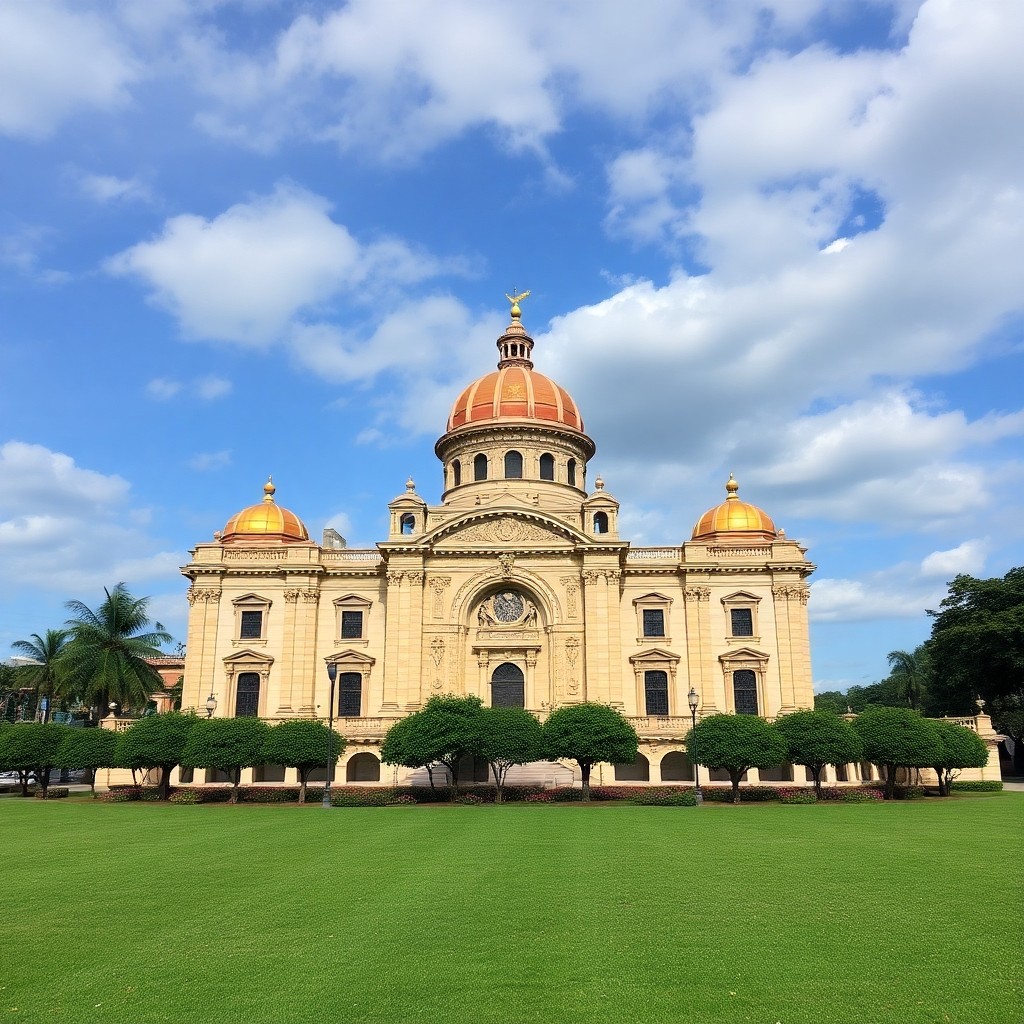
The Asociación Social y Deportiva Justo José de Urquiza, popularly known as "J.J. de Urquiza" or simply "Jota Jota", is one of the most unique institutions in Argentine lower-league football. Based in the Tres de Febrero district, in Greater Buenos Aires, the team currently competes in the Primera C Metropolitana (the fourth division for clubs directly affiliated with the AFA), seeking to regain the prominence that led them to their historic promotion to the Primera B in 2018. Characterized by its strong community identity and financial resilience, the Loma Hermosa club balances its social vocation with the challenge of remaining competitive in the demanding and physical suburban football scene of Buenos Aires.
Club History
1. Origins and Foundation: The Merger of Three Forces in the Heart of the Suburbs
The history of the Asociación Social y Deportiva Justo José de Urquiza dates back to the 1930s, a period of profound urban and social transformation on the outskirts of Buenos Aires. On June 8, 1936, in the town of Caseros, three neighborhood clubs decided to join forces to create a more robust institution capable of obtaining the much-desired affiliation with the Argentine Football Association (AFA). These entities were the Club Atlético Justo José de Urquiza, the Club Social y Deportivo Caseros, and the Club Atlético Bondpland.
The name chosen for the new institution paid tribute to General Justo José de Urquiza, the military officer and politician from Entre Ríos who presided over the Argentine Confederation between 1854 and 1860, and whose historical role was fundamental in the Battle of Caseros (1852), where he defeated the forces of Juan Manuel de Rosas. The site of the battle, historically linked to the current Tres de Febrero district, justified the choice of the patron.
The founders established that the club's official colors would be sky blue and white, arranged in vertical stripes, mimicking the national colors and the traditional colors of the province of Entre Ríos, the birthplace of General Urquiza. In 1937, just one year after its foundation, the club obtained legal status and official affiliation with the AFA, debuting in the tournaments of the former Tercera de Ascenso.
2. Golden Eras and Historic Campaigns
For most of its trajectory, J.J. de Urquiza moved through the lower divisions of Argentine football (Primera D and Primera C). However, the club wrote pages of bravery that remained etched in the memory of its fans.
The 1990s: Consolidation in the Primera C
After years of inconsistency and financial crises that threatened its continuity, the 1990s marked the beginning of an institutional restructuring. In the 1994/95 season, under the presidency of historic leaders who prioritized youth categories, the club achieved promotion to the Primera C. This period consolidated "Jota Jota" not as a mere itinerant participant, but as a tough nut to crack for the giants of the category.
The 2018 Miracle: The Historic Promotion to the Primera B Metropolitana
The pinnacle of the club's footballing history occurred in the 2017/2018 season. With a modest budget compared to the favorites of the category, such as Argentino de Quilmes and Luján, J.J. de Urquiza had a consistent campaign in the regular season, qualifying for the Reducido tournament (promotion play-offs).
Under the technical command of Martín Nohra, the team successively eliminated Real Pilar and Luján. In the grand final, they faced the traditional Argentino de Quilmes. After a dramatic draw on aggregate (1-1 in the first leg and 1-1 in the return leg), the decision went to a penalty shootout at the opponent's home ground. Goalkeeper Diego Córdoba shone, and Jota Jota won 3-1 on penalties, reaching the Primera B Metropolitana (third national division) for the first time in 82 years of history.
Near Glory and the Copa Argentina (2020-2021)
In the Primera B, the club did not just fight against relegation. During the 2021 season, the team had a spectacular campaign, finishing in the top positions and playing in the Reducido semifinals for promotion to the Primera Nacional (second division), being narrowly eliminated by Colegiales. At the same time, the club faced the powerful Estudiantes de La Plata in the Copa Argentina, a match that, despite the defeat, represented the highest point of media exposure in the club's history.
3. Context and Current Moment
After a virtuous cycle in the third division, J.J. de Urquiza suffered the hard blow of relegation at the end of the 2022 season. The descent back to the Primera C Metropolitana forced the board to completely reformulate the football department, focusing on cutting payroll expenses and utilizing the youth divisions (the inferiores).
Currently, the club competes in the Primera C with the clear goal of returning to the higher division. Under the management of president Adrián Zaffaroni, J.J. de Urquiza has focused on infrastructure. The Ramón Roque Martín stadium, located in Barrio Libertador (Loma Hermosa) and with a capacity for about 2,500 spectators, has undergone renovations to its pitch and press areas to meet modern media broadcast standards.
Financially, the club operates under a non-profit civil association model, resisting the pressure of privatization and maintaining strong ties with the local community through activities such as field hockey, figure skating, and boxing.
4. Main Idols and Coaches Who Left Their Mark
No club sustains itself without its popular heroes. In the case of Jota Jota, these names are synonymous with sacrifice:
- Ramón Roque Martín: An emblematic player from past decades and a tireless leader. His dedication to the club was so remarkable that the board and fans decided to name the official stadium after him.
- Diego Córdoba: The hero goalkeeper of the 2018 promotion. His saves in the penalty shootout against Argentino de Quilmes placed him in the club's pantheon of immortals.
- Damián Bogado: A midfielder with refined technique and quiet leadership. He was the engine of the team during the golden years in the Primera C and the captain during the transition to the Primera B.
- Oscar "Gordo" Altamirano: A folk hero of Argentine lower-league football. Already a veteran, Altamirano provided decisive goals, physical presence in the box, and an immediate connection with the Loma Hermosa fans due to his warrior style of play.
- Martín Nohra (Coach): The strategist who designed the tactical scheme for the 2018 promotion. His ability to extract the maximum from a financially limited squad is still studied today by lower-league football analysts.
5. Major Rivalries: The Sense of Territorial Belonging
J.J. de Urquiza has intense rivalries, forged within the geographical limits of the Tres de Febrero and San Martín districts.
The Classic against Central Ballester
Jota Jota's biggest and most fervent rival is Club Atlético Central Ballester. The clash is known as the "Clásico del Noroeste" (Northwest Classic) or "Clásico de la Vía". The rivalry was born in the 1970s, fueled by the geographical proximity between Loma Hermosa and Villa Ballester. Matches between the two teams are historically marked by heavy police presence, high tension in the stands, and matches of extreme physical intensity.
Neighborhood Rivalry: General Lamadrid and Colegiales
J.J. de Urquiza has also developed a fierce rivalry with Club Atlético General Lamadrid (from the Buenos Aires neighborhood of Villa Devoto) and with Colegiales. These clashes have taken on the contours of "modern classics" due to the number of times the teams have decided promotions, relegations, and direct titles over the last three decades.
6. List of Titles, Cups, and Achievements
Although official AFA achievements are scarce in terms of absolute division champion trophies, Jota Jota's promotions are celebrated as true national titles by its fans:
| Competition / Achievement | Season / Year | Status / Relevance |
|---|---|---|
| Primera D Championship (Promotion) | 1994/1995 | Apertura Tournament Champion and direct promotion to Primera C. |
| Primera C Torneo Reducido (Promotion) | 2017/2018 | Winner of the promotion playoff, moving up to Primera B Metropolitana for the first time. |
| Primera B Torneo Clausura (Runner-up) | 2021 | Best historical campaign in the third division of Argentine football. |
| Copa de Competencia de la Liga de Caseros | 1938, 1940 | Regional titles from the club's semi-amateur/amateur era. |
Researched Sources
- Argentine Football Association (AFA) - Historical Archives of Affiliated Clubs.
- Diario Olé - Special coverage of J.J. de Urquiza's 2018 promotion and campaigns in the Primera B.
- "El Gráfico" - Digital archive on the origins of lower-league football in Tres de Febrero.
- Solo Ascenso - Updated statistics and squads of the Primera C Metropolitana.
- Tres de Febrero News Portal - Articles on the social impact of the club in Barrio Libertador and Loma Hermosa.





