



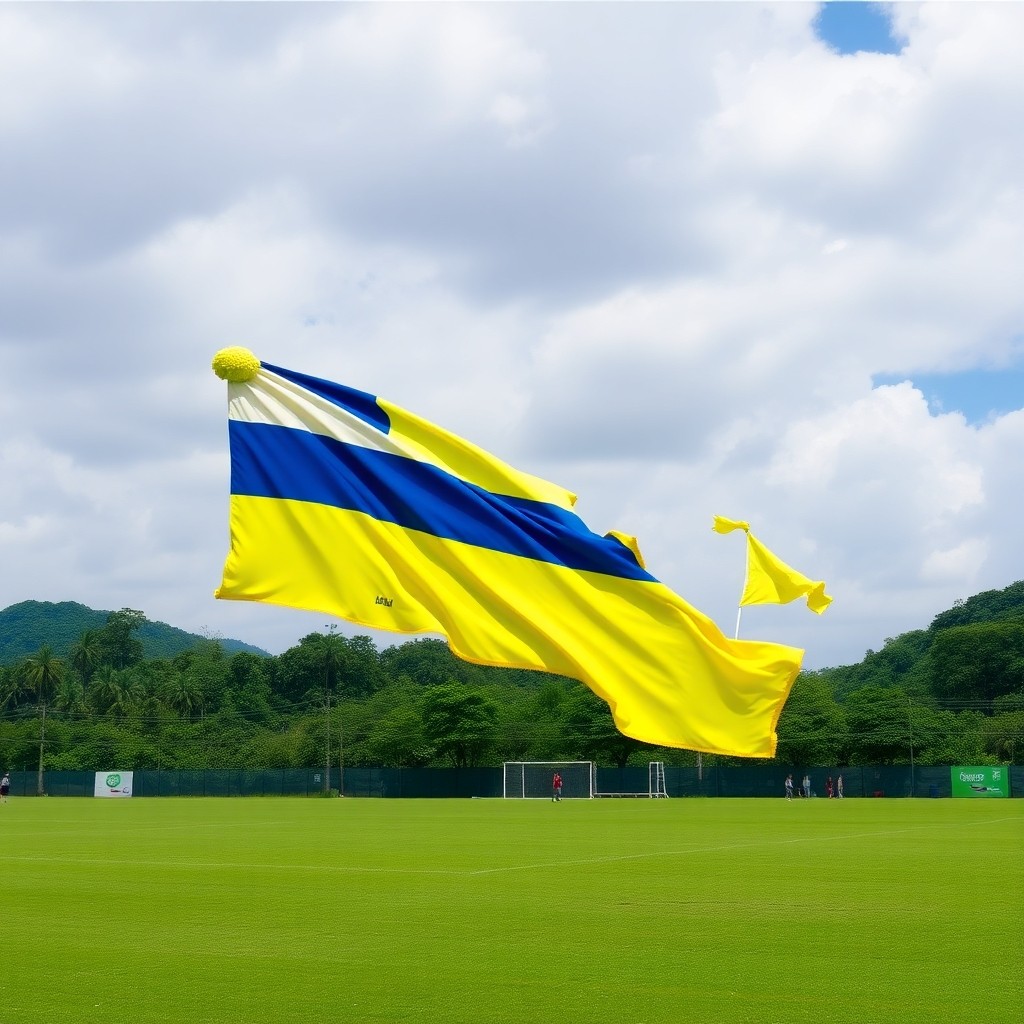
Honduran football is a narrative of resistance carved under the tropical heat of Central America, where the sport transcends mere entertainment to become a mirror of its complex social, economic, and political reality. Affectionately known as La H, the Honduran national team carries more than just the blue and white colors of its flag on its jersey; it carries the responsibility of being the primary element of national cohesion in a country historically plagued by institutional crises, inequality, and violence. In the CONCACAF landscape, Honduras has always represented the antithesis of aristocratic technical refinement: a game of physical strength, stunning speed, territorial imposition, and psychological resilience forged in adversity. However, classifying Honduran football merely as a monument to physical strength is an analytical oversight. It is a school that, in its peak moments, knew how to combine the athletic exuberance of its Afro-Caribbean heritage (particularly represented by the Garifuna community) with rigorous tactical discipline, capable of haunting global giants and toppling continental empires. Today, Honduran football faces an existential crossroads, oscillating between the nostalgia of its golden eras and the urgency of deep structural modernization, at a time when the geopolitical map of Central American football demands much more than raw talent to ensure survival on the international stage.
1. Origins and Formation of National Identity
To understand the genesis of football in Honduras, one must look back to the early 20th century, when the country was inserted into the economic machinery of large North American multinationals, particularly in the banana export sector. Unlike other South American nations, where football was introduced by the local aristocracy or British sailors in commercial ports, in Honduras, the development of the sport is intrinsically linked to the banana enclave on the country's north coast. Cities like Puerto Cortés, La Ceiba, and San Pedro Sula became the first hubs for the sport, driven by engineers, foremen, and foreign workers from the United Fruit Company and Standard Fruit Company. Football, therefore, was born in the shadow of banana plantations, establishing a geographical and cultural divide that would define the national championship and the national team itself for decades: the industrial, dynamic, and athletic north versus the administrative, political, and traditional center-south focused on the capital, Tegucigalpa.
The founding of the first clubs reflects this geographical duality. Club Deportivo Olimpia, founded in 1912 in Tegucigalpa originally as a baseball club, soon embraced football and became the country's greatest institutional powerhouse. Shortly after, in 1928, its eternal rival in the capital, Club Deportivo Motagua, was born. In the north, however, football developed with a distinct identity, more physical and fast-paced, driven by Club Deportivo Marathón (1925) and, later, Real Club Deportivo España (1929) in San Pedro Sula. This regional fragmentation delayed the creation of a unified national league, which would only materialize in 1964 with the founding of the Liga Nacional de Fútbol Profesional de Honduras. Until then, football was played in regional and amateur tournaments, which hindered the consolidation of a homogeneous tactical identity for the national team.
The National Autonomous Federation of Football of Honduras (FENAFUTH), although founded in 1935, faced decades of institutional amateurism and a lack of resources. The true identity of the Honduran player began to consolidate when the sport started to organically integrate the marginalized populations of the north coast, especially the Garifuna community. The Garifuna, descendants of Caribs, Arawaks, and peoples of African origin, brought an unprecedented physical and athletic dimension to Honduran football. Pure speed, elasticity, resistance to the harsh climate, and impressive muscular strength became the trademarks of athletes from the northern region. This biological and cultural fusion transformed Honduras' style of play: the purely physical and direct football of the banana origins gained the contours of a formidable athletic power, capable of suffocating technically more refined opponents through unbearable territorial pressure and lightning-fast offensive transitions.
This identity, however, took time to be translated into tactical organization. During the 1950s and 1960s, the Honduras national team was seen as a spirited but tactically naive squad. International matches were marked by displays of enormous physical effort that, nevertheless, crumbled before opponents with greater strategic depth, such as Mexico or Costa Rica. The transition from martial amateurism to tactical sophistication began to take shape only in the late 1960s, when the federation realized that the physical exuberance of its athletes required a rigid collective framework to triumph beyond Central American borders. Football ceased to be a mere pastime for workers and students to become the greatest symbol of pride for a nation seeking its place in the geopolitical concert of Central America.
2. Golden Era, Great Campaigns, and Eternal Idols
The definitive turning point in the history of Honduran football occurred in the early 1980s, under the command of one of the most revered figures in Central American sports: José de la Paz Herrera, immortalized as "Chelato Uclés." With a revolutionary vision for the time, Chelato understood that Honduras' physical talent needed to be channeled through almost scientific tactical discipline. He implemented modern training methodologies, prioritized the psychological preparation of athletes, and designed a game system based on defensive solidity, compact lines, and surgical counter-attack speed. The result of this revolution was the historic qualification for the 1982 World Cup in Spain, a feat that forever changed the perception of Honduras on the international stage.
Honduras' campaign in the 1982 World Cup is widely considered the greatest epic in the country's football history. Drawn into a group that included hosts Spain, Northern Ireland, and Yugoslavia, the Central American team was pointed out by international analysts as the perfect underdog, a candidate to suffer humiliating routs. What was seen on the pitch, however, stunned the world. In the opener in Valencia, Honduras faced Spain and opened the scoring just seven minutes in with a historic goal by Héctor "Pecho de Águila" Zelaya. With a monumental defensive performance led by defender Jaime Villegas and goalkeeper Julio César "El Achote" Arzú, Honduras held on for a 1-1 draw, conceding the equalizer only through a controversial penalty. In the following game, another 1-1 draw against Northern Ireland, with a goal by Tony Laing. Elimination came painfully in the final match, a 1-0 defeat to Yugoslavia, with a penalty goal conceded in the 88th minute. Despite the group stage exit, that team returned to Tegucigalpa as heroes, having proven that tactical organization combined with physical vigor could compete on equal terms against European powers.
After the brilliance of 1982, Honduras experienced a period of transition and frustration in the Qualifiers, but the turn of the millennium would bring a new Golden Era. The year 2001 was marked in the memory of South American football by Honduras' historic participation in the Copa América, held in Colombia. A last-minute invitee due to the withdrawal of Canada and Argentina for security reasons, the Honduran delegation arrived in Cali just hours before their debut, without any prior preparation. Under the command of Ramón "El Primitivo" Maradiaga, the team not only competed but stunned the continent. After advancing from the group stage, Honduras faced Luiz Felipe Scolari's powerful Brazilian team in the quarterfinals. On a magical night in Manizales, Honduras beat Brazil 2-0, with goals from Saúl Martínez, in one of the biggest upsets in the tournament's history. The team finished the competition in an unthinkable third place, consolidating players like Amado Guevara — voted the best player of that Copa América — and striker David Suazo on the international scene.
This golden generation paved the way for the return to the World Cups. Under the technical direction of Colombian Reinaldo Rueda, Honduras qualified for the 2010 World Cup in South Africa. Rueda managed to unite the experience of veterans like Carlos Pavón — the top scorer in the national team's history, known for his lethality in the air — and Amado Guevara with the energy of young talents shining in Europe, such as midfielder Wilson Palacios (then at Tottenham) and left-back Maynor Figueroa (Wigan). Although the campaign in South Africa was modest (defeats to Chile and Spain, and a goalless draw against Switzerland), the qualification restored national pride. Four years later, under the command of another Colombian, Luis Fernando Suárez, Honduras repeated the feat and stamped their passport for the 2014 World Cup in Brazil. With a vertical and extremely physical style of play, personified by striker Carlo Costly and the tireless Jerry Bengtson, the Honduran team scored its first World Cup goal since 1982 (scored by Costly against Ecuador), although they bowed out in the group stage with three defeats. These consecutive campaigns crowned an era of athletes who managed to export the name of Honduras to the most competitive leagues on the planet, including the English Premier League and the Italian Serie A.
3. Rivalries, Crises, and Behind-the-Scenes Power
No chapter in the history of Honduran football is as dramatic and geopolitically charged as the so-called "Football War" (or 100-Hour War), which occurred in 1969. The armed conflict between Honduras and El Salvador was immediately triggered by a series of three extremely tense qualifying matches for the 1970 World Cup. However, the root causes were socioeconomic in nature, involving land reform in Honduras and the mass migration of hundreds of thousands of Salvadoran peasants to the neighboring territory. The first match, in Tegucigalpa, won by Honduras 1-0, was marked by riots and the suicide of a young Salvadoran fan. The return leg, in San Salvador, turned into a scene of psychological warfare: the Honduran delegation was harassed at the hotel, the country's flag was desecrated, and the climate of violence in the stands culminated in a general brawl; El Salvador won 3-0. The playoff match, held on neutral ground in Mexico City, ended with a 3-2 Salvadoran victory in extra time.
A few weeks after the match in Mexico City, diplomatic tensions broke down completely, and the armed forces of both countries initiated a military conflict that lasted about four days and claimed the lives of more than two thousand people, in addition to displacing tens of thousands. Polish journalist Ryszard Kapuściński immortalized the conflict in his book "The Football War," describing how the sport was instrumentalized by military regimes on both sides to divert attention from internal social crises and stir up hysterical nationalism. Although peace was signed years later, the rivalry between Honduras and El Salvador remained one of the most intense and electrifying in CONCACAF, transcending the four lines and always carrying an inevitable historical weight.
In addition to the rivalry with El Salvador, Honduras developed a fierce classic against Costa Rica — known as the Clásico Centroamericano —, a dispute for the region's hegemonic supremacy. While the Costa Ricans pride themselves on a more technical and cerebral football, the Hondurans impose their physical strength and competitive aggressiveness, turning every clash into a battle of attrition. There is also the historic rivalry with Mexico. Playing at the Estadio Olímpico Metropolitano in San Pedro Sula, under a stifling heat of over 35 degrees and oppressive humidity, became the nightmare of any CONCACAF team, especially the Mexican one. The Honduran fans, known for their feverish passion, turn the stadium into a hostile cauldron, where the psychological pressure begins long before the opening whistle.
Parallel to the pitched battles, the behind-the-scenes of Honduran football have historically been plagued by serious administrative crises and corruption scandals that have undermined the development of the sport in the country. The peak of this institutional crisis occurred in 2015, with the outbreak of the global scandal known as "FIFA Gate." Two of the most powerful figures in Honduran football were directly implicated in the FBI investigations: Rafael Callejas, former President of the Republic of Honduras (1990-1994) and former president of FENAFUTH, and Alfredo Hawit, then interim president of CONCACAF and former secretary of the Honduran federation. Both were accused and subsequently found guilty of conspiracy to commit racketeering and wire fraud, involving the receipt of millions of dollars in bribes in exchange for broadcasting and marketing rights for World Cup qualifiers.
The arrest and conviction of these leaders exposed the institutional fragility of FENAFUTH, which found itself plunged into a severe financial and credibility crisis. The embezzlement of public and private funds that should have been allocated to youth categories and sports infrastructure left a trail of destruction. First-division Honduran clubs frequently face chronic salary delay problems, lack of decent training conditions, and obsolete stadiums. The violence of organized fan groups (the so-called barras bravas, such as Olimpia's Ultra Fiel and Motagua's Revo) has also become a public safety issue, with bloody clashes inside and outside sports arenas, driving families away from stadiums and scaring off potential private sponsors.
4. The Current Moment: Tactics, Generation, and Challenges
The contemporary landscape of the Honduran national team is one of painful reconstruction and the search for a new tactical identity. After the frustrating qualification campaigns for the 2018 World Cups (where the team fell in the intercontinental playoff against Australia) and 2022 (where it had one of the worst campaigns in its history in the final CONCACAF octagonal, finishing in last place without winning a single match), FENAFUTH opted to resort to a known formula: the return of Colombian coach Reinaldo Rueda, announced in 2023 with the mission of restructuring the country's football with an eye on the 2026 World Cup.
Tactically, Honduras is experiencing a transition crisis. The traditional 4-4-2 system, characterized by two rigid lines, strong physical marking in midfield, and quick transitions down the flanks with fast wingers, which brought so much success in the Rueda and Suárez eras, has become obsolete and predictable against opponents that use more fluid game systems and positional ball possession. Rueda has been trying to implement a tactical variation to the 4-2-3-1 or 4-3-3, seeking greater midfield control and cleaner ball exit from the defense. However, the coach faces a shortage of midfielders with the ability to dictate the pace of the game (the so-called registas) and creative playmakers who can break down compact defensive lines.
The current generation of Honduran players reflects this transition. The team's great technical exponent today is Luis Palma, a forward for Celtic in Scotland. Palma represents the prototype of the modern Honduran player: he combines traditional speed and physical strength with appreciable technical refinement, excellent ball striking on free kicks, and the ability to play both wide on the wings and floating inside. However, Palma often finds himself isolated in an offensive system that lacks collective support. Another key piece is center-forward Anthony "Choco" Lozano, a player with a long trajectory in Spanish football (with stints at Cádiz, Getafe, and Almería), who offers presence in the box, the ability to hold the ball with his back to the goal, and leadership, but who often suffers from a lack of quality service.
In the defensive sector, which was historically Honduras' fortress with names like Maynor Figueroa and Víctor "Muma" Bernárdez, the current team presents an alarming vulnerability. The lack of defenders with international experience and leadership ability has been costly in decisive matches. Players like Denil Maldonado try to take on this role, but defensive inconsistency remains the team's Achilles' heel. In goal, after the retirement of icons like Noel Valladares and the final phase of Luis "Buba" López's career, the search for a reliable goalkeeper with presence in the box has been a constant headache for the coaching staff.
Honduras' main tactical and competitive challenge is to manage to compete in terms of intensity and mental speed with the new giants of CONCACAF. While the United States and Canada have revolutionized their training structures and today have squads composed mostly of athletes who play in the main leagues of Europe (Premier League, Bundesliga, Serie A), and Mexico maintains its internal economic power, Honduras has seen its export of athletes decrease quantitatively and qualitatively. To overcome this disparity, Rueda bets on extreme collective organization, the rescue of the mystique of San Pedro Sula, and the maximum exploitation of set pieces — a historic weapon of Honduran football that needs to be revitalized.
5. Talent Development, Structure, and Future
The long-term sustainability of Honduran football depends critically on its athlete development structures, a sector that currently suffers from severe structural, financial, and methodological deficiencies. Unlike neighbors like Costa Rica, which invested in the modernization of its training centers and the training of youth coaches, or the MLS franchise model that is beginning to expand throughout the region, the development of players in Honduras is still a predominantly intuitive, rustic process dependent on the spontaneous emergence of talent on the country's streets and beaches.
The country's main clubs, Olimpia, Motagua, Real España, and Marathón, are largely responsible for supplying the youth national teams, but they face severe limitations. Most do not have modern training centers dedicated exclusively to youth categories, and young athletes often train on dirt fields or pitches in poor condition. The absence of a scientific approach to physical preparation, sports nutrition, and psychological support from childhood means that many athletes reach the professional level with tactical and physical gaps that are difficult to correct in adulthood. Furthermore, talent scouting on the north coast and in Garifuna communities — the great gold mine of Honduran football — is still done in a rudimentary way, through informal scouts (the so-called cazatalentos) who operate without the support of modern data analysis or professional scouting tools.
This structural precariousness is reflected in the dynamics of player exports. If in the 2000s and 2010s Honduran players were transferred directly to elite European leagues, today the most common and viable destination is the Major League Soccer (MLS) of the United States or peripheral leagues in Europe and Latin America. MLS, in particular, has become a safe harbor and a center for tactical development for young Hondurans, offering the infrastructure they do not find in their home country. However, this dependence on MLS also presents challenges, as the North American league's style of play, focused on physical transition and speed, does not always develop the tactical sensitivity and decision-making ability under pressure required in high-level European football.
Honduras' social context also plays an ambivalent role in the development of the sport. In a country plagued by poverty, lack of job opportunities, and urban violence perpetrated by maras (transnational gangs), football emerges as one of the few routes for social and economic advancement for thousands of young people from vulnerable communities. This reality gives Honduran athletes extraordinary competitive hunger and psychological resilience — they play for the survival of their families. However, the lack of state support and social vulnerability also mean that many promising talents are lost along the way, seduced by crime or forced to abandon the sport prematurely to work in the informal market or emigrate illegally to the United States.
Looking to the future, Honduras' horizon presents a golden opportunity and a herculean challenge. The expansion of the 2026 World Cup to 48 teams, which will be held in North America (USA, Canada, and Mexico), means that the three giants of CONCACAF are already automatically qualified. This opens up three additional direct spots and two for the playoffs for the other nations in the confederation. For Honduras, qualification for the 2026 World Cup is not just a sporting goal, but a financial survival necessity for FENAFUTH, which desperately needs the millions in FIFA prize money to pay off its debts and invest in the modernization of its infrastructure.
To capitalize on this opportunity, Honduran football urgently needs a deep structural reform. This involves the definitive professionalization of FENAFUTH's management, investment in technology applied to sports, the creation of a competitive national youth league, and the decentralization of football, ensuring that talents from rural and coastal areas have access to quality training. The future of La H will depend on its ability to honor its heritage of grit, passion, and physical vigor, while embracing, once and for all, the tactical and administrative modernity that 21st-century football demands. Only then can Honduras cease to be a sporadic surprise and consolidate itself as a respected and constant power on the world football stage.





