



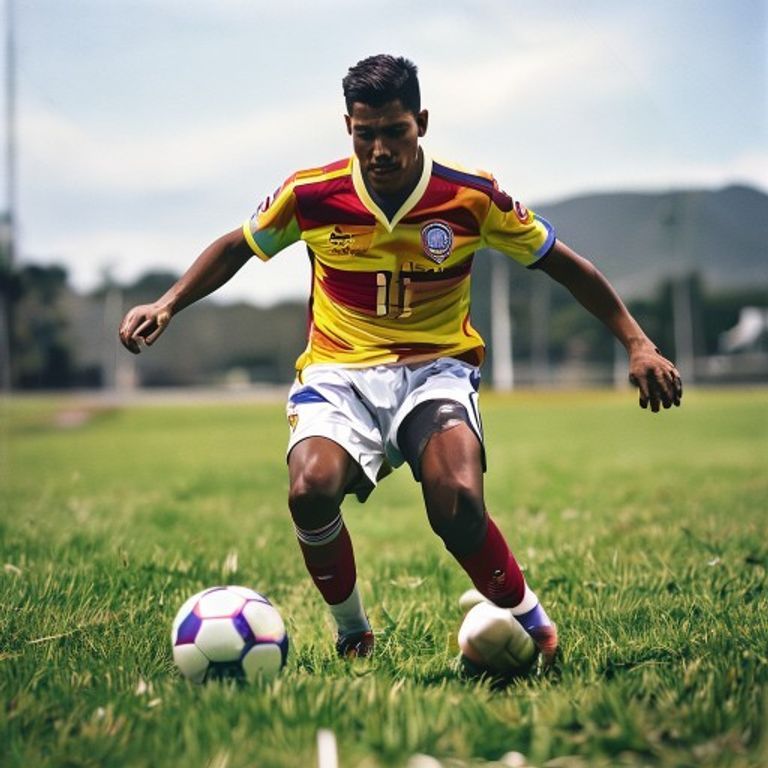
In the heart of Central America, where the geography is shaped by towering volcanoes and history is marked by the scars of deep social conflicts, football is not merely entertainment; it is a hyperbolic mirror of the national soul itself. The El Salvador national football team, affectionately nicknamed "La Selecta," carries in its blue and white uniform a dramatic weight that few nations on the planet can emulate. It is a team that has reached the top of the continent, exported one of the greatest misunderstood geniuses in world football history—Jorge "Mágico" González—but has also been swallowed by literal wars, devastating match-fixing scandals, and an administrative schizophrenia that seems to systematically sabotage its immense popular potential. This dossier dives into the depths of Salvadoran football, analyzing how a passion of almost religious intensity survives amidst structural chaos, seeking to decipher whether the path toward the 2026 World Cup represents a utopia or a real possibility of historical redemption.
1. Origins and Formation of National Identity
To understand the genesis of football in El Salvador, one must look back to the late 19th and early 20th centuries, a period when the country was attempting to consolidate itself as a modern agro-exporting republic under the aegis of a coffee elite highly influenced by European cultural currents. Football did not arrive in Salvadoran lands organically through the working classes, but rather as an imported product brought by young members of the local aristocracy returning from their studies in Europe—mostly from England and France—and by foreign sailors and engineers working on the country's port and railway infrastructure.
The first official record of a football match on Salvadoran soil dates back to July 26, 1899, in the city of Santa Ana, a stronghold of the economic prosperity of the time. The match, played between teams formed by local and foreign enthusiasts, planted the seed of a sport that would quickly migrate from improvised coffee farm fields to the public squares of major cities like San Salvador and San Miguel. In 1921, marking the centenary of Central American independence, El Salvador organized its first national representative team to compete in the Centenary Games in Guatemala, an event that, although not officially recognized by FIFA, marked the symbolic birth of "La Selecta."
The founding of the Salvadoran Football Federation (FESFUT) in 1935 and its subsequent affiliation with FIFA in 1938 formalized the structure of a sport that had already captured the imagination of the masses. As the country plunged into military regimes and agrarian tensions throughout the 1930s and 1940s, football emerged as one of the few spaces for social cohesion and the expression of a unified national identity. The Salvadoran style of play began to take shape during this era: a game characterized by physical agility, refined technique in tight spaces, and a combative spirit that reflected the resilience of a people accustomed to climatic and social adversity.
The turning point in the infrastructure and mystique of national football occurred with the design and construction of the Cuscatlán Stadium, inaugurated in 1976 in the capital, San Salvador. Known as "El Coloso de Monserrat," the Cuscatlán became much more than a football stadium; it transformed into a temple of sporting intimidation and a symbol of civic pride. With an original capacity for over 50,000 spectators, its brutalist reinforced concrete architecture and vertical stands created a "cauldron" atmosphere that, over the decades, terrorized CONCACAF giants like Mexico and the United States. Playing at the Cuscatlán, under the humid heat and the deafening pressure of the Salvadoran fans, became considered one of the most difficult rites of passage for any national team on the continent.
The relationship between football and the State in El Salvador has always been one of mutual dependence and, often, political instrumentalization. During the years of dictatorship and the subsequent polarization that would culminate in civil war, control over FESFUT and support for the national team were seen by the government as crucial tools for propaganda and temporary social pacification. The blue and white of the national flag, stamped on the players' jerseys, offered a visual truce in a society deeply fractured between the revolutionary left and the militarized right. Football, therefore, consolidated itself not only as the king of sports but as the official narrative of Salvadoran survival and dignity.
2. Golden Era, Great Campaigns, and Eternal Idols
The so-called "Golden Era" of Salvadoran football is intrinsically linked to two historic qualifications for the FIFA World Cup: Mexico 1970 and Spain 1982. These two moments represent the peaks of technical and tactical performance for a nation that, despite its small territorial size, managed to impose itself against regional powers. The road to the 1970 World Cup was marked by extreme drama, culminating in the famous clash against Honduras that became known internationally as the "Football War" (detailed in the following section). Under the technical command of Argentine Gregorio Bundio, that team featured legendary players such as goalkeeper Gualberto Fernández, defender Salvador Mariona, and striker Mauricio "Pipo" Rodríguez, author of the decisive goal that secured the historic qualification in the third playoff match against the Hondurans, held in Mexico City.
Although the participation in the 1970 World Cup was modest in terms of results—three group stage losses to Belgium, Mexico, and the Soviet Union, without scoring a single goal—the mere presence on Mexican soil put El Salvador on the global football map. However, the true pinnacle of individual talent and Salvadoran mystique would occur at the turn of the 1980s, a paradoxical period in which the country was bleeding in a violent civil war but found its greatest moment of artistic genius in football.
The name that defines this era and remains the greatest icon of the sport in the country is, incontestably, Jorge Alberto González Barillas, universally known as "Mágico" González. Gifted with a technical ability that defied the laws of physics, with disconcerting short dribbles, extraordinary peripheral vision, and an improvisational capacity that drew applause from opposing fans, Mágico is considered by many, including Diego Armando Maradona, to be one of the greatest players of all time. Maradona, in one of his famous statements, claimed: "There was one player who was better than me: the Salvadoran Mágico González. He did things I could never repeat."
The "Mágico" González Phenomenon
- Beginnings at FAS: Discovered by ANTEL and consecrated at Club Deportivo FAS in Santa Ana, where he won national titles and the CONCACAF Champions' Cup in 1979.
- Consecration at Cádiz: Transferred to Cádiz CF in Spain after the 1982 World Cup. In Andalusia, he became a cult myth, adored for his genius on the pitch and his bohemian, carefree lifestyle off it.
- The Almost-Deal with Barcelona: He toured the United States with FC Barcelona alongside Maradona, but his rebellious personality and refusal to submit to the rigid discipline of major European clubs prevented a permanent transfer.
The qualification for the 1982 World Cup in Spain was an epic built under the crossfire of internal conflict. Led on the pitch by Mágico González and the cerebral midfielder Norberto "Pajarito" Huezo, and managed by local coach Mauricio "Pipo" Rodríguez, the Salvadoran team overcame the CONCACAF Qualifiers in a hexagonal tournament held in Tegucigalpa, securing the spot alongside Honduras. The preparation for the World Cup, however, was chaotic: due to the economic and political crisis resulting from the war, the delegation traveled to Spain with limited resources, without proper training uniforms, and with a reduced squad of only 20 players instead of the permitted 22.
El Salvador's first game in the 1982 World Cup went down in history for the wrong reasons. Facing Hungary in the city of Elche, the Salvadoran team, tactically disorganized and physically exhausted by the troubled journey, suffered a humiliating 10-1 defeat—which remains to this day the largest margin of victory in World Cup history. Despite the tactical disaster, that game recorded a moment of immense emotional catharsis: the only Salvadoran goal, scored by Luis Baltazar "Pelé" Zapata after a masterful assist from Mágico González, was celebrated in the war-torn country as if it were the goal that won the World Cup. In the following games, the team regained tactical dignity, suffering narrow defeats to Belgium (1-0) and Maradona's Argentina (2-0), but the early elimination marked the end of the country's most brilliant football era.
3. Rivalries, Crises, and Power Behind the Scenes
The history of Salvadoran football is inseparable from the geopolitical turmoil and institutional crises that plagued Central America in the second half of the 20th century. The most dramatic and world-famous episode of this intersection between sport and politics occurred in June 1969, with the outbreak of the so-called "Football War" (or 100-Hour War) between El Salvador and Honduras. Although the armed conflict was triggered by deep social and economic tensions—specifically the Honduran agrarian reform that expropriated land from thousands of Salvadoran peasant immigrants—the spark that ignited military hostilities was a series of three qualifying matches for the 1970 World Cup.
The atmosphere during the games in Tegucigalpa and San Salvador was one of extreme nationalist violence, with assaults on fans, diplomatic persecution, and suicides reported by the press on both sides. After El Salvador's 3-2 victory in the playoff match in Mexico City, diplomatic relations were severed, and within weeks, the armed forces of both countries initiated a military conflict that resulted in the deaths of more than 3,000 people. Polish journalist Ryszard Kapuściński immortalized the conflict in his chronicles, demonstrating how football was used as a catalyst for xenophobic hatred by authoritarian governments seeking to divert attention from their internal crises.
Decades after overcoming the armed conflicts, Salvadoran football would face its darkest period in the 21st century, not due to external wars, but due to internal corruption and sporting betrayal. In 2013, the country was shaken by the biggest scandal in its sporting history: the "amaños" (match-fixing) case. A thorough investigation revealed that several national team players had been approached by international sports betting mafias, based mainly in Singapore, to throw official and friendly matches of the senior national team.
The matches under suspicion included humiliating defeats against Mexico (5-0 in the 2011 Gold Cup), friendly matches against the United States, and even a clash against Venezuela. In September 2013, FESFUT, under strong pressure from FIFA and local public opinion, banned 14 national team players from professional football for life. Many of these were considered the pillars of the team and fan favorites, such as Dennis Alas, Alfredo Pacheco (who would be tragically assassinated in 2015), Marvin González, and Miguel "Mudo" Montes. The scandal destroyed the credibility of Salvadoran football, drove away sponsors, emptied stadiums, and plunged the national team into a technical and moral abyss that took nearly a decade to be minimally overcome.
The governance of FESFUT has been a chronic source of instability. The federation has historically been managed by political and business factions that prioritize immediate financial gain over the structural development of grassroots sports. In 2022, the institutional crisis reached its peak when the National Institute of Sports of El Salvador (INDES), a government body led by Yamil Bukele (brother of the President of the Republic, Nayib Bukele), attempted to intervene directly in the federation, removing the executive committee under accusations of money laundering and fraudulent administration. FIFA, faithful to its statutes that strictly prohibit state interference in football management, threatened to suspend El Salvador from all international competitions. The crisis was temporarily bypassed with the appointment of a Normalization Committee imposed by FIFA to manage the administrative transition, but the tension between the central government—which seeks to control football as a tool for political marketing—and international football bodies remains a latent time bomb.
4. The Current Moment: Tactics, Generation, and Challenges
In the contemporary scenario, the El Salvador national team is attempting to redefine itself tactically in an environment of extreme competitiveness in CONCACAF, where traditional powers like Mexico and the United States, in addition to the exponential growth of Canada and structured Central American teams like Panama and Costa Rica, have narrowed the margins for error. The historical style of play of "La Selecta," once based on individual creativity and technical improvisation, has had to give way to a more pragmatic, defensive approach focused on collective organization.
The hiring of Salvadoran-American coach Hugo Pérez in 2021 represented the most serious attempt at tactical modernization of national football in recent years. Pérez, who played in the 1994 World Cup for the United States, brought with him a professional work methodology focused on high physical intensity, counter-pressing, and the use of a modern tactical system, alternating between 4-3-3 and 4-2-3-1. Under his command, El Salvador returned to competing at a high level, reaching the final stage of the 2022 World Cup Qualifiers (the Final Octagonal), something that had not happened for several editions of the tournament.
However, the lack of squad depth and the scarcity of strikers with international-level finishing power took their toll. Hugo Pérez's team played aesthetically pleasing football with good ball possession in the build-up phase, but suffered terribly in the final third. After a string of negative results and public disagreements with the FESFUT board regarding the lack of infrastructure and logistical support for training, Pérez was fired in September 2023. To replace him, after a brief stint by Spanish coach Rubén de la Barrera, the federation hired another Spaniard, David Dóniga, who took command with the mission of restructuring the team for the 2026 World Cup qualifying cycle.
Tactical Analysis of the Current Game Model
- Base System: Dóniga has implemented a hybrid tactical structure, varying between 5-3-2 in the defensive phase and 3-5-2 in the offensive phase, prioritizing the solidity of the defensive line and compact blocks.
- Defensive-Offensive Transition: The team eschews prolonged ball possession in favor of rapid transitions, using the speed of the wing-backs to exploit the space behind opposing defenders.
- The "Number 9" Void: El Salvador's greatest tactical challenge remains the absence of a reference center-forward who can hold the ball in the attacking third and convert the few chances created into goals.
The current El Salvador squad reflects the country's demographic and social complexity. Given the technical fragility of the domestic league, the coaching staff has resorted heavily to searching for athletes in the Salvadoran diaspora, mainly in the United States. Players born or trained on American soil, children of Salvadoran immigrants who fled the civil war or gang violence, have become the backbone of the national team. Names like defender Eriq Zavaleta (with a long career in MLS), midfielder Alex Roldan (captain of the Seattle Sounders and a key piece in the team's transition), and young striker Mayer Gil represent this new transnational identity of "La Selecta."
The integration of these diaspora players, however, does not occur without friction. There is a constant cultural and sporting debate in the country between proponents of using "local" athletes—who know the harsh reality of Salvadoran football—and those who advocate prioritizing athletes trained abroad, who possess better physical, tactical, and nutritional preparation. This clash of realities is reflected in the team's oscillating performance, which alternates competitive displays against continental giants with unexpected stumbles against lower-ranked Caribbean teams.
5. Talent Development, Structure, and Future
The future of football in El Salvador is directly conditioned by the structural reform of its youth categories and the professionalization of its domestic league, the Primera División de Fútbol Profesional. Currently, the national championship is composed of 12 clubs, among which the three historical giants stand out: Club Deportivo FAS (from Santa Ana), Alianza Fútbol Club (from the capital, San Salvador), and Club Deportivo Águila (from San Miguel). Although these clubs have passionate fanbases and a rich history, they operate under financial and infrastructure conditions that are decades behind modern professional football standards.
The infrastructure crisis is visible on training pitches, in the absence of state-of-the-art physical preparation centers, and, mainly, in the chronic delay of salaries (the so-called "impagos") that affects players and coaching staffs throughout almost every season. Without financial stability, local clubs become unable to retain their young talents or invest in structured athlete development academies. Most professional players in El Salvador emerge spontaneously, polished by street football ("fútbol de potrero"), without going through a scientific process of physical, tactical, and psychological training during the golden ages of motor development (from 12 to 18 years old).
To mitigate this structural deficiency, the role of the diaspora in the United States has become the true engine of the national team's technical survival. It is estimated that more than 2.5 million Salvadorans or their descendants live in American territory, concentrated in metropolitan areas like Los Angeles, Washington D.C., Houston, and New York. FESFUT has established networks of technical scouts in the US to monitor young talents who stand out in Major League Soccer (MLS) academies and university football (NCAA). This "talent import" strategy has allowed the national team to maintain a minimum level of competitiveness, but it is seen by local analysts as a palliative that does not solve the central problem: the abandonment of grassroots football on Salvadoran soil.
The great historical opportunity for El Salvador football lies in the new format of the 2026 FIFA World Cup, which will be jointly hosted by the United States, Mexico, and Canada. With the automatic qualification of the three CONCACAF superpowers as host nations, three additional direct spots and two spots for the intercontinental playoffs have opened up for the other teams in the region. For "La Selecta," this expansion represents the most concrete chance to return to a World Cup since 1982.
However, to turn this opportunity into reality, Salvadoran football needs to overcome its own internal fragmentation. Under the current administration of Nayib Bukele, the country has experienced a radical transformation in terms of public security, with the dismantling of the gangs (maras) that previously controlled vast territories and prevented the free movement of youth and the practice of sports in vulnerable communities. This new social reality opens an unprecedented space for the revitalization of community football and for the creation of football schools in previously inaccessible areas.
The challenge facing FESFUT, the clubs, and the Salvadoran State is to channel this new social stability into real and sustainable investment in youth. If the country can unify the visceral passion of its fans, government infrastructure, modern technical organization, and the talent of the youth from the diaspora, "La Selecta" may finally stop being a nostalgic memory of the Mágico González years to become, once again, a source of pride and unity for the entire Central American nation in the arenas of world football.





