



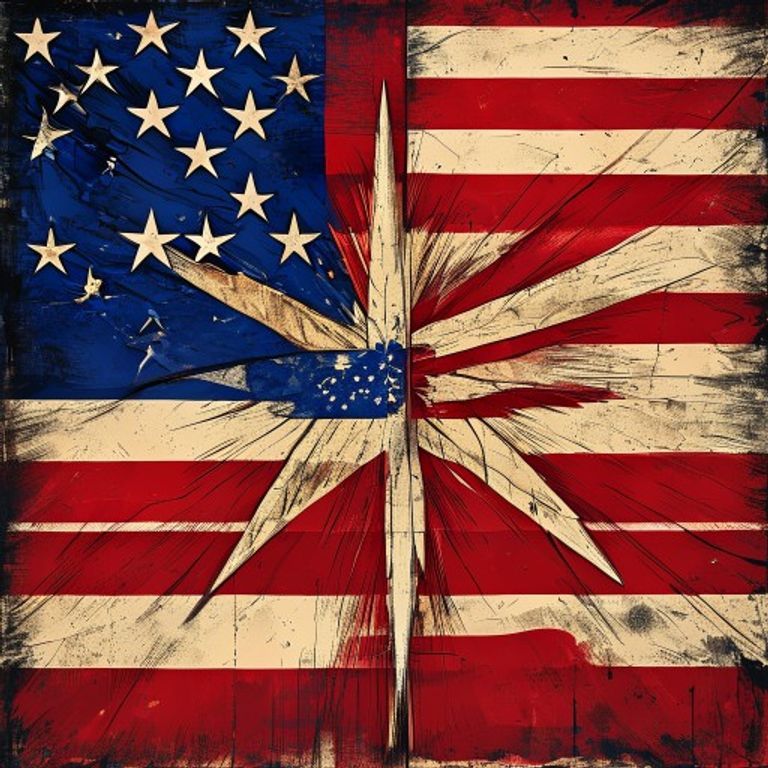
The Voice of the New World: History and Evolution of North American Literature
The literature of the United States is not merely an extension of English literature; it is the record of a nation attempting to define itself. From Puritan chronicles to fragmented postmodernism, American writing is marked by recurring themes: the individual versus society, the frontier (physical and psychological), the American Dream, and the original sin of slavery.
Below, we divide this trajectory into five major canonical eras.
1. Colonial and Revolutionary Period (1607–1830)
Forging Identity
In the early centuries, literature was utilitarian. Fiction was not written for entertainment, but rather sermons, travelogues, histories, and political pamphlets.
Puritanism (17th Century)
New England was shaped by Puritans who saw life as a spiritual battle. Writing was simple, direct, and biblical.
-
Anne Bradstreet (1612–1672): America's first notable poet. Her work, The Tenth Muse Lately Sprung Up in America, balances religious faith with domestic love.
-
Jonathan Edwards (1703–1758): Theologian of the "Great Awakening." His sermon Sinners in the Hands of an Angry God is the ultimate example of the rhetoric of fear and redemption.
The Age of Reason and Revolution (18th Century)
With the Enlightenment, the focus shifted from God to Man and Politics.
-
Benjamin Franklin (1706–1790): His Autobiography created the archetype of the "Self-Made Man," central to American culture.
-
Thomas Paine (1737–1809): Author of Common Sense, the pamphlet that ignited the desire for independence.
2. Romanticism and the "American Renaissance" (1830–1865)
Literary Coming-of-Age
This is the period when US literature ceased to imitate British literature and found its own voice. The era is marked by the tension between transcendentalist optimism and Gothic pessimism.
Transcendentalism
A philosophical movement that preached the inherent goodness of nature and the individual. Society corrupts; solitude purifies.
-
Ralph Waldo Emerson (1803–1882): The essay Self-Reliance is the manifesto of American individualism.
-
Henry David Thoreau (1817–1862): In Walden, he recounts his two years living in isolation in the woods, a fundamental work on ecology and civil disobedience.
Dark Romanticism
While Emerson saw light, others saw darkness, guilt, and madness.
-
Edgar Allan Poe (1809–1849): Master of the short story and inventor of detective fiction. Works like The Fall of the House of Usher and The Raven explore the macabre subconscious.
-
Nathaniel Hawthorne (1804–1864): In The Scarlet Letter, he dissects Puritan hypocrisy and the weight of ancestral sin.
-
Herman Melville (1819–1891): Author of Moby Dick. More than a sea adventure, it is a metaphysical encyclopedia about obsession, evil, and the indifference of God (represented by the white whale).
The Two Poles of Poetry
-
Walt Whitman (1819–1892): The poet of democracy and the body. His Leaves of Grass used free verse to celebrate the vastness of America.
-
Emily Dickinson (1830–1886): The poet of reclusion. She wrote short, dense, and innovative poems about death and immortality, almost all published posthumously.
3. Realism and Naturalism (1865–1914)
Raw Truth
After the Civil War (1861–1865), romanticism seemed naive. Industrialization and westward expansion demanded literature that showed life "as it is."
Realism
Focus on verisimilitude, the middle class, and regional dialect.
-
Mark Twain (1835–1910): Considered by Hemingway the father of modern American literature. The Adventures of Huckleberry Finn is revolutionary for its use of colloquial language and its critique of racism through the eyes of a boy.
-
Henry James (1843–1916): Master of psychological realism and the "international theme" (naive Americans in complex Europe). Key work: The Portrait of a Lady.
Naturalism
A more radical version of realism, influenced by Darwin. Characters are victims of their biology and social environment.
-
Jack London: The Call of the Wild explores the instinct for survival.
-
Theodore Dreiser: Sister Carrie shocked by showing a woman who rises socially through "immoral" means without being punished in the end.
4. Modernism (1914–1945)
Fragmentation and the Lost Generation
World War I destroyed faith in progress. Modernism brought formal experimentation (stream of consciousness) and existential despair.
Modernist Prose
-
F. Scott Fitzgerald (1896–1940): The chronicler of the Jazz Age. The Great Gatsby is the definitive critique of the materialism of the American Dream.
-
Ernest Hemingway (1899–1961): Created a concise style ("Iceberg Theory") that influenced the entire 20th century. Works: The Sun Also Rises, A Farewell to Arms.
-
William Faulkner (1897–1962): The giant of the South. He used stream of consciousness to narrate the decay of Southern families. Masterpiece: The Sound and the Fury.
-
John Steinbeck (1902–1968): Focused on the Great Depression and rural workers. The Grapes of Wrath.
The Harlem Renaissance
The African-American cultural explosion in New York in the 1920s.
-
Langston Hughes: Poet who incorporated the rhythm of jazz and blues.
-
Zora Neale Hurston: Author of Their Eyes Were Watching God, focusing on the experience of Black women in the rural South.
Modern Theater
-
Eugene O'Neill: Brought realistic and tragic drama to the American stage. Long Day's Journey into Night.
5. Post-War and Contemporary (1945–Present)
From Beat to Postmodern
The Beat Generation (1950s)
Rebellion against the consumerist conformity of the post-war era.
-
Jack Kerouac: On the Road (the bible of the counterculture).
-
Allen Ginsberg: The poem Howl.
Postmodernism (1960s–1980s)
Literature marked by irony, paranoia, metanarrative, and the mixing of high culture with pop culture.
-
Thomas Pynchon: Gravity's Rainbow.
-
Don DeLillo: White Noise.
Multiculturalism and Identity (1980s–Present)
Literature opens up to previously marginalized voices, becoming truly global.
-
Toni Morrison (1931–2019): First Black woman to win the Nobel Prize. Beloved is a powerful work about the trauma of slavery returning as a ghost.
-
Philip Roth: The Jewish-American voice. American Pastoral.
-
Cormac McCarthy: The violent and biblical neo-West. Blood Meridian and The Road.
Bibliographical References
For academic in-depth study, consulting the following fundamental works is recommended:
-
BAYM, Nina (Ed.). The Norton Anthology of American Literature. 9th ed. New York: W.W. Norton & Company, 2017. (The standard anthology used in most universities).
-
BERCOVITCH, Sacvan (Ed.). The Cambridge History of American Literature. 8 volumes. Cambridge: Cambridge University Press, 1994-2005. (The most comprehensive historical reference work).
-
RULAND, Richard; BRADBURY, Malcolm. From Puritanism to Postmodernism: A History of American Literature. New York: Penguin Books, 1992. (An excellent single volume for a critical overview).
-
BLOOM, Harold. The Western Canon: The Books and School of the Ages. New York: Harcourt Brace, 1994. (For a critical view of canonical authors like Whitman, Dickinson, and Faulkner).
-
FIEDLER, Leslie. Love and Death in the American Novel. Dalkey Archive Press, 1960. (A classic psychological study of US literature).

Editor's Note: Research conducted with the assistance of Deep Research is subject to referential ambiguity and may confuse facts and people. Although Sílvio de Souza Lôbo Júnior has reviewed the material to resolve such inconsistencies, it is advised that inaccuracies may persist. We count on your help for clarifications and suggestions. Contact the Editor.
The Voice of the New World: History and Evolution of North American Literature
The literature of the United States is not merely an extension of English literature; it is the record of a nation attempting to define itself. From Puritan chronicles to fragmented postmodernism, American writing is marked by recurring themes: the individual versus society, the frontier (physical and psychological), the American Dream, and the original sin of slavery.
Below, we divide this trajectory into five major canonical eras.
1. Colonial and Revolutionary Period (1607–1830)
Forging Identity
In the early centuries, literature was utilitarian. Fiction was not written for entertainment, but rather sermons, travelogues, histories, and political pamphlets.
Puritanism (17th Century)
New England was shaped by Puritans who saw life as a spiritual battle. Writing was simple, direct, and biblical.
-
Anne Bradstreet (1612–1672): America's first notable poet. Her work, The Tenth Muse Lately Sprung Up in America, balances religious faith with domestic love.
-
Jonathan Edwards (1703–1758): Theologian of the "Great Awakening." His sermon Sinners in the Hands of an Angry God is the ultimate example of the rhetoric of fear and redemption.
The Age of Reason and Revolution (18th Century)
With the Enlightenment, the focus shifted from God to Man and Politics.
-
Benjamin Franklin (1706–1790): His Autobiography created the archetype of the "Self-Made Man," central to American culture.
-
Thomas Paine (1737–1809): Author of Common Sense, the pamphlet that ignited the desire for independence.
2. Romanticism and the "American Renaissance" (1830–1865)
Literary Coming-of-Age
This is the period when US literature ceased to imitate British literature and found its own voice. The era is marked by the tension between transcendentalist optimism and Gothic pessimism.
Transcendentalism
A philosophical movement that preached the inherent goodness of nature and the individual. Society corrupts; solitude purifies.
-
Ralph Waldo Emerson (1803–1882): The essay Self-Reliance is the manifesto of American individualism.
-
Henry David Thoreau (1817–1862): In Walden, he recounts his two years living in isolation in the woods, a fundamental work on ecology and civil disobedience.
Dark Romanticism
While Emerson saw light, others saw darkness, guilt, and madness.
-
Edgar Allan Poe (1809–1849): Master of the short story and inventor of detective fiction. Works like The Fall of the House of Usher and The Raven explore the macabre subconscious.
-
Nathaniel Hawthorne (1804–1864): In The Scarlet Letter, he dissects Puritan hypocrisy and the weight of ancestral sin.
-
Herman Melville (1819–1891): Author of Moby Dick. More than a sea adventure, it is a metaphysical encyclopedia about obsession, evil, and the indifference of God (represented by the white whale).
The Two Poles of Poetry
-
Walt Whitman (1819–1892): The poet of democracy and the body. His Leaves of Grass used free verse to celebrate the vastness of America.
-
Emily Dickinson (1830–1886): The poet of reclusion. She wrote short, dense, and innovative poems about death and immortality, almost all published posthumously.
3. Realism and Naturalism (1865–1914)
Raw Truth
After the Civil War (1861–1865), romanticism seemed naive. Industrialization and westward expansion demanded literature that showed life "as it is."
Realism
Focus on verisimilitude, the middle class, and regional dialect.
-
Mark Twain (1835–1910): Considered by Hemingway the father of modern American literature. The Adventures of Huckleberry Finn is revolutionary for its use of colloquial language and its critique of racism through the eyes of a boy.
-
Henry James (1843–1916): Master of psychological realism and the "international theme" (naive Americans in complex Europe). Key work: The Portrait of a Lady.
Naturalism
A more radical version of realism, influenced by Darwin. Characters are victims of their biology and social environment.
-
Jack London: The Call of the Wild explores the instinct for survival.
-
Theodore Dreiser: Sister Carrie shocked by showing a woman who rises socially through "immoral" means without being punished in the end.
4. Modernism (1914–1945)
Fragmentation and the Lost Generation
World War I destroyed faith in progress. Modernism brought formal experimentation (stream of consciousness) and existential despair.
Modernist Prose
-
F. Scott Fitzgerald (1896–1940): The chronicler of the Jazz Age. The Great Gatsby is the definitive critique of the materialism of the American Dream.
-
Ernest Hemingway (1899–1961): Created a concise style ("Iceberg Theory") that influenced the entire 20th century. Works: The Sun Also Rises, A Farewell to Arms.
-
William Faulkner (1897–1962): The giant of the South. He used stream of consciousness to narrate the decay of Southern families. Masterpiece: The Sound and the Fury.
-
John Steinbeck (1902–1968): Focused on the Great Depression and rural workers. The Grapes of Wrath.
The Harlem Renaissance
The African-American cultural explosion in New York in the 1920s.
-
Langston Hughes: Poet who incorporated the rhythm of jazz and blues.
-
Zora Neale Hurston: Author of Their Eyes Were Watching God, focusing on the experience of Black women in the rural South.
Modern Theater
-
Eugene O'Neill: Brought realistic and tragic drama to the American stage. Long Day's Journey into Night.
5. Post-War and Contemporary (1945–Present)
From Beat to Postmodern
The Beat Generation (1950s)
Rebellion against the consumerist conformity of the post-war era.
-
Jack Kerouac: On the Road (the bible of the counterculture).
-
Allen Ginsberg: The poem Howl.
Postmodernism (1960s–1980s)
Literature marked by irony, paranoia, metanarrative, and the mixing of high culture with pop culture.
-
Thomas Pynchon: Gravity's Rainbow.
-
Don DeLillo: White Noise.
Multiculturalism and Identity (1980s–Present)
Literature opens up to previously marginalized voices, becoming truly global.
-
Toni Morrison (1931–2019): First Black woman to win the Nobel Prize. Beloved is a powerful work about the trauma of slavery returning as a ghost.
-
Philip Roth: The Jewish-American voice. American Pastoral.
-
Cormac McCarthy: The violent and biblical neo-West. Blood Meridian and The Road.
Bibliographical References
For academic in-depth study, consulting the following fundamental works is recommended:
-
BAYM, Nina (Ed.). The Norton Anthology of American Literature. 9th ed. New York: W.W. Norton & Company, 2017. (The standard anthology used in most universities).
-
BERCOVITCH, Sacvan (Ed.). The Cambridge History of American Literature. 8 volumes. Cambridge: Cambridge University Press, 1994-2005. (The most comprehensive historical reference work).
-
RULAND, Richard; BRADBURY, Malcolm. From Puritanism to Postmodernism: A History of American Literature. New York: Penguin Books, 1992. (An excellent single volume for a critical overview).
-
BLOOM, Harold. The Western Canon: The Books and School of the Ages. New York: Harcourt Brace, 1994. (For a critical view of canonical authors like Whitman, Dickinson, and Faulkner).
-
FIEDLER, Leslie. Love and Death in the American Novel. Dalkey Archive Press, 1960. (A classic psychological study of US literature).
Editor's Note: Research conducted with the assistance of Deep Research is subject to referential ambiguity and may confuse facts and people. Although Sílvio de Souza Lôbo Júnior has reviewed the material to resolve such inconsistencies, it is advised that inaccuracies may persist. We count on your help for clarifications and suggestions. Contact the Editor.





