



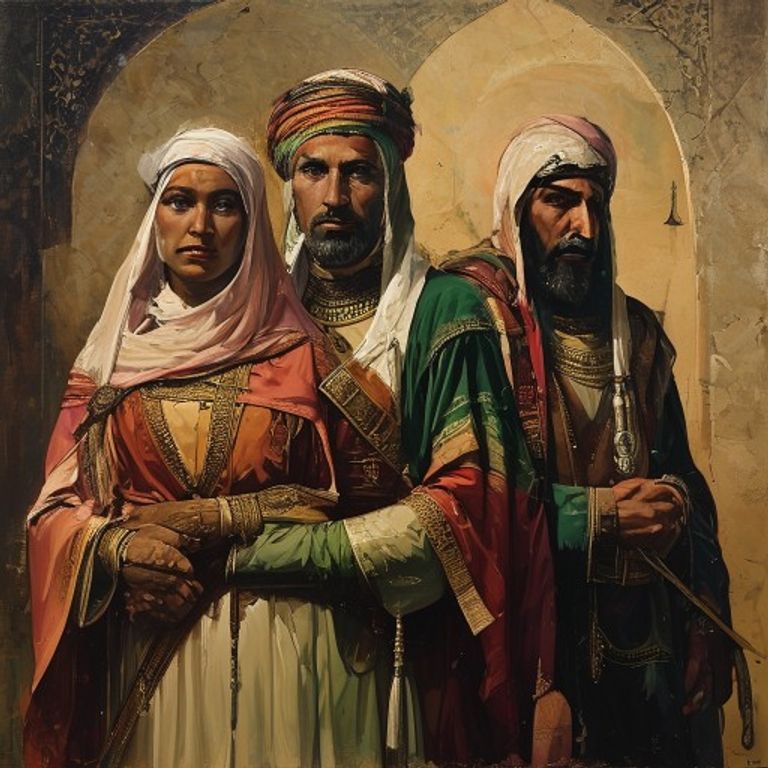
A synonym for ambition, the UAE has transformed fishing villages into global metropolises like Dubai and Abu Dhabi. Home to the world's tallest building (Burj Khalifa), the country is a hub for aviation, luxury tourism, and innovation. The federation of seven emirates balances extreme modernity with the preservation of falconry, camel racing, and Bedouin culture.
⚠️ Research conducted with the assistance of Deep Research is subject to referential ambiguity.
🖥️Clean HTML code using a proprietary tool.
👥 Research by Guilherme Felipe, Curation by Sílvio Lôbo
The Literary Tapestry of the United Arab Emirates: Voices, Movements, and Identities
The literature of the United Arab Emirates, though relatively young in terms of global recognition, is a vibrant and multifaceted field that reflects the country's rapid social, economic, and cultural transformation. From its Bedouin origins and oral tradition to the emergence of contemporary authors navigating the complexities of modernity, Emirati literary production offers a fascinating portal into understanding local identity and its aspirations.
Origins and Oral Tradition
The roots of literary expression in the United Arab Emirates trace back to the rich oral tradition of the Bedouin tribes that inhabited the region. Poetry, in particular, played a central role in preserving history, values, and knowledge. Epic poems, battle narratives, elegies, and odes to the desert were passed down from generation to generation, shaping a strong sense of community and shared identity. Nabati poetry, written in local dialects, is a testament to this heritage, with figures like Sheikh Zayed bin Sultan Al Nahyan, the founding father of the UAE, being notable practitioners and proponents of this literary form.
The Awakening of Modern Literature
With the formation of the United Arab Emirates in 1971 and the subsequent economic boom driven by oil, a new landscape for literary production emerged. Growing literacy, access to formal education, and the establishment of publications allowed new voices to emerge. The 1970s and 1980s saw the rise of authors who began to explore more contemporary themes, albeit often with a focus on nostalgia for the past and observations of social changes.
Key Authors and Their Contributions
Contemporary Emirati literature is marked by a diversity of voices and perspectives. Several authors born or based in the UAE have gained prominence, addressing everything from the complexities of modern life to reminiscences of the past and issues of cultural identity in a globalized world.
- Sheikha Al-Mutairi: A poet and writer recognized for her exploration of the female condition and social dynamics in the UAE. Her works frequently challenge conventions and promote reflections on modernity and tradition.
- Saleh Al-Amri: A fiction author who has been praised for his ability to portray the daily lives and aspirations of Emirati citizens. His narratives explore the nuances of human relationships and societal transformations.
- Noura Al-Neyadi: A prolific writer whose works span short stories and novels. Al-Neyadi is known for addressing themes such as identity, migration, and the search for a place in the world, often through strong female characters.
- Jamal Al-Ameri: One of the most prominent novelists in the UAE, whose works often delve into the region's history and culture. Al-Ameri is admired for his rich prose and his skill in weaving complex narratives.
- Mohamed Al-Murr: Although he passed away in 2015, Mohamed Al-Murr left a lasting legacy as one of the pioneers of modern fiction in the UAE. His short stories are celebrated for their social insight and their realistic portrayal of Emirati life.
Literary Movements and Important Publications
While Emirati literature is not rigidly defined by formal literary movements as in other older traditions, it is possible to identify emerging trends and focuses. Social realism has been a strong current, with authors documenting the changes and challenges faced by society. Poetry, with its deep roots, continues to be a vital form of expression, with many poets experimenting with contemporary forms and themes.
Publications play a crucial role in disseminating Emirati literature. Newspapers, literary magazines, and local and regional publishing houses have been important platforms for showcasing new talent. The organization of literary festivals, such as the Sharjah International Book Fair, has also fostered cultural exchange and given visibility to Emirati authors on the international stage.
Local Cultural Identity Reflected in Books
The cultural identity of the United Arab Emirates is a central and recurring theme in its literary production. Authors explore the tensions between the traditional and the modern, the local and the global, and the search for an authentic identity in a constantly changing world.
- The Bedouin Legacy: Many writers evoke the Bedouin heritage, not just as a romantic past, but as a source of values, resilience, and a deep connection to the land. The desert landscape, its challenges, and its transcendent beauty, often appear as a symbolic backdrop.
- Modern City Life: With rapid urban development and diverse populations, books portray life in the UAE's cosmopolitan cities, addressing complex social dynamics, multicultural interactions, and new ways of living.
- The Role of Women: The evolving role of women in Emirati society is a frequently explored theme. Female and male authors address the challenges, achievements, and aspirations of women, reflecting changes in social structures and expectations.
- Globalization and Identity: Authors discuss how globalization and the increasing presence of foreign cultures impact local identity. The search for a balance between embracing progress and preserving cultural traditions is a constant.
- The Power of Language: The Arabic language itself, in its various dialectal and literary forms, is a vehicle for expressing identity. The preservation and evolution of the Arabic language are often themes of reflection.
In summary, the literature of the United Arab Emirates is a dynamic reflection of a nation in constant evolution. Through its literary voices, readers gain privileged insight into the complexities of life, aspirations, and the rich cultural tapestry that defines the United Arab Emirates.





