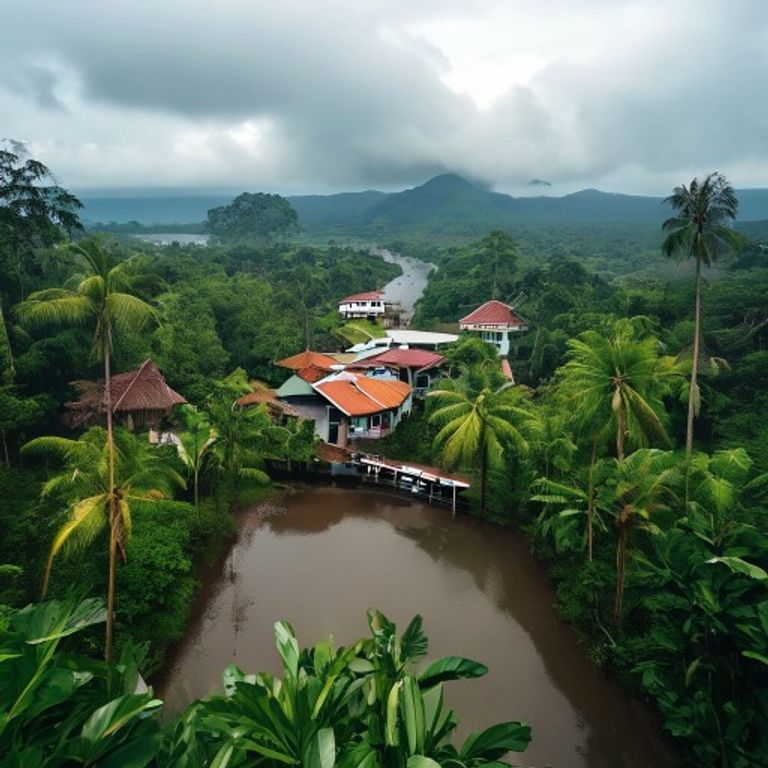
The smallest country in South America, Suriname is a fascinating ethnic melting pot (Dutch, African, Indian, Javanese, Chinese, and indigenous). The capital, Paramaribo, is a UNESCO World Heritage site for its unique wooden colonial architecture. Most of the territory is preserved Amazon rainforest. Dutch is the official language, making it a cultural exception in the region.
⚠️ Research elaborated with the help of Deep Research is subject to referential ambiguity.
🖥️Clean HTML code using a proprietary tool.
👥 Research by Guilherme Felipe, Curation by Sílvio Lôbo
The Literary Tapestry of Suriname: Voices, Movements, and Cultural Identity
Suriname, with its rich and multifaceted history, is a cultural melting pot that is poignantly reflected in its literary production. A vibrant nation, shaped by migrations and exchanges, Suriname offers fertile ground for the exploration of identities, conflicts, and aspirations. As a literary critic and researcher, I embark on this journey to unravel the threads that weave the Surinamese literary tapestry, focusing on its protagonists, its historical milestones, and the soul of its people that pulses through its pages.
Roots and Strands: Key Authors and Their Contributions
Surinamese literature is distinguished by a diversity of voices, many of them emerging from distinct communities that make up the country's social mosaic. The influence of Dutch, the official language, is undeniable, but Surinamese Creole (Sranan Tongo) and other minority languages also find their space in literary expression, lending authenticity and depth.
- Rudi Kousbroek: Although better known as an essayist and cultural critic, Kousbroek played a fundamental role in promoting and valuing Surinamese culture and literature within the Dutch context. His writings frequently revisited Suriname's history and identity.
- Albert Helman (Lourens Rudolphus de Jong): Considered one of the fathers of modern Surinamese literature. His work, written in Dutch, encompasses novels, plays, and essays. "Het stille land" (The Silent Land) is one of his best-known works, exploring man's relationship with nature and colonial identity.
- Frank Martinus Arion: Another prominent name in Dutch-language literature. His novels, such as "De laatste vrijheid" (The Last Freedom), address themes of identity, migration, and the search for belonging.
- Cynthia McLeod: An internationally renowned author, McLeod writes in Dutch and is known for her historical novels depicting life in colonial Suriname, especially the experiences of slaves and their descendants. "Hoe duur was de suiker?" (How Much Was the Sugar?) is one of her most emblematic books, which served as the basis for a successful television adaptation.
- Michiel van Kempen: A critic, historian, and translator, Van Kempen is a central figure in the research and dissemination of Surinamese literature. His theoretical work and anthologies play a crucial role in preserving and disseminating the country's literary production.
- Shankari Sundar: With a body of work that explores the Hindu diaspora in Suriname, Sundar brings to the fore narratives about tradition, adaptation, and the preservation of culture in a new context.
- Kenric Miguel-Morris: One of the most recent names to emerge, he represents a new generation of writers exploring contemporary issues, social concerns, and the complexity of Surinamese identity in a globalized world.
Historical Milestones and Literary Movements
The literary trajectory of Suriname is marked by different phases, reflecting the country's social and political transformations:
- Colonial Period and Early Manifestations: The first forms of literary expression were linked to European influence, with works written in Dutch by authors who depicted the colonial environment, often from a Eurocentric perspective.
- The Emergence of Sranan Tongo: The consolidation of Sranan Tongo as a literary language was a crucial milestone. Authors such as Guillaume Louis, Peter Abraham, and Egbert Reinck laid the foundations for a literature that spoke directly to the soul of the Surinamese people, expressing their realities and emotions authentically.
- The "Moetete" Movement: In the 1960s and 1970s, the "Moetete" movement (in Sranan Tongo, "wake up" or "awaken") represented an important phase of cultural and literary awareness. It sought to value Black and indigenous culture, challenging Dutch cultural dominance and promoting writing in Sranan Tongo.
- Independence and its Reflections: After independence in 1975, literature began to reflect the new realities, the challenges of nation-building, and the search for a distinct identity. Issues of migration, return, and complex ethnic relations gained prominence.
- Contemporary Literature: Currently, Surinamese literature is characterized by thematic and stylistic diversity. There is a continuous exploration of cultural heritage, gender issues, social ills, and the hope for a more just and equitable future.
Emblematic Publications and the Voice of the People
The publication of works in Sranan Tongo was a watershed moment. Newspapers, magazines, and books began to give voice to a previously silenced audience:
- "De Brug" Magazine: One of the first important publications that provided space for writers in Sranan Tongo, contributing to its legitimization.
- Anthologies of Poetry and Prose: Compilations, such as those organized by Michiel van Kempen, have been fundamental in presenting the richness of Surinamese literature to a wider audience, both in Suriname and abroad.
- Editions in Various Languages: The translation of works into Dutch, English, and other languages has been crucial for the internationalization of Surinamese literature, allowing its stories to reach readers globally.
Cultural Identity: The Heart of Surinamese Narrative
Cultural identity is, without a doubt, the central axis that permeates Suriname's literature. The complex intermingling of peoples – Africans, Hindus, Javanese, indigenous, Chinese, Europeans – results in a tapestry of experiences and perspectives that fuel literary production:
- Diaspora and Memory: Literature frequently explores the memories of slavery, indentured servitude, and forced migrations, retelling stories to reclaim and affirm identities.
- Syncretism and Spirituality: Religious and spiritual beliefs, often syncretic, such as Winti (an Afro-Surinamese religion) and Hinduism, are recurring themes, revealing the worldview and rituals that shape life in the country.
- Relationship with Nature: Suriname's lush tropical nature, with its dense forests and mighty rivers, is a constant backdrop and, at times, a character in itself, influencing characters and conflicts.
- The Struggle for Recognition: The quest for recognition and appreciation of Surinamese culture, over and against external influences, is a persistent theme, reflecting the need to assert one's own voice in a globalized world.
- Sranan Tongo as a Tool of Identity: The adoption and use of Sranan Tongo in literature are not merely a linguistic choice but a political and cultural act of identity affirmation, a reclaiming of a language that represents the resistance and unity of different groups.
In summary, the literature of Suriname is a vibrant testament to its history, its struggles, and its rich cultural identity. Through the works of its notable authors, the movements that shaped its trajectory, and the publications that have given voice to its people, the Surinamese literary tapestry continues to expand, inviting us to delve into a universe of fascinating and profoundly human narratives.