



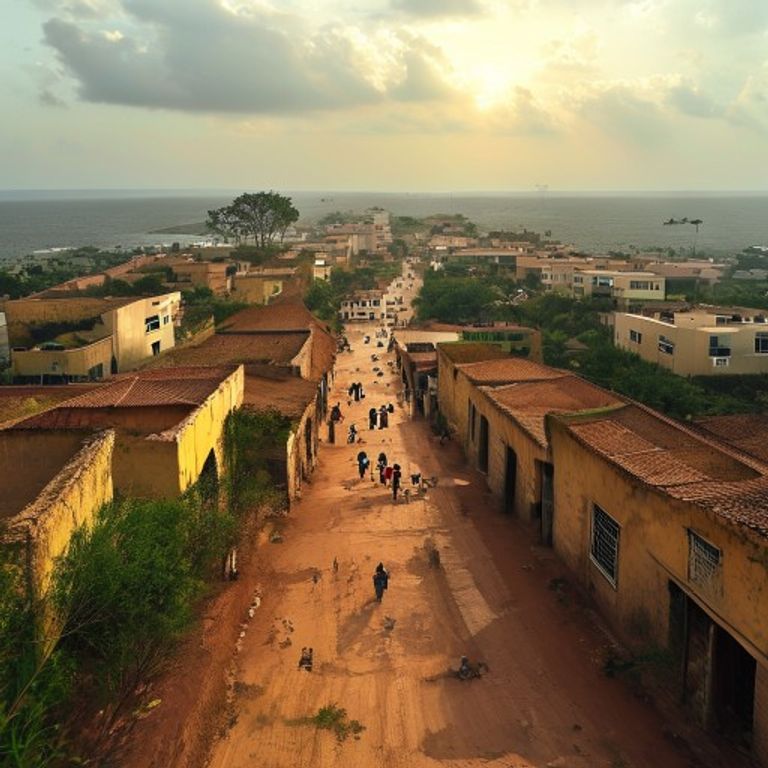
With the longest coastline in continental Africa, Somalia is located in the 'Horn of Africa,' in a strategic position between the Red Sea and the Indian Ocean. A nation of poets and merchants with an ancient history of maritime exchange, the country struggles to rebuild itself after decades of civil conflict. Its culture is deeply Islamic, with strong clans and a resilient global diaspora.
⚠️ Research elaborated with the aid of Deep Research is subject to referential ambiguity.
🖥️Clean HTML code using a proprietary tool.
👥Research by Guilherme Felipe, Curation by Sílvio Lôbo
The Voice of Somalia: A Journey Through the Literature of a Resilient People
Somali literature, despite having faced and continuing to face monumental challenges, is a vibrant testament to the resilience, rich cultural tapestry, and deep identity of a people. Born from an ancestral oral tradition, written literature blossomed late but quickly established itself as a powerful mirror of Somali experiences, aspirations, conflicts, and their unwavering pursuit of self-knowledge and sovereignty.
Roots in Orality and the Birth of Writing
For centuries, the transmission of stories, poems, proverbs, and teachings in Somalia was predominantly oral. Gees (poets) and Abwaan (storytellers) were guardians of collective memory, transmitting wisdom and forging cultural identity through captivating narratives and mesmerizing rhythms. This strong oral tradition is a fundamental cornerstone of Somali written literature, influencing its structure, style, and thematic depth.
The introduction of the Latin script for the Somali language, made official in 1972, was a watershed moment. Before that, there were attempts to transcribe the language into Arabic and other alphabets, but standardization paved the way for broader and more accessible literary production. Poetry continued to be the dominant literary form, but novels and prose began to gain ground, allowing for the exploration of modern life's complexities.
Key Authors and Their Contributions
Somali literature is enriched by voices that have transcended borders, both geographical and literary. Many Somali authors, forced into exile by political instability, found a space in the diaspora to express their experiences and keep alive their connection to their homeland.
- Nuruddin Farah: Arguably the most prominent name in contemporary Somali literature, Farah is an internationally renowned novelist. His works, such as From a Crooked Rib (1970), Maps (1986), and Yesterday, Tomorrow: Voices from Our Somalia (1991), explore themes of colonialism, nationalism, gender identity, exile, and the complexities of post-independence Somali society. His style is often marked by rich prose, complex characters, and deep social critique.
- Warsan Shire: A Somali-British poet who has gained global recognition, Shire addresses themes of identity, displacement, trauma, and femininity in her poems. Her work, influenced by her experiences as a refugee and immigrant, resonates deeply with a generation grappling with similar issues.
- Said Jama Hussein: A poet and educator, Hussein is an important figure in the preservation and promotion of the Somali language and culture. His poetic work is celebrated for its lyrical beauty and strong sense of belonging.
- Mohamed Ibrahim Warsame "Hadraawi": Although best known for his poetry, Hadraawi is considered one of the greatest living Somali poets. His work, often epic and allegorical, addresses the history, culture, and challenges faced by the Somali people with remarkable linguistic mastery.
- Abdi Latif Ega: Another author whose work explores the experiences of the diaspora and the realities of Somalia.
Literary Movements and Important Publications
While Somali literature may not be organized into formal literary movements like other traditions, we can identify important trends and milestones:
- The Post-Independence Era (from 1960 onwards): With independence, there was an initial flourishing of literature, driven by the desire to build a national identity. Poetry continued to be a powerful vehicle for expressing national pride and political challenges.
- Literature of Exile: The deterioration of the political situation and the civil war forced many writers into exile, but paradoxically, this led to greater international visibility for their works. Literature of exile often deals with longing, loss, memory, and the search for a home.
- Important Publications: The publication of novels like those by Nuruddin Farah in foreign languages was crucial in introducing Somali literature to a wider audience. Literary magazines, though scarce, played a vital role in disseminating new works. Academic and journalistic production also contributed to reflections on Somali identity and history.
Local Cultural Identity Reflected in Books
Somali cultural identity is a central and inseparable element in the region's literature. This identity is shaped by a series of interconnected factors:
- Clan and Lineage: The clan-based social structure, with its complexities and rivalries, is often explored in literature, depicting family and social dynamics.
- Islam: The Islamic religion plays a significant role, influencing moral values, rituals, and characters' worldviews.
- The Struggle for Sovereignty and Post-Colonialism: The scars of Italian and British colonialism, and the subsequent struggle for self-determination, are recurring themes, addressing the lasting impact of these influences.
- Nomadism and Desert Life: Nomadic traditions, with their deep connection to the land, resilience in the face of climatic adversity, and the simplicity of life, are often portrayed with lyricism and reverence.
- Resilience and Hope: Despite the extreme difficulties faced by the country, Somali literature is imbued with a spirit of resilience and an unwavering hope for a better future. The people's ability to rise again and keep their culture alive amidst chaos is a recurring theme.
- The Somali Woman: Authors like Nuruddin Farah and Warsan Shire have dedicated themselves to giving voice to Somali women, exploring their roles, struggles, and strength in an often patriarchal society.
In summary, Somali literature is a multifaceted mirror of a people who, despite their trials, maintain a vibrant and essential literary voice. Their authors, whether rooted in their homeland or in the diaspora, continue to weave narratives that celebrate their rich cultural heritage, confront their challenges, and yearn for a future of peace and prosperity, enriching the global literary landscape with their unique and powerful perspectives.





