



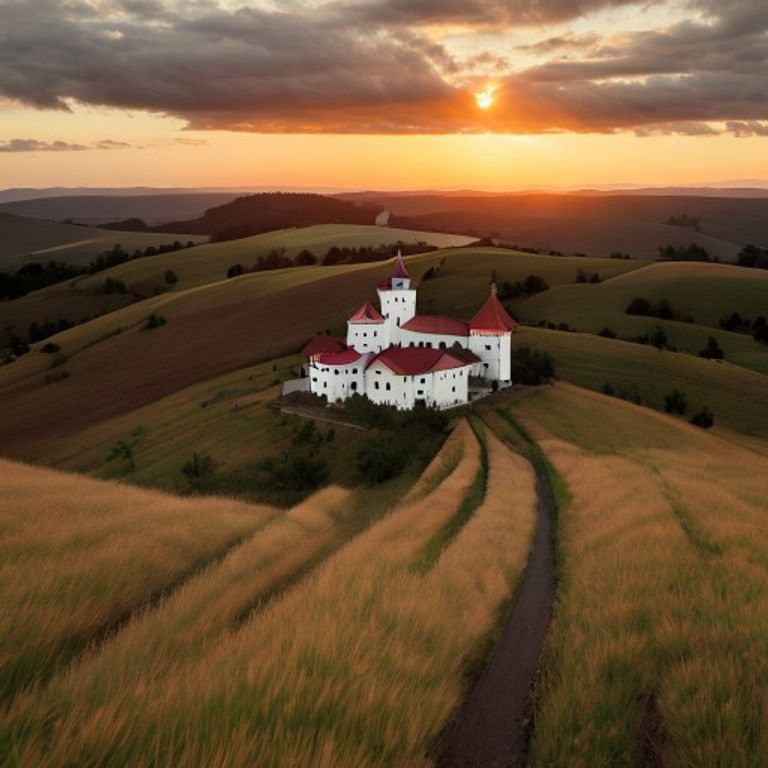
Famous for its windmills, tulips, and Amsterdam canals, the Netherlands is a triumph of engineering over water. A nation of bicycles and a liberal society, it pioneered global trade and the arts (Van Gogh, Rembrandt). The country stands out for its innovation, pragmatism, and quality of life, being one of the world's largest agricultural exporters despite its small size.
⚠️ Research conducted with the aid of Deep Research is subject to referential ambiguity.
🖥️Clean HTML code using a proprietary tool.
👥 Research by Guilherme Felipe, Curation by Sílvio Lôbo
The Dutch Soul in Words: An Analysis of Literature from The Low Countries
The literature of the Netherlands, though often less visible on the global stage compared to its neighboring European literary powers, is a rich and multifaceted reflection of a complex history, a resilient cultural identity, and a pragmatic spirit that has shaped its artistic expression over the centuries. From the earliest vernacular writings to vibrant contemporary productions, Dutch authors have explored the intricacies of the human condition, the relationship with water, the pursuit of freedom, and the constant negotiation between the individual and the collective.
Exploring Dutch literature is to delve into a tapestry of influences, from the Gothic and medieval legacy to the impact of the Renaissance, the Protestant Reformation, and the golden ages of trade and exploration. Each period has left its mark, with authors and movements that defined not only the literary landscape of their time but also the very perception of Dutch identity.
Historical Literary Movements and Their Representatives
The literary trajectory of the Netherlands can be outlined through some key movements:
- The Medieval Period and the Rise of Vernacular: Although Latin influence was predominant, the 12th century saw the flourishing of texts in the vernacular language. Epic poems like "Karel ende Elegast" and "Walewein" (both anonymous) demonstrate the introduction of chivalric and heroic themes. Religious poetry also stood out, with authors like Hadewijch, an important mystic whose poems and letters express a fervent love for God, anticipating future romantic sensibilities.
- The Renaissance and the Golden Age (16th-17th Centuries): This was a period of cultural and economic effervescence, and literature reflected this prosperity. Humanism flourished, and the printing press played a crucial role in disseminating ideas. Desiderius Erasmus, although writing in Latin, is a seminal figure of European humanism with strong ties to the Netherlands, whose social and pedagogical critiques, such as in "The Praise of Folly", had an immense impact. In the vernacular, Dirck Volkertszoon Coornhert was a polymath, poet, and polemicist who advocated for freedom of thought. However, the most prominent name of this period is undoubtedly Joost van den Vondel, often considered the Dutch Shakespeare. His vast body of work includes epic tragedies like "Gysbrecht van Aemstel", which celebrate national history and pride.
- The Enlightenment and Neoclassicism (18th Century): The literature of this period sought clarity, reason, and imitation of classical models. Authors like Jan van Effen, with his satirical magazines, and Hieronymus van Alphen, with his children's and moralistic poetry, reflect the spirit of the age.
- Romanticism and Realism (19th Century): The 19th century saw a growing national self-awareness and a renewed interest in Dutch history and folklore. Multatuli (pseudonym of Eduard Douwes Dekker) is a monumental figure, whose novel "Max Havelaar" (1860) is a powerful denunciation of Dutch colonialism in the East Indies. His work is a landmark of social realism and a cry for justice. Other authors like Carel Vosmaer and Jacques Perk explored more lyrical and aesthetic themes.
- The Modernist Movement and the "Tachtigers" (Late 19th/Early 20th Century): Known as the "Eightiers," a group of young writers and artists sought to break away from the literary conventions of their time, influenced by French Parnassianism and Symbolism. They valued art for art's sake, formal beauty, and the exploration of new expressive forms. Authors like Herman Gorter, with his poem "Mei" (May), and Lodewijk van Deyssel, with his experimental prose, were central figures of this movement that paved the way for modern literature.
- 20th Century and Contemporary Literature: The 20th century was marked by two World Wars, which left deep scars and shaped literature. Anne Frank, with her intimate and moving diary, transcended the boundaries of her time and nationality to become a universal symbol of the tragedy of the Holocaust and human hope. Harry Mulisch, with his vast and diverse work, explored philosophical, historical, and metaphysical themes, often weaving complex and ambitious narratives, as in "The Discovery of Heaven". W.F. Hermans is known for his pessimism and his exploration of human fragility in the face of chaos, exemplified in "The Darkroom of Damocles". Gerard Reve, with his ironic and autobiographical prose, explored religion, sexuality, and everyday life in a unique and shocking way in works like "The Evenings". Contemporary authors like Arnon Grunberg continue to challenge conventions and explore social and existential issues with an incisive style.
Important Publications and Cultural Identity
Dutch cultural identity, marked by its intrinsic relationship with water, its history of tolerance and pragmatism, and its mercantile spirit, is a recurring theme in many literary works. The struggle against the sea, the creation of polders, and maritime expansion have inspired both epic narratives and reflections on human resilience and ingenuity. Religiosity, especially the Protestant Reformation and its consequences, also permeates the morality, social tensions, and introspection of many characters.
Publications such as the literary magazine "De Nieuwe Gids" (The New Guide), founded by the "Tachtigers," were crucial for disseminating new ideas and forming a literary avant-garde. Dutch publishing houses, like De Bezige Bij, play a vital role in promoting and publishing national and international authors, ensuring a continuous flow of new voices and perspectives.
The literature of the Netherlands, therefore, is not merely a collection of texts but a mirror of the soul of a nation that, despite its small geographical size, possesses remarkable cultural depth and literary richness. Through its authors, movements, and works, the Netherlands continues to offer the world narratives that explore the human condition with insight, originality, and an unmistakable Dutch touch.





