



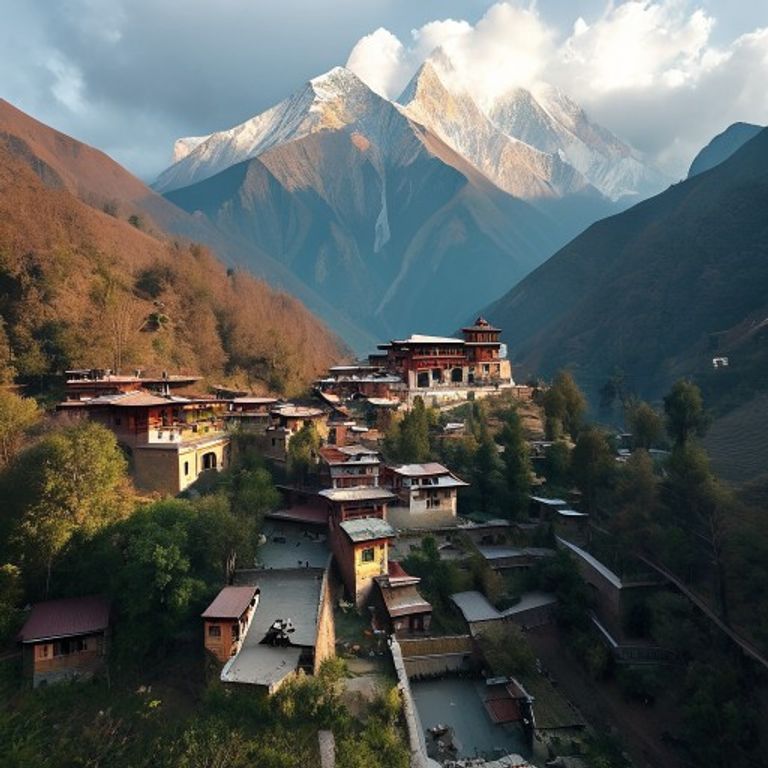
The roof of the world, Nepal is defined by the Himalayas and Mount Everest. The birthplace of Buddha (Lumbini), it is a destination for spirituality and adventure. The country, which has never been colonized, boasts a unique (non-rectangular) flag and a fascinating blend of Hinduism and Buddhism. Kathmandu, the capital, is a labyrinth of medieval temples, and the Sherpa people are legendary for their resilience.
As a literature scholar, it is a pleasure to discuss Nepal's literary tradition. Often overshadowed by the neighboring literatures of India and China, Nepalese output is a fascinating mosaic reflecting the transition from an isolated monarchy to a democratic republic, shaped by imposing geography and profound spirituality.
Nepalese literature is not limited to the Nepali language but encompasses works in Newari (Nepal Bhasa), Maithili, Bhojpuri, and more recently, a growing output in English.
Historical Evolution and Literary Schools
The trajectory of Nepalese literature can be divided into distinct phases that mirror the country's political changes:
1. The Classical Period and the Devotional Era (18th - 19th Centuries)
Before the 19th century, literature was predominantly oral or written in Sanskrit, focused on religious texts.
-
Bhanubhakta Acharya: The starting point of modern literature. He translated the epic Ramayana from Sanskrit into colloquial Nepali. In doing so, he not only democratized access to religion but also laid the linguistic foundations of the nation. He is revered as the Adikavi (The First Poet).
2. Romanticism and the "Poet Idol" (Early 20th Century)
In the 1920s and 1930s, influenced by Indian and Western romanticism, a generation emerged seeking to express individual emotions and the beauty of the Himalayan landscape.
-
Laxmi Prasad Devkota: Considered Nepal's greatest poet (the Mahakavi). His masterpiece, Muna Madan, broke away from classical Sanskrit forms by using the meter of popular folk songs (jhyaure). Devkota introduced a profoundly humanistic and romantic sensibility.
3. Social Realism and Political Consciousness (1950 - 1990)
With the fall of the Rana dynasty in 1951, Nepal opened up to the world. Literature became a tool for social and political critique.
-
School of Realism: Writers began to portray poverty, the caste system, and the oppression of women.
-
B.P. Koirala: Besides serving as Prime Minister, he was a seminal novelist who introduced psychological analysis and existentialism into Nepalese literature, focusing on the individual's desires and dilemmas.
4. Modernism and Post-Modernism (1990 - Present)
After the restoration of democracy in 1990 and the subsequent period of civil war (1996-2006), literature became experimental, fragmented, and intensely focused on issues of ethnic identity and traumatic memory.
Notable Contemporary Writers
Contemporary Nepalese literature is vibrant, dealing with both the legacy of conflict and the global diaspora.
Parijat (Bishnu Kumari Waiba)
Although her main work, Sirishko Phool (The Blue Mimosa), was published in the 1960s, Parijat remains a fundamental influence on contemporary writing. Her nihilistic and existentialist approach to desire and mortality is considered the pinnacle of Nepalese modernism.
Narayan Wagle
A journalist and novelist, Wagle is one of the most popular voices today. His novel "Palpasa Café" became a publishing phenomenon for portraying the impact of the civil war on the daily lives of young artists and intellectuals, capturing the disillusionment of a generation.
Buddhisagar
A representative of the new generation focusing on rural roots. His book "Karnali Blues" is a moving work about the father-son relationship in one of Nepal's most remote regions, notable for its raw realism and rich colloquial language.
Manjushree Thapa
Writing in English, Thapa is the main bridge between Nepalese literature and the international audience. Her works, such as Forget Kathmandu, blend fiction, essay, and history to critique power structures and the country's political situation.
Samrat Upadhyay
The first Nepalese novelist writing in English to achieve success in the US. His short story collections, such as Arresting God in Kathmandu, explore the tensions between tradition and modernity in the urban life of Kathmandu.
Nepalese literature today is experiencing a moment of effervescence, where the trauma of war has given way to a search for new narratives that encompass the country's ethnic diversity. It is a literature that breathes the altitude of the mountains but keeps its feet firmly planted in the social complexities of the valley.
🖥️Clean HTML code using proprietary tool.
The roof of the world, Nepal is defined by the Himalayas and Mount Everest. The birthplace of Buddha (Lumbini), it is a destination for spirituality and adventure. The country, which has never been colonized, boasts a unique (non-rectangular) flag and a fascinating blend of Hinduism and Buddhism. Kathmandu, the capital, is a labyrinth of medieval temples, and the Sherpa people are legendary for their resilience.
As a literature scholar, it is a pleasure to discuss Nepal's literary tradition. Often overshadowed by the neighboring literatures of India and China, Nepalese output is a fascinating mosaic reflecting the transition from an isolated monarchy to a democratic republic, shaped by imposing geography and profound spirituality.
Nepalese literature is not limited to the Nepali language but encompasses works in Newari (Nepal Bhasa), Maithili, Bhojpuri, and more recently, a growing output in English.
Historical Evolution and Literary Schools
The trajectory of Nepalese literature can be divided into distinct phases that mirror the country's political changes:
1. The Classical Period and the Devotional Era (18th - 19th Centuries)
Before the 19th century, literature was predominantly oral or written in Sanskrit, focused on religious texts.
-
Bhanubhakta Acharya: The starting point of modern literature. He translated the epic Ramayana from Sanskrit into colloquial Nepali. In doing so, he not only democratized access to religion but also laid the linguistic foundations of the nation. He is revered as the Adikavi (The First Poet).
2. Romanticism and the "Poet Idol" (Early 20th Century)
In the 1920s and 1930s, influenced by Indian and Western romanticism, a generation emerged seeking to express individual emotions and the beauty of the Himalayan landscape.
-
Laxmi Prasad Devkota: Considered Nepal's greatest poet (the Mahakavi). His masterpiece, Muna Madan, broke away from classical Sanskrit forms by using the meter of popular folk songs (jhyaure). Devkota introduced a profoundly humanistic and romantic sensibility.
3. Social Realism and Political Consciousness (1950 - 1990)
With the fall of the Rana dynasty in 1951, Nepal opened up to the world. Literature became a tool for social and political critique.
-
School of Realism: Writers began to portray poverty, the caste system, and the oppression of women.
-
B.P. Koirala: Besides serving as Prime Minister, he was a seminal novelist who introduced psychological analysis and existentialism into Nepalese literature, focusing on the individual's desires and dilemmas.
4. Modernism and Post-Modernism (1990 - Present)
After the restoration of democracy in 1990 and the subsequent period of civil war (1996-2006), literature became experimental, fragmented, and intensely focused on issues of ethnic identity and traumatic memory.
Notable Contemporary Writers
Contemporary Nepalese literature is vibrant, dealing with both the legacy of conflict and the global diaspora.
Parijat (Bishnu Kumari Waiba)
Although her main work, Sirishko Phool (The Blue Mimosa), was published in the 1960s, Parijat remains a fundamental influence on contemporary writing. Her nihilistic and existentialist approach to desire and mortality is considered the pinnacle of Nepalese modernism.
Narayan Wagle
A journalist and novelist, Wagle is one of the most popular voices today. His novel "Palpasa Café" became a publishing phenomenon for portraying the impact of the civil war on the daily lives of young artists and intellectuals, capturing the disillusionment of a generation.
Buddhisagar
A representative of the new generation focusing on rural roots. His book "Karnali Blues" is a moving work about the father-son relationship in one of Nepal's most remote regions, notable for its raw realism and rich colloquial language.
Manjushree Thapa
Writing in English, Thapa is the main bridge between Nepalese literature and the international audience. Her works, such as Forget Kathmandu, blend fiction, essay, and history to critique power structures and the country's political situation.
Samrat Upadhyay
The first Nepalese novelist writing in English to achieve success in the US. His short story collections, such as Arresting God in Kathmandu, explore the tensions between tradition and modernity in the urban life of Kathmandu.
Nepalese literature today is experiencing a moment of effervescence, where the trauma of war has given way to a search for new narratives that encompass the country's ethnic diversity. It is a literature that breathes the altitude of the mountains but keeps its feet firmly planted in the social complexities of the valley.
🖥️Clean HTML code using proprietary tool.





