



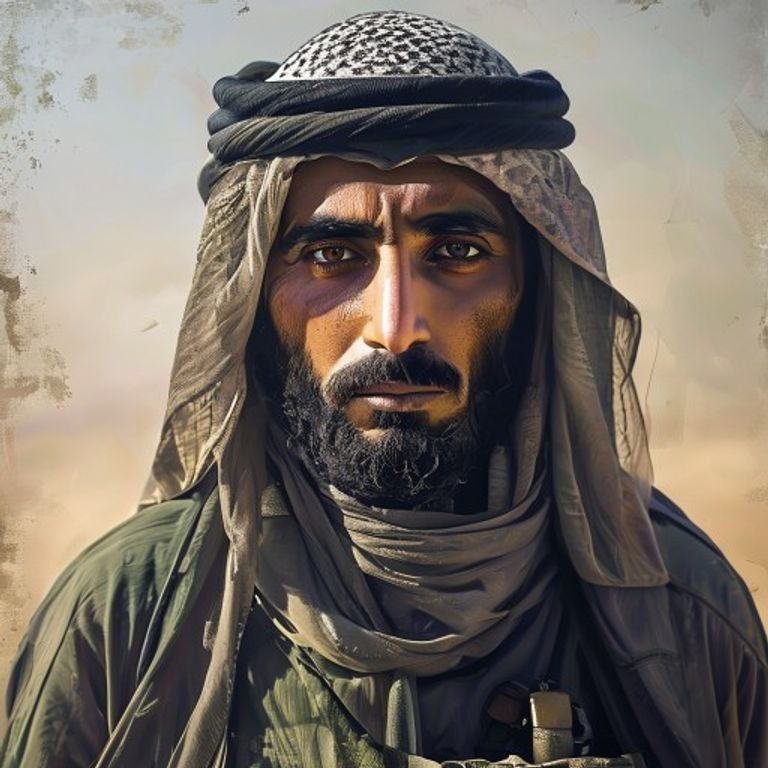
Iraq is the cradle of civilization, ancient Mesopotamia, where writing and cities were born between the Tigris and Euphrates rivers. Rich in oil and history, it houses Shiite holy sites like Karbala. The nation is slowly recovering from decades of conflict and invasions, trying to restore Baghdad's cultural glory and preserve its millennia-old heritage.
⚠️ Research conducted with the aid of Deep Research is subject to referential ambiguity.
🖥️Clean HTML code using a proprietary tool.
👥 Research by Guilherme Felipe, Curation by Sílvio Lôbo
The Wounded and Resilient Soul of Iraq in Literature
Iraqi literature is a multifaceted mirror of a turbulent history and a rich, complex cultural identity. Born in a land traversed by ancient civilizations and marked by recent conflicts, Iraq has produced authors whose works echo resilience, pain, hope, and the relentless search for meaning amidst adversity. As a literary critic and researcher, it is with deep respect that I delve into this production, seeking to unravel the nuances of its expression and its place in the global literary landscape.
Historical Roots and Literary Movements
The origins of modern Iraqi literature date back to the late 19th and early 20th centuries, with the flourishing of the Arab Renaissance (Nahda). During this period, Iraqi writers, influenced by new ideas and contact with Europe, began to experiment with new poetic and narrative forms, seeking to modernize language and address social and political themes. Poetry, in particular, has always held a prominent place, serving as a powerful vehicle for expressing national sentiments and criticizing the status quo.
The post-World War II period and the rise of Arab nationalism saw the emergence of new generations of writers who reflected aspirations for independence and self-determination. Literature became an ideological battleground, where different political currents and visions for the future vied for space. Movements such as socialist realism had some influence, as did free verse poetry, which broke away from traditional metrics to embrace a more spontaneous and direct expression.
Decades of conflict, from the Iran-Iraq War to more recent invasions, have profoundly shaped the literary landscape. Literature became not only a record of lived experiences but also a space for reflection on destruction, exile, loss, and the search for identity in a fragmented country.
Key Authors and Their Landmark Works
The richness of Iraqi literature is manifested through a constellation of notable voices. Among the most prominent, we can highlight:
- Mahmoud Darwish (1941-2008): Although Palestinian, Darwish had a deep connection with Iraq, and his work resonates powerfully with the Arab experience in general, including the Iraqi one. His poetry, marked by poignant lyricism and strong political consciousness, addresses themes of exile, identity, and resistance.
- Badr Shakir al-Sayyab (1926-1964): Considered one of the fathers of modern Arab poetry, al-Sayyab revolutionized poetic forms, introducing free verse and addressing mythical and social themes with great depth. His work is a landmark in Iraqi and Arab literature.
- Nizar Qabbani (1923-1998): Another giant of Arab poetry with a strong influence in Iraq. His poetry, initially romantic, evolved into biting social and political criticism, frequently addressing love, women, and oppression.
- Ghazi Abdel Khaleq (1949-): One of the most important names in contemporary Iraqi prose. His novels often explore life under authoritarian regimes, the impact of war, and the complexities of human relationships in difficult times.
- Samir Naqash (1938-2012): Known for his short stories and novels that portray the life of Iraqi Jewish communities and the country's complex social and religious reality. His work offers a unique perspective on an often-forgotten part of Iraqi history.
- Radhi Al-Mudhafar (1962-): A contemporary poet whose work reflects the scars of war and occupation, but also the search for a future of peace and reconciliation. His poetry is visceral and deeply human.
Important Publications and Literary Circulation
Over the decades, various publications have played a crucial role in disseminating Iraqi literature. Literary magazines such as "Al-Majalla" and "Al-Thaqafa al-Arabiya" were important platforms for new talent and intellectual debates. Daily newspapers also included literary sections that featured poems, short stories, and essays.
The publication of novels and poetry collections by Iraqi authors in other Arab countries, and more recently in translations into English and other languages, has been fundamental in giving visibility to local production. The Iraqi diaspora, scattered around the world, has also been a driving force for literary production, with many authors writing about their experiences of exile and longing.
It is important to note that censorship and publication difficulties, especially during periods of conflict and political repression, have always been significant challenges. However, the creativity and determination of Iraqi writers have found ways to circumvent these obstacles, often through clandestine publications or abroad.
Cultural Identity and Reflections in Literature
Iraqi cultural identity, intrinsically linked to its millennia-old history, ethnic and religious diversity, and the complexities of its geopolitical position, is a central theme in its literature.
- Ancient Heritage: The presence of civilizations such as the Sumerian, Akkadian, and Babylonian, with their mythologies and legacies, permeates the imagination of writers, evoking a sense of historical depth and a questioning of continuity and rupture with the past.
- Religious and Ethnic Diversity: Iraq is a melting pot of different ethnicities (Arabs, Kurds, Turkmen, etc.) and religions (Shiite and Sunni Islam, Christianity, Judaism, etc.). This diversity is reflected in characters, narratives, and conflicts, exploring the tensions and interconnections between these groups.
- The Experience of War and Violence: The devastation caused by decades of conflict is a recurring and painful theme. Literature becomes a space to process trauma, document losses, and explore the scars left on the individual and collective soul. The raw and realistic depiction of life under bombardment, occupation, and sectarian violence is a strong characteristic.
- Exile and Longing: The Iraqi diaspora, forced to leave their country for political or security reasons, has produced a vast body of work on exile, the loss of roots, the struggle to maintain identity in foreign lands, and the constant longing for the homeland.
- The Search for a Future and Resilience: Despite the pain and destruction, Iraqi literature also pulses with hope and resilience. There is a relentless search for a future of peace, justice, and self-knowledge, where Iraqi identity can be rebuilt and celebrated. The ability to find beauty and meaning even in the darkest moments is a notable characteristic.
In summary, Iraqi literature is a powerful testament to the human experience in one of the world's most complex and challenging settings. Through their words, Iraqi authors invite us to delve into their stories, feel their pains and joys, and recognize the unwavering strength of the human spirit in the face of adversity. It is a literature that undoubtedly deserves to be read, studied, and widely disseminated.





