



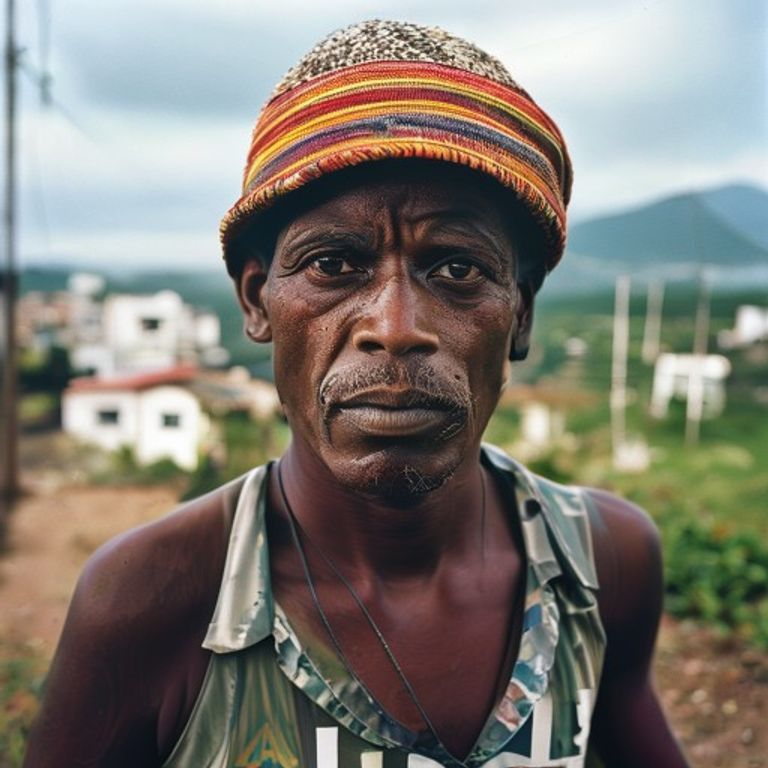
The first independent black republic in the world, Haiti was born from a unique revolution of enslaved people in history. It shares the island of Hispaniola with the Dominican Republic. Despite facing severe natural and political challenges, it possesses a vibrant culture, expressed in naive art, Voodoo religion, and the Citadelle Laferrière, a mountain fortress symbolizing freedom and resistance.
⚠️ Research conducted with the aid of Deep Research may be subject to referential ambiguity.
🖥️Clean HTML code using proprietary tools.
👥 Research by Guilherme Felipe, Curation by Sílvio Lôbo
The Creole Soul: An Essay on Haitian Literature
Haitian literature, a multifaceted mirror of its rich and complex history, pulses with the strength of a cultural identity forged in resistance, celebration, and the incessant search for self-knowledge. Born from the most successful slave revolution in history, Haiti's literary production carries in its veins the echo of the struggle for freedom, the African heritage mixed with French influence, and the nuances of life on an island marked by socioeconomic challenges, yet endowed with unparalleled spirituality and creativity.
Roots and Resistance: The Origins of Literary Expression
The beginnings of literary expression in Haiti, though not in strictly "national" terms in the modern sense, date back to the colonial era. The first manifestations, often in French, were produced by a literate elite, but the true driving force of Haitian literature lies in its ability to overflow the boundaries of the colonizing language and incorporate the sounds, rhythms, and cosmologies of the people. Haitian Creole (Kreyòl Ayisyen), spoken by the vast majority of the population, gradually became a powerful literary vehicle, an act of cultural affirmation and linguistic decolonization.
The Voice of Poets and Novelists: Key Authors and Works
Throughout the 20th and early 21st centuries, Haiti has given the world a constellation of literary talents who have captured the essence of the Haitian experience. Poetry, in particular, has been a pillar, expressing the passion, pain, and hope of the people.
- Émile Ollivier (1940-2000): Although he lived much of his life abroad, Ollivier is one of the most important names. His novel "Mille Épisodes de la vie d'un homme" (A Thousand Episodes in the Life of a Man) is a monumental work that explores Haitian identity and exile.
- René Philoctète (1933-1972): One of the most influential poets of the Renouveaux movement, his work, such as "Sérénade pour un noir" (Serenade for a Black Man), is marked by lyrical strength and social criticism.
- Frankétienne (b. 1936): A multifaceted artist – writer, painter, playwright – Frankétienne is an iconic figure. His work in Creole, such as "Dezafi" (The Challenge), is considered a landmark in Creole literature, challenging conventions and exploring themes of resistance and spirituality.
- Simone Schwarz-Bart (1939-2018): With her husband André Schwarz-Bart, she wrote the acclaimed "Pluie et vent sur Télumée Miracle" (Rain and Wind on Télumée Miracle), a novel that narrates the life of a strong woman amidst adversity, celebrating resilience and popular wisdom.
- Marie-Denise Coll-Prézeau (b. 1944): A poet and essayist, her work often addresses the natural beauty of Haiti and the strength of its women.
- Yanick Lahens (b. 1953): A contemporary novelist who explores the complexity of Haiti's family, social, and historical relationships in works such as "Faubourg des Songes" (Faubourg of Dreams).
Historical Literary Movements: From Renaissance to Social Criticism
Haitian literary history is punctuated by movements that reflect the aspirations and transformations of society:
- The Literary Renaissance (1940s): This movement, with figures like Jean-F. Brierre, demanded greater authenticity in literature, promoting the use of Creole and the exploration of intrinsically Haitian themes, such as Voodoo and peasant culture.
- The Renouveaux Movement (1960s): Influenced by racial issues and the search for an African identity, this movement, with authors like René Philoctète and Frankétienne, sought to break away from European models and create more engaged and nationalist art.
- Contemporary Literature: More recent authors continue to expand horizons, addressing themes such as the diaspora, migration, gender issues, and the impacts of globalization, often using Creole as a central element of expression.
Important Publications and the Power of the Written Word
In addition to individual works, Haiti has seen the emergence of literary magazines and publishing houses that play a crucial role in disseminating written culture:
- Literary Magazines: Publications like "Chemin de Fer" and other periodic initiatives, even if ephemeral due to the difficulties faced, have been vital in giving voice to new talents and promoting literary debate.
- Creole Editions: The development of publishing houses dedicated to publishing in Creole has been fundamental in democratizing access to literature and legitimizing the language as a vehicle for artistic and intellectual expression.
Haitian Cultural Identity on Stage: Recurring Themes and Motifs
Haitian literature is inseparable from its vibrant and complex cultural identity. The themes and motifs that emerge from the pages of its books offer a window into the soul of the country:
- Resilience and Resistance: The struggle for freedom and the ability to rise again in the face of adversity are central themes, echoing the history of the revolution and the ongoing challenges faced by Haiti.
- Spirituality and Voodoo: Voodoo, often misunderstood by outsiders, is portrayed in its spiritual and cultural depth, as a belief system that shapes the worldview and social practices.
- The Diaspora and Exile: Many authors address the experience of migration, longing for their homeland, and the search for a place in the world, reflecting the reality of a significant portion of the Haitian population.
- Nature and the Land: Haiti's lush beauty, its landscapes, and the people's intrinsic relationship with the land are often celebrated, contrasting with material difficulties.
- The Power of the Word and Orality: Haiti's rich oral tradition intertwines with written literature, where tales, proverbs, and popular narratives take on new forms and meanings.
In summary, Haitian literature is a living testament to the resilience, creativity, and depth of a culture that, despite all adversities, continues to produce works of rare beauty and significance. It is a literature that invites reflection, empathy, and the discovery of a literary universe as rich as the island itself that inspires it.





