



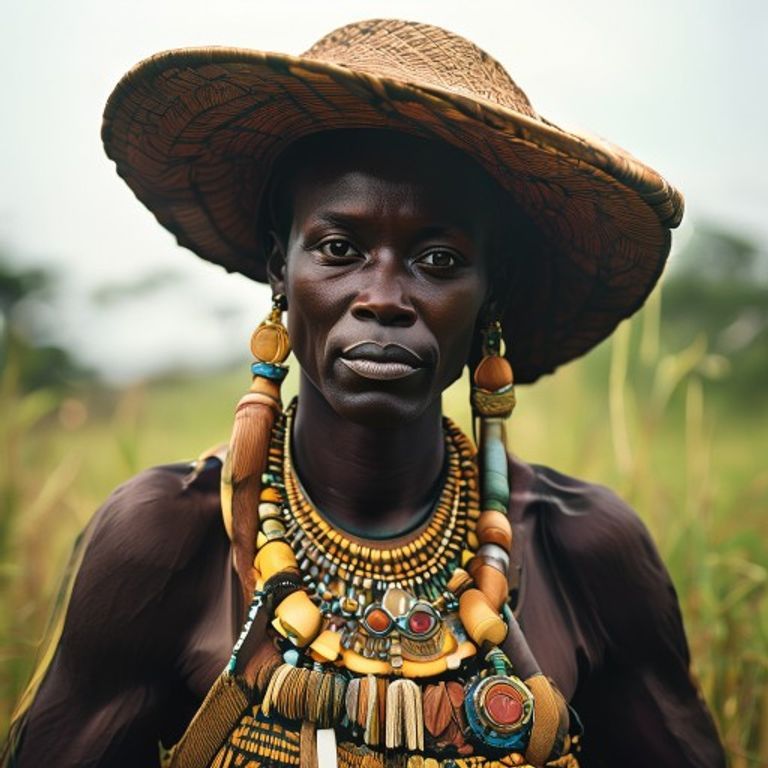
The only African country with Spanish as an official language, it is small but rich in oil. Composed of a continental part and volcanic islands like Bioko (where the capital, Malabo, is located), it exhibits modern infrastructure that contrasts with social inequality. Governed by a long-standing regime, it has dense rainforests and well-preserved Spanish colonial architecture.
⚠️ Research conducted with the aid of Deep Research is subject to referential ambiguity.
🖥️Clean HTML code using a proprietary tool.
👥Research by Guilherme Felipe, Curation by Sílvio Lôbo
The Literature of Equatorial Guinea: Silenced Voices and Cultural Resistance
The literature of Equatorial Guinea, despite its rich cultural tapestry and history marked by colonization and subsequent dictatorship, emerges as a fascinating and, at times, challenging field of study. Characterized by intermittent production and dissemination difficulties, the country's literary work reflects the complexities of its identity, the wounds of the past, and the incessant search for its own voice on the African and global stage.
Historical Context and Influences
Spanish colonial history left an indelible mark on the cultural and linguistic formation of Equatorial Guinea. Spanish, as the official language, became the primary vehicle for literary expression, although the influence of local languages such as Fang and Bubi is palpable in themes and imagery. The post-independence period, often plagued by political repression and lack of infrastructure, hindered the flourishing of consolidated literary movements and large-scale publication of works. However, this very adversity catalyzed a literature of resistance, where words became weapons of denunciation and preservation of memory.
Key Authors and Their Contributions
The literary production of Equatorial Guinea, though not extensive in quantity, is notable for the depth and relevance of its authors. Many of them emerged in forced exile, becoming spokespersons for a silenced nation.
- León Mba Bikogo: Considered one of the pioneers of Equatorial Guinean prose, his works explore the complexities of post-colonial society and the ills of dictatorship.
- Maximiliano Mbá: His poetry is a cry for freedom and a reclamation of African cultural identity, often confronting colonial legacies and social injustices.
- Justo Bolevia: With a multifaceted body of work, Bolevia addresses themes such as migration, national identity, and the pursuit of a more just future. His writing is marked by a strong lyrical and reflective tone.
- Concepción Abeso: One of the few prominent female voices, Abeso brings to literature themes related to the condition of women, traditional culture, and the challenges of modern life.
- Donato Ndongo-Miyono: One of the most celebrated names, Ndongo-Miyono is a sharp chronicler of Equatorial Guinean reality. His work, often in Spanish but with strong African resonance, exposes the wounds of authoritarian power and the people's resistance.
Literary Movements and Publications
The absence of organized and structured literary movements, as seen in other African countries, is a striking characteristic. However, it is possible to identify trends and influences that have shaped literary production:
- Literature of Exile: A significant portion of the significant production occurred outside the borders of Equatorial Guinea, with authors writing in countries such as Spain, France, and Cameroon. This literary diaspora allowed for greater freedom of expression and access to publications.
- Themes of Identity and History: The search for national identity, the re-elaboration of historical memory, criticism of colonialism and dictatorship are recurring themes.
- Fragmented Publications: The difficulty of publication within the country limited the reach and circulation of works. Literary magazines and anthologies, when they emerged, often had a short lifespan. Independent production and self-publishing, especially in exile, became important avenues.
Local Cultural Identity Reflected in Books
Equatorial Guinean literature is a mirror of the country's complex cultural identity, marked by the fusion of African traditions and European influences:
- Traditional Worldviews: Myths, legends, rituals, and beliefs of the various ethnic groups (Fang, Bubi, Kombe, Annobonese) permeate the narratives, lending a mystical and profound character to the works.
- Reclamation of Language and Orality: Although Spanish is the official language, the musicality, cadence, and proverbs of the mother tongues often shine through in the writing, creating a hybrid and authentic language.
- Social and Political Criticism: Oppression, corruption, social inequality, and the struggle for freedom are constant themes, revealing the resilience and hope of a people seeking to assert their dignity.
- Landscape and Nature: The lush biodiversity of Equatorial Guinea, its dense forests, rivers, and coastline, often serve as settings and metaphors in literary works, connecting characters to the land and their roots.
In summary, the literature of Equatorial Guinea is a tapestry woven with threads of pain, resistance, and a profound search for self-affirmation. Despite historical challenges and limited visibility, the voices emerging from this territory continue to enrich the African literary landscape, offering raw and inspiring reflections on the human condition and the complexity of cultural identity in a constantly changing world.





