



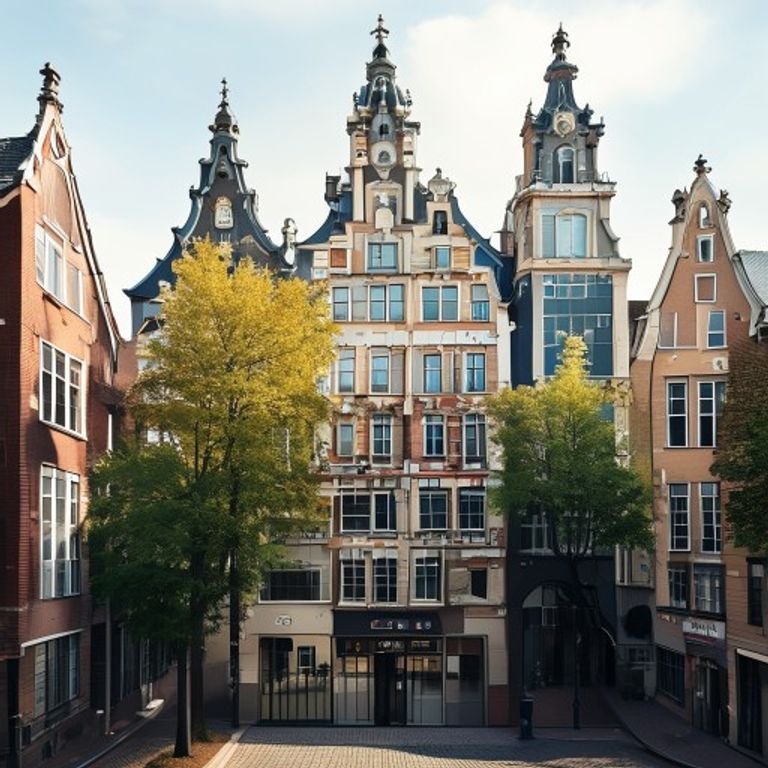
Belgian Literature: A Mosaic of Voices and Identities
Belgium, a country of rich historical and cultural tapestry, is not only a stage for significant political and economic events but also fertile ground for the flourishing of vibrant and multifaceted literature. Its geography, positioning it between the great European cultural powers, and its complex linguistic reality, divided between Dutch (in the north, Flanders), French (in the south, Wallonia), and German (in a small region to the east), intrinsically shape its literary production, creating a mosaic of voices and identities that defies simplistic categorization.
Historical Roots and Early Signs of Literary Identity
The origins of Belgian literature are intrinsically linked to the literary traditions of its neighbors. However, as early as the 18th and 19th centuries, figures began to emerge who, despite writing in languages dominant in Europe, manifested a sensibility and a gaze focused on the Belgian reality. Romanticism, with its emphasis on national identity and folklore, found an echo in Belgium, especially after its independence in 1830. Poets like Charles Deulin (Francophone) and writers who explored Flemish traditions in Dutch began to chart a distinctive literary path.
The 20th Century: The Explosion of Movements and Linguistic Diversity
The 20th century was undoubtedly a period of greatest effervescence for Belgian literature. Linguistic diversity became a driving force, resulting in two distinct, yet often interconnected, literary traditions: French-language literature and Dutch-language (Flemish) literature.
French-Language Literature: Elegance, Existentialism, and the Grotesque
In the Francophone sphere, Belgium has produced internationally renowned authors who explored everything from formal elegance to the depths of existentialism and the grotesque. Some of the most prominent names include:
- Georges Simenon: World-famous for his series of detective novels featuring Inspector Maigret, Simenon transcended the genre, exploring the complexity of the human soul in works that portray everyday life, loneliness, and moral conflicts. His work is a faithful portrait of a certain Belgian atmosphere, urban and melancholic.
- Marguerite Yourcenar: Although she spent much of her life in France, Yourcenar was born in Belgium, and her work, marked by erudition and psychological depth, dialogues with European history and culture, with resonances that can be felt in a Belgian context.
- Henri Michaux: One of the great innovators of the 20th century, Michaux explored language as a means to unravel the mysteries of consciousness and perception. His experimental poetry and prose, often influenced by travels and experiences with psychedelic substances, challenged the boundaries of artistic expression.
- Amélie Nothomb: One of the most recognized contemporary voices, Nothomb captivates with her ironic, direct, and surprisingly profound style. Her novels, often short and incisive, address themes such as identity, otherness, and the search for meaning with a peculiar humor and a uniquely Belgian worldview.
Dutch-Language (Flemish) Literature: Realism, Social Criticism, and the Search for Identity
In Flanders, literature in Dutch has followed an equally fascinating path, marked by the consolidation of its own cultural identity and the exploration of specific social and historical realities. Highlights include:
- Stijn Streuvels: One of the pillars of modern Flemish literature, Streuvels masterfully portrayed rural life and peasant traditions, with a rich and evocative language that celebrated the land and its people.
- Louis Paul Boon: Known for his irreverent style and transgressive approach, Boon was a keen chronicler of urban life, sexuality, and Flemish history, blending realism with elements of fantasy and social satire.
- Hugo Claus: Considered one of the greatest Belgian writers of the 20th century, Claus was a poet, novelist, playwright, and filmmaker. His work, often marked by emotional intensity and the exploration of language in its various facets, addressed themes such as war, love, death, and Flemish identity in a constantly changing European context.
- Conrad Busken Huet: Although more associated with literary criticism, his prose work and essays were fundamental to the reflection on Flemish literature and identity in the late 19th and early 20th centuries.
Literary Movements and Important Publications
Throughout the 20th century, various literary movements shaped Belgian production. Surrealism had a significant impact, not only on visual art but also on literature, with authors exploring the unconscious and the irrational. Publications such as literary magazines and anthologies played a crucial role in disseminating new voices and discussing ideas. Publishers, both Francophone and Flemish, were essential in consolidating these traditions.
In the more recent period, Belgian literature has stood out for its ability to engage with contemporary issues such as globalization, immigration, and the identity crisis. The fluidity between different regions and languages, while sometimes complex, has generated a rich exchange of ideas and influences.
Cultural Identity Reflected in Books
Belgian cultural identity, so rich and contradictory, is a common thread present in much of its literary production. This identity manifests in various ways:
- Linguistic Duality: The coexistence of Dutch and French (and to a lesser extent, German) is not just a linguistic fact but an intrinsic element of Belgian identity, often explored in novels depicting life in bilingual families, tensions between communities, or the search for a unified national identity.
- Historical Influence: Belgium, marked by centuries of foreign domination and a glorious yet turbulent past, has its history as an inexhaustible source of inspiration. Historical novels, works revisiting periods such as the Industrial Revolution, the World Wars, or the colonial period, are common.
- Everyday Life and Melancholy: Many Belgian works capture a certain atmosphere of melancholy and introspection, an attentive gaze at the details of everyday life, silent dramas, and human relationships in their subtlest nuances.
- Humor and the Grotesque: Belgian humor, often dry and ironic, with a penchant for the absurd and the grotesque, also finds space in literature, serving as a tool for social criticism or for exploring darker aspects of the human condition.
- Connection with Europe: Being a country located in the heart of Europe, Belgian literature frequently dialogues with European cultural and philosophical currents, positioning itself as a convergence point for different influences.
In summary, Belgian literature is a fascinating and constantly expanding universe. By delving into its pages, we discover not only engaging stories and memorable characters but also a mirror of the complexities, beauties, and contradictions of a country that, in its diversity, finds a unique strength and an unmistakable literary voice.





