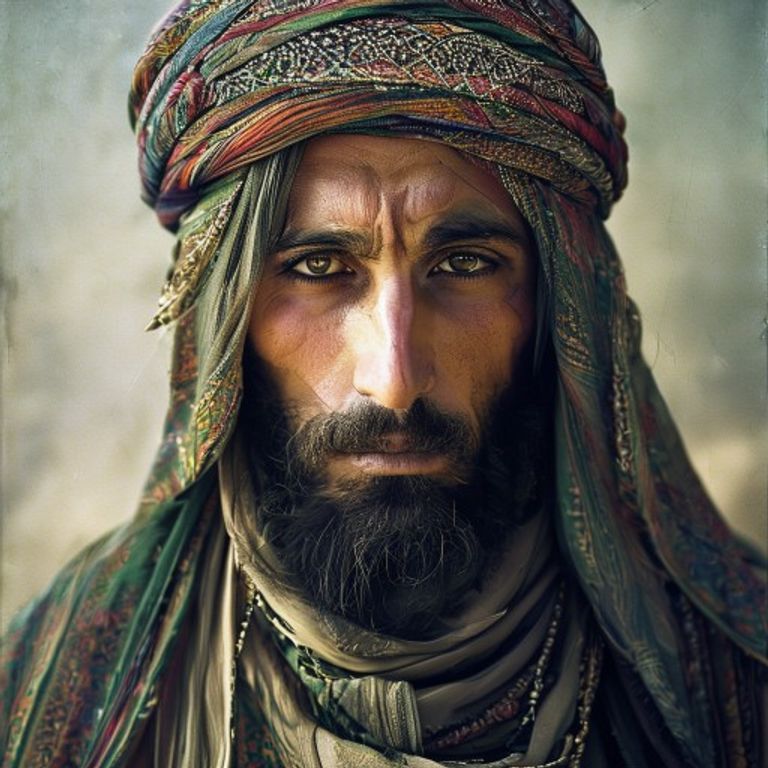
Crossroads of Asia, Afghanistan is a land of stark mountainous beauty and turbulent history. Known as the 'graveyard of empires,' it boasts a resilient and deep tribal culture, famed for its poetry and the Pashtunwali code of honor. Rich in unexplored minerals like lithium, the country constantly struggles for internal stability and international recognition.
Echoes of the Silk Road: A Journey Through Afghan Literature
Afghan literature, much like its geography, is a terrain of rugged beauty and profound resilience. Often reduced in Western headlines to a stage for perpetual conflict, the country possesses an ancient literary tradition that has been the cradle for some of the greatest poets in the Islamic world. To understand the Afghan soul, one must read beyond the war reports and delve into its verses.
1. Historical Context: The Crossroads of Asia
Afghanistan has never been an isolated country; it is the "crossroads of Asia." Situated at the heart of the ancient Silk Road, the territory served as a cultural corridor where Indian mysticism, Greek philosophy (brought by Alexander the Great), Persian Zoroastrianism, and later, Arab Islam converged.
This privileged geographical position, however, brought a curse: the inevitability of invasions. From Genghis Khan to the British and Soviet empires, and more recently the American intervention, Afghan history is marked by territorial defense. Consequently, national literature has developed as a literature of resistance, where the sword and the pen walk together, and tragedy is a constant backdrop.
2. The Linguistic Question: Two Voices, One Nation
There is no single "Afghan language." The country's literature is defined by a historical diglossia that shapes its cultural output:
-
Dari (Afghan Persian): Historically the language of the court, administration, and high culture. It is the bridge connecting Afghanistan to the vast Persian literary tradition (which includes Iran and Tajikistan). It is the language of refined prose and classical poetry.
-
Pashto: The language of the country's largest ethnic group (the Pashtuns). For centuries, it was considered a rural and tribal language, but it possesses a robust and vigorous oral tradition, focused on honor and the land.
Most Afghan intellectuals are bilingual, and modern literature transitions between the urban sophistication of Dari and the earthy strength of Pashto.
3. Roots and the Strength of Oral Tradition
Before being written, Afghan literature was sung and recited. Historical illiteracy rates made orality the primary vehicle for cultural preservation.
Landays: The Cry of Women
The most fascinating form of this tradition is Landays. These are couplets (two-line poems) in Pashto, created anonymously, almost always by women. They do not rhyme in the Western sense but possess a strong drum-like rhythm.
Contrary to the image of silent submission often associated with Afghan women, Landays are rebellious, ironic, and sometimes erotic or violent. They speak of forbidden love, the pain of losing children in war, or contempt for cowardly husbands.
Example of a Landay: "May your plane crash and you die So that I don't have to wait for news from the front lines."
The Moshaira
Poetry is a social sport in Afghanistan. The Moshaira is a poetry competition or gathering that can bring together dozens to thousands of people, where poets recite their verses and the audience responds with emotion. Even during the darkest periods of conflict, Moshairas continued to take place, serving as collective therapy.
4. The Classical Canon: Pillars of Identity
Three giants support the roof of Afghan literature:
-
Jalaluddin Balkhi (Rumi): Although Turkey and Iran claim him, Rumi was born in Balkh, in present-day Afghanistan, in 1207. He is the supreme voice of Sufism (Islamic mysticism). His work, the Masnavi, teaches that love is the force that connects man to the divine, transcending religious boundaries.
-
Khushal Khan Khattak (17th Century): The embodiment of the Pashtun ideal. He was a tribal chief and warrior who fought against the Mughal Empire but was also a prolific poet. His verses preach the unity of Afghan tribes and bravery. He is the quintessential "warrior-poet."
-
Rahman Baba (17th Century): The mystical counterpoint to Khushal. Rahman Baba was an ascetic who preached peace, tolerance, and divine love above tribal disputes. His poems are revered to this day, and his verses are often used in folk songs.
5. Recurring Themes and Identity
Afghan literature is not monolithic, but certain themes echo through the centuries:
-
Sufism and Mysticism: The search for inner truth and the metaphor of "wine" as divine intoxication.
-
Pashtunwali: The tribal code of honor that dictates strict rules of hospitality (Melmastia), revenge (Badal), and protection (Nanawatai). Many literary tragedies arise from the conflict between individual desire and the demands of this code.
-
Longing (Exile): With millions of Afghans living as refugees for the past four decades, the theme of the "lost homeland" and nostalgia for times of peace has become ubiquitous.
6. The Contemporary Scene and the Diaspora
The Soviet invasion (1979) and the rise of the Taliban created a rupture in literary production.
The Voice of the Diaspora
The Western world "discovered" Afghanistan through authors writing in European languages.
-
Khaled Hosseini: With The Kite Runner and A Thousand Splendid Suns, Hosseini (writing in English) became the most important cultural bridge of the 21st century. He humanized the conflict, focusing on family relationships and redemption.
-
Atiq Rahimi: Writing in Persian and French, Rahimi (winner of the Goncourt Prize for The Patience Stone) offers a rawer and more experimental view, often addressing sexual and religious taboos.
Internal Literature
Within the country, literature survives under precarious conditions. Young authors use short fiction and literary journalism to document life under extremism. There is a growing movement of clandestine women's literature, where women write and share stories online or in private circles, defying prohibitions on education and women's voices.
7. Conclusion
Afghan literature is a testament that culture can survive where institutions fail. From the courts of Balkh to refugee camps in Pakistan, and from the palaces of Kabul to diaspora apartments in California, the written and spoken word remains the thread that holds Afghan identity together.
Reading Afghan literature is discovering that, behind the dust of war, there is a secret garden of poetry, where honor, love, and hope resist any empire.

Editor's Note: Research conducted with the assistance of Deep Research is subject to referential ambiguity and may confuse facts and people. Although Sílvio de Souza Lôbo Júnior has reviewed the material to resolve such inconsistencies, it is advised that inaccuracies may persist. We count on your help for clarifications and suggestions. Speak with the Editor.
Crossroads of Asia, Afghanistan is a land of stark mountainous beauty and turbulent history. Known as the 'graveyard of empires,' it boasts a resilient and deep tribal culture, famed for its poetry and the Pashtunwali code of honor. Rich in unexplored minerals like lithium, the country constantly struggles for internal stability and international recognition.
Echoes of the Silk Road: A Journey Through Afghan Literature
Afghan literature, much like its geography, is a terrain of rugged beauty and profound resilience. Often reduced in Western headlines to a stage for perpetual conflict, the country possesses an ancient literary tradition that has been the cradle for some of the greatest poets in the Islamic world. To understand the Afghan soul, one must read beyond the war reports and delve into its verses.
1. Historical Context: The Crossroads of Asia
Afghanistan has never been an isolated country; it is the "crossroads of Asia." Situated at the heart of the ancient Silk Road, the territory served as a cultural corridor where Indian mysticism, Greek philosophy (brought by Alexander the Great), Persian Zoroastrianism, and later, Arab Islam converged.
This privileged geographical position, however, brought a curse: the inevitability of invasions. From Genghis Khan to the British and Soviet empires, and more recently the American intervention, Afghan history is marked by territorial defense. Consequently, national literature has developed as a literature of resistance, where the sword and the pen walk together, and tragedy is a constant backdrop.
2. The Linguistic Question: Two Voices, One Nation
There is no single "Afghan language." The country's literature is defined by a historical diglossia that shapes its cultural output:
-
Dari (Afghan Persian): Historically the language of the court, administration, and high culture. It is the bridge connecting Afghanistan to the vast Persian literary tradition (which includes Iran and Tajikistan). It is the language of refined prose and classical poetry.
-
Pashto: The language of the country's largest ethnic group (the Pashtuns). For centuries, it was considered a rural and tribal language, but it possesses a robust and vigorous oral tradition, focused on honor and the land.
Most Afghan intellectuals are bilingual, and modern literature transitions between the urban sophistication of Dari and the earthy strength of Pashto.
3. Roots and the Strength of Oral Tradition
Before being written, Afghan literature was sung and recited. Historical illiteracy rates made orality the primary vehicle for cultural preservation.
Landays: The Cry of Women
The most fascinating form of this tradition is Landays. These are couplets (two-line poems) in Pashto, created anonymously, almost always by women. They do not rhyme in the Western sense but possess a strong drum-like rhythm.
Contrary to the image of silent submission often associated with Afghan women, Landays are rebellious, ironic, and sometimes erotic or violent. They speak of forbidden love, the pain of losing children in war, or contempt for cowardly husbands.
Example of a Landay: "May your plane crash and you die So that I don't have to wait for news from the front lines."
The Moshaira
Poetry is a social sport in Afghanistan. The Moshaira is a poetry competition or gathering that can bring together dozens to thousands of people, where poets recite their verses and the audience responds with emotion. Even during the darkest periods of conflict, Moshairas continued to take place, serving as collective therapy.
4. The Classical Canon: Pillars of Identity
Three giants support the roof of Afghan literature:
-
Jalaluddin Balkhi (Rumi): Although Turkey and Iran claim him, Rumi was born in Balkh, in present-day Afghanistan, in 1207. He is the supreme voice of Sufism (Islamic mysticism). His work, the Masnavi, teaches that love is the force that connects man to the divine, transcending religious boundaries.
-
Khushal Khan Khattak (17th Century): The embodiment of the Pashtun ideal. He was a tribal chief and warrior who fought against the Mughal Empire but was also a prolific poet. His verses preach the unity of Afghan tribes and bravery. He is the quintessential "warrior-poet."
-
Rahman Baba (17th Century): The mystical counterpoint to Khushal. Rahman Baba was an ascetic who preached peace, tolerance, and divine love above tribal disputes. His poems are revered to this day, and his verses are often used in folk songs.
5. Recurring Themes and Identity
Afghan literature is not monolithic, but certain themes echo through the centuries:
-
Sufism and Mysticism: The search for inner truth and the metaphor of "wine" as divine intoxication.
-
Pashtunwali: The tribal code of honor that dictates strict rules of hospitality (Melmastia), revenge (Badal), and protection (Nanawatai). Many literary tragedies arise from the conflict between individual desire and the demands of this code.
-
Longing (Exile): With millions of Afghans living as refugees for the past four decades, the theme of the "lost homeland" and nostalgia for times of peace has become ubiquitous.
6. The Contemporary Scene and the Diaspora
The Soviet invasion (1979) and the rise of the Taliban created a rupture in literary production.
The Voice of the Diaspora
The Western world "discovered" Afghanistan through authors writing in European languages.
-
Khaled Hosseini: With The Kite Runner and A Thousand Splendid Suns, Hosseini (writing in English) became the most important cultural bridge of the 21st century. He humanized the conflict, focusing on family relationships and redemption.
-
Atiq Rahimi: Writing in Persian and French, Rahimi (winner of the Goncourt Prize for The Patience Stone) offers a rawer and more experimental view, often addressing sexual and religious taboos.
Internal Literature
Within the country, literature survives under precarious conditions. Young authors use short fiction and literary journalism to document life under extremism. There is a growing movement of clandestine women's literature, where women write and share stories online or in private circles, defying prohibitions on education and women's voices.
7. Conclusion
Afghan literature is a testament that culture can survive where institutions fail. From the courts of Balkh to refugee camps in Pakistan, and from the palaces of Kabul to diaspora apartments in California, the written and spoken word remains the thread that holds Afghan identity together.
Reading Afghan literature is discovering that, behind the dust of war, there is a secret garden of poetry, where honor, love, and hope resist any empire.
Editor's Note: Research conducted with the assistance of Deep Research is subject to referential ambiguity and may confuse facts and people. Although Sílvio de Souza Lôbo Júnior has reviewed the material to resolve such inconsistencies, it is advised that inaccuracies may persist. We count on your help for clarifications and suggestions. Speak with the Editor.