



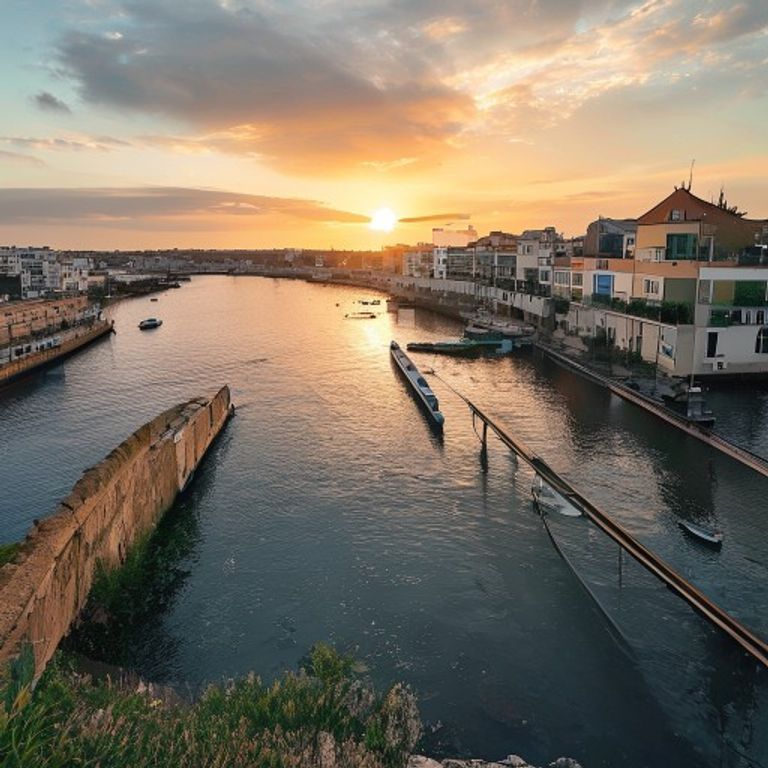
This municipality in the State of Piauí, the state's first capital, is a center for the preservation of historical and literary memory, serving as inspiration for works that rescue the colonial past and secular religious traditions.
⚠️ Research elaborated with the aid of Deep Research is subject to referential ambiguity.
🖥️Clean HTML code with the use of a proprietary tool.
👥 Research by Guilherme Felipe, Curation by Sílvio Lôbo
Literature in Oeiras: A Mosaic of Voices, History, and Landscapes
The region of Oeiras, nestled on the Portuguese Atlantic coast, between the capital and the Cascais line, is not just a geographical space of transition, but a fertile territory for the emergence and development of a literature that reflects its historical uniqueness, the beauty of its landscape, and the complexity of its cultural identity. Oeiras, as a municipality, has served and continues to serve as a stage, home, and inspiration for some of the most prominent figures in Portuguese literature, shaping and being shaped by the literary currents that have traversed the 20th century and extend to the present day.
Oeiras as a Space for Creation and Inspiration
Oeiras offers a multifaceted scenario that translates into a rich literary tapestry. From the imposing Tagus estuary, where the river meets the ocean, to the historic palaces and gardens, passing through the beaches and the daily lives of its inhabitants, the municipality presents a fascinating duality. It is a place of Pombaline memory, of 18th-century grandeur, but also of growing modernity and urbanity. This dichotomy – between opulent past and dynamic present, between coastal bucolism and metropolitan proximity – resonates deeply in the works of authors who lived and created there, making Oeiras not just a place of passage, but a silent protagonist in countless narratives.
Major Figures: Authors Born or Based There
Oeiras' connection to literature is inseparable from names that have indelibly marked Portuguese literature. While many were not born in Oeiras, they chose it as a refuge, home, or source of inspiration, imbuing their works with the spirit of the place.
- Fernando Pessoa (1888-1935): Although born in Lisbon, Fernando Pessoa resided in Paço de Arcos, in the municipality of Oeiras, during crucial periods of his life and work. His stay by the Tagus, the introspective atmosphere, and the proximity to the sea possibly influenced the genesis of some of his existential and lyrical concerns. The riverside landscape and the light of Oeiras subtly echo in his poetry, which so often delves into the national soul and the human condition. Pessoa's presence in Oeiras cements the municipality's connection to Portuguese Modernism.
- José Saramago (1922-2010): The Nobel Prize in Literature had a deep connection to Oeiras. Saramago lived much of his adult life in Azinhaga de Santa Comba, in Oeiras, and it was there that he wrote fundamental works such as Baltasar and Blimunda, The Year of the Death of Ricardo Reis, and The Gospel According to Jesus Christ. His residence in Oeiras, a period of intense literary production, gives the municipality a central role in the biography and creation of one of the greatest Portuguese-language writers. His prose, which blends history with fiction, and his critical view of society find echoes in the landscape and daily life of Oeiras, which became a witness to his creative genius.
- Manuel da Fonseca (1911-1993): Although born in Santiago do Cacém, this important neo-realist writer settled in Oeiras in the final phase of his life. His work, marked by social denunciation and the portrayal of the deep Portugal, contrasts with the more cosmopolitan image of Oeiras, but his presence enriches the municipality's literary panorama, linking it to a current of strong social intervention.
- Other Authors: Many other writers, poets, and intellectuals found in Oeiras a place to live and create, even if their connection may not be as biographically significant as that of Pessoa or Saramago. The proximity to Lisbon and the quality of life in the municipality have attracted and continue to attract artists from various fields.
Literary Movements and Currents
Oeiras, due to its strategic location and the presence of major figures, did not generate its own isolated literary movement, but rather functioned as a hub for the radiation and reception of various currents that marked Portuguese literature:
- Modernism: Fernando Pessoa's stay in Paço de Arcos at the beginning of the 20th century places Oeiras on the map of Portuguese Modernism. The magazine Orpheu, although published in Lisbon, and the environment of rupture and experimentation that characterized this movement, had Pessoa as its greatest exponent, and his residence in Oeiras during this phase of his life makes the municipality an epicenter, albeit secondary, of this literary revolution.
- Neo-realism: The presence of authors like Manuel da Fonseca in Oeiras, even if late, refers to the social and political concerns of Neo-realism. Social criticism, attention to the disadvantaged, and the representation of Portuguese reality were themes addressed by authors who, in some way, had contact with the municipality.
- Post-War and Contemporaneity: The second half of the 20th century and the beginning of the 21st century saw Oeiras consolidate itself as a place of residence for writers. The creative freedom after April 25th, the diversity of genres and styles, and the exploration of new themes – from intimacy to historical fiction – find echoes in the works of authors who live there. Contemporary literature in Oeiras reflects the plurality of voices and the complexity of the current world.
Important Publications and Cultural Dissemination
Although Oeiras is not traditionally a large publishing center, its connection to literature is manifested in various ways:
- Authors' Works: The works of Saramago, Pessoa, and others, written in Oeiras or under its influence, are the most important publications linking the municipality to literary history.
- Local Initiatives: The Oeiras City Council has invested in culture, with libraries (such as the Oeiras Municipal Library or the Algés Municipal Library), occasional literary awards, and cultural events that promote reading and writing. These spaces and initiatives are crucial for literary dissemination at the local level.
- Studies and Essays: There are numerous academic studies and critical essays that address the life and work of authors connected to Oeiras, highlighting the municipality's importance in their creative journey.
- Local Magazines and Newspapers: Over time, local and regional publications may have served as platforms for young writers or for the discussion of literary themes, contributing to the region's cultural vitality.
Oeiras' Cultural Identity Reflected in Books
Oeiras' identity, a fusion of rurality and urbanity, history and modernity, sea and land, finds a deep resonance in literature:
- The Landscape: The Tagus River, the beaches (Torre, Santo Amaro), the gardens (such as those of the Quinta Real de Caxias or the Palácio do Marquês de Pombal), and the characteristic coastal light are often elements of scenery or inspiration. The contemplation of the river or the sea, the Atlantic breeze, the lush vegetation of its parks and estates, all contribute to an atmosphere that can be one of introspection, melancholy, or exaltation.
- History: The indelible mark of the Marquis of Pombal, with his palace and his enlightened visions, is present in the collective imagination of Oeiras. This legacy of grandeur, but also of pragmatism and modernity for its time, can be explored as a backdrop for reflections on power, progress, and memory.
- Social Transition: From a fishing and agricultural village to a cosmopolitan and technological municipality, Oeiras has undergone a profound social transformation. This metamorphosis, with the arrival of new populations, the development of infrastructure, and the change in habits, offers a vast field for literature that explores social dynamics, generational conflicts, and the search for identity in a constantly changing world.
- Oeiras as a Liminal Space: Its position between Lisbon and Cascais, between the urban center and the coastline, gives Oeiras a liminal character. It is a place of borders, of encounters and misunderstandings, of passage and permanence. This condition of "in-between places" can be read in works that explore duality, fragmented identity, and the search for a sense of belonging.
Conclusion
Literature in Oeiras is a vibrant reflection of a municipality rich in history, natural beauty, and cultural diversity. Through the voices of Fernando Pessoa, José Saramago, and many others, Oeiras emerges not just as a setting, but as an active element in Portuguese literary creation. Its cultural identity, woven between the Pombaline legacy and modernity, between the Atlantic and the Tagus, between the intimacy of home and the vastness of the world, continues to inspire writers and offer readers a portal to understanding a Portugal in constant reinvention. Oeiras is thus a fundamental and continuously written chapter in the grand work of Lusitanian literature.





