



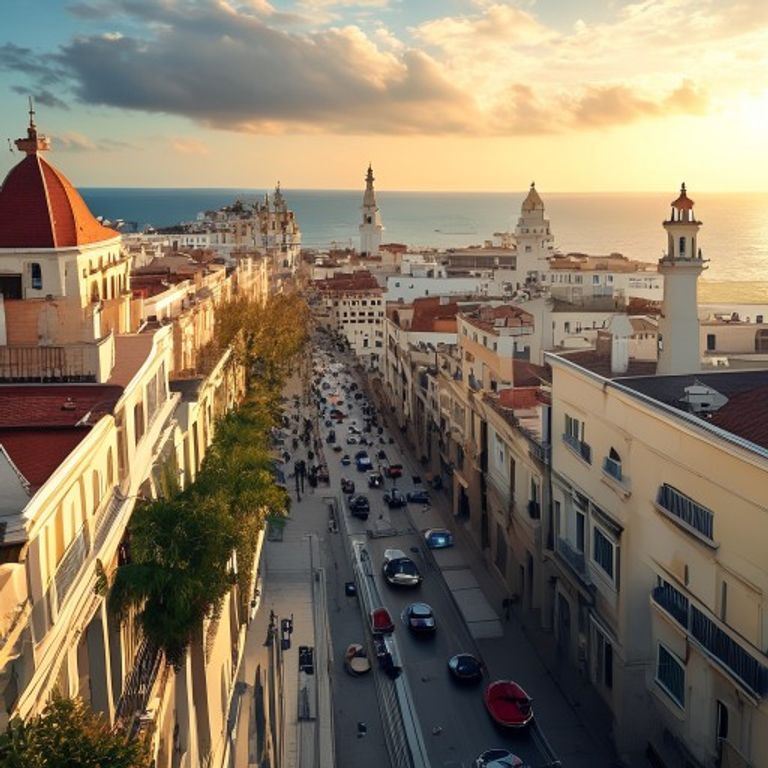
This municipality in the State of Pará was the setting for the chronicles and short stories of Dalcídio Jurandir, who in his 'Ciclo do Extremo Norte' masterfully described the life of the Marajoara people and the capital of Pará.
⚠️ Research elaborated with the assistance of Deep Research is subject to referential ambiguity.
🖥️Clean HTML code using a proprietary tool.
👥 Research by Guilherme Felipe, Curation by Sílvio Lôbo
The Voice of Rain and River: An Essay on Literature in Belém
The literature of Belém, the capital of Pará, emerges as a fascinating and complex microcosm within the vast Brazilian literary landscape. Rooted in Amazonian exuberance and shaped by centuries of cultural exchange, Belém's literary production reflects the unique identity of a port city that is, at once, a gateway to the forest and a link to the world. This essay seeks to outline the main authors, movements, publications, and the intrinsic relationship between literary production and local cultural identity, revealing the richness of a universe that pulses between the dense green of the forest and the lament of the tides.
Historical Roots and Early Movements
The beginnings of Belém's literature are intertwined with the city's own formation and economic rise, especially during the "Rubber Cycle" (late 19th and early 20th centuries). The opulence of the Amazonian Belle Époque fostered a vibrant cultural environment, with the founding of theaters, libraries, and the circulation of newspapers that provided space for literary production. During this period, European influence was marked, and the first Pará literary figures orbited between Parnassianism and Symbolism, while still seeking the initial nuances of regionalism.
Great names like José Veríssimo (though from Óbidos, his intellectual career was consolidated in Belém and Rio) and Bruno de Menezes emerged in this scenario. Veríssimo, better known as a critic and historian of Brazilian literature, already showed a keen eye for regional uniqueness in his early works. Bruno de Menezes, in turn, represented an important transition; a Symbolist poet, but with a growing interest in Amazonian and folkloric themes, he laid the groundwork for literature more engaged with the local landscape and people. The founding of the Academia Paraense de Letras (Pará Academy of Letters) in 1900 was a fundamental institutional milestone, bringing together intellectuals of the time and legitimizing regional literary production.
Modernism, which shook central-southern Brazil starting in 1922, arrived in Belém with peculiarities. It was not a radical rupture, but a gradual assimilation that merged aesthetic innovations with the persistent search for an Amazonian identity. The "Generation of 1920," or more appropriately, the authors who established themselves in the 1930s and 1940s, such as Dalcídio Jurandir, deepened regional themes, transcending the merely picturesque to a social and psychological analysis of the Amazonian reality.
Key Authors and Their Contributions
The list of authors who have contributed and continue to enrich Belém's literature is vast, but some stand out for the originality of their voice and the impact of their works:
- Dalcídio Jurandir (1909-1983): Considered one of the greatest novelists of the Amazon, his masterpiece, the "Extremo-Norte" cycle (composed of ten novels, including "Chove nos Campos de Cachoeira" and "Marajó"), is a deep dive into riverside life, social complexity, and the landscape of a changing Pará. His social realism, combined with poetic and dense prose, captures the nuances of the Amazonian soul.
- Eneida de Moraes (1907-1971): Journalist, columnist, and novelist, Eneida was a prominent figure. In works like "O Vendedor de Ilusões" (The Seller of Illusions), she portrays urban Belém, its anonymous characters, and its contradictions, with remarkable insight and a brisk, direct style.
- Benedicto Monteiro (1927-2008): Writer, politician, and jurist, Benedicto Monteiro dedicated himself to historical and regional fiction. His novels, such as "A Noite das Emoções" (The Night of Emotions) and "O Minotauro" (The Minotaur), revisit episodes of Pará's history and Amazonian legends, masterfully blending facts and myths.
- Max Martins (1926-2009): One of the most important poets from Pará and Brazil, Max Martins built a unique body of work, marked by introspection, formal rigor, and an incessant philosophical quest. His poetry, sometimes hermetic but always deeply human, explores themes such as time, memory, and the existential condition, distancing himself from explicit regionalism, yet still imbued with the telluric atmosphere.
- João de Jesus Paes Loureiro (1939-): Poet, essayist, art critic, and one of the great theorists of Amazonian aesthetics. His vast poetic work, which includes "Caminho de Santiago" (Way of St. James) and "Poesia Reunida" (Collected Poetry), dialogues with the mythology and landscape of the Amazon, while also exploring universal issues. His essays are fundamental to understanding Amazonian culture.
- Edyr Augusto (1954-): A representative of contemporary Belém literature, Edyr Augusto gained national and international recognition with his crime and suspense novels. Works like "Pornopopéia", "Parque Industrial" (Industrial Park), and "Belém, Paris, Amazônia" portray a raw, violent, and pulsating Belém, exposing the city's underbelly with direct and impactful language.
- Maria Lúcia Medeiros (1937-2005): Poet and short story writer, her work stands out for its delicacy and psychological depth. In books like "As Mãos de Absalão" (Absalom's Hands) and "Crônica de um Tempo Difícil" (Chronicle of a Difficult Time), she explores human relationships, memory, and life's complexities, often with a subtle Amazonian backdrop.
Important Publications and Literary Spaces
The vitality of Belém's literature has always been linked to the existence of circulation vehicles and debate spaces. Newspapers like A Província do Pará and Folha do Norte, in the early 20th century, were important platforms for the dissemination of poems, short stories, and chronicles. Later, cultural periodicals and magazines, often linked to universities or independent groups, continued to foster production.
The Academia Paraense de Letras, since its founding, has played a crucial role in preserving literary memory and encouraging new talents. The Federal University of Pará (UFPA), through its publishing house and postgraduate programs, has been a radiating center for research and production, with emphasis on the publication of essays, anthologies, and works by local authors. Furthermore, independent bookstores, used bookstores, and cultural centers, such as CENTUR (Tancredo Neves Cultural Center) and Estação das Docas, have become meeting points and hubs for the city's literary and cultural scene.
Belém's Cultural Identity Reflected in Books
Belém's literature is a multifaceted mirror of its cultural identity, a synthesis of the influences that shaped it: the Amazonian nature, the mixing of peoples, and the urban port life. The elements that define Belém — its humidity, its heat, the smell of rain, the taste of açaí, the rhythm of carimbó, the devotion to the Círio de Nazaré — permeate the pages of its writers.
- The Amazon as a Character: More than a setting, the forest and rivers are active presences in Belém's literature. The incessant rain, which permeates Dalcídio Jurandir's work, is not just a meteorological phenomenon but a state of mind, a metaphor for melancholy and persistence. The igarapés (small rivers), islands, fauna, and flora are elements that shape the characters' worldview and destiny.
- Miscegenation and Multiculturalism: Belém's literature frequently explores the complexity of the region's ethnic formation — the fusion of indigenous peoples, Africans, Europeans, and migrants from other parts of Brazil. This mix manifests in myths, legends, cuisine (so present in descriptions), and social relations, creating a rich and syncretic cultural fabric.
- Urban Life and Its Contradictions: Belém is a city of contrasts. The decadent glamour of the Belle Époque coexists with the vibrancy of the markets, religiosity with profanity, architectural beauty with social inequality. Authors like Eneida de Moraes and Edyr Augusto capture this duality, exposing the lights and shadows of the Amazonian metropolis, its alleys, its secrets, and its marginalized characters.
- Sensory Experience and Orality: Belém's literature is intensely sensory. Descriptions of flavors, smells (of the mangrove, of wet earth), sounds (of street vendors, of parties, of the river) transport the reader to the Amazonian experience. Orality, regional speech patterns, the peculiar way of telling stories, are aspects that enrich the prose and poetry, lending them authenticity.
- Myth and Reality: The boundary between the real and the fantastic is thin in the Amazon. Legends of the boto (river dolphin), curupira (forest spirit), and Iara (water nymph) intertwine with everyday life, influencing the popular imagination and, consequently, literary production. Benedicto Monteiro and João de Jesus Paes Loureiro are masters at exploring this mythical dimension.
Conclusion
The literature of Belém is an eloquent testament to Brazil's cultural richness and diversity. Through the voices of its writers, the riverside city reveals itself in all its complexity – a place where nature imposes its force, history resonates in every corner, and cultural identity is a vibrant mosaic. From Dalcídio Jurandir to Edyr Augusto, from Max Martins to João de Jesus Paes Loureiro, Pará's literature not only documents but interprets and reinvents the Amazon, offering the reader a profound and unforgettable experience. In every verse, in every paragraph, the "voice of the rain and river" continues to narrate the infinite stories of a Belém that, beyond the beauty of its mango trees, is a cradle of talent and a cultural beacon in the Amazonian immensity.





