



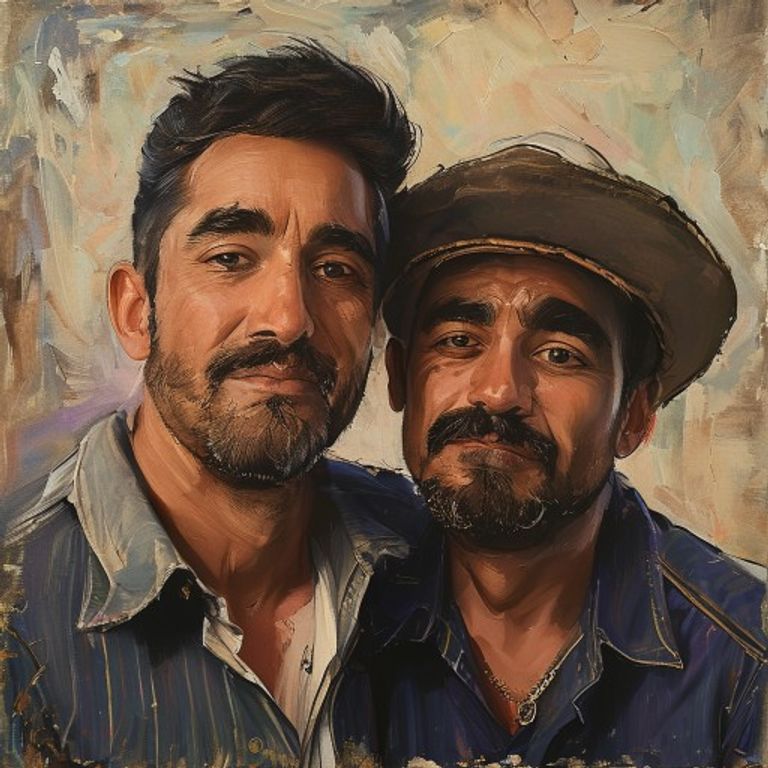
Miguel Jorge: The Multifaceted Voice of Goiana Literature – Life, Work, and Legacy
In the vast panorama of contemporary Brazilian literature, few names manage to transition with such fluidity between novels, short stories, poetry, theater, and art criticism as Miguel Jorge. A visceral writer and refined intellectual, he is a central figure in Goiás's culture, transcending regional borders to establish himself as a master of the Portuguese language.
This article explores the trajectory of this literary icon, analyzing his biography, his most impactful works, and the relevance of his legacy.
1. Biography: Roots in Campinas and Intellectual Formation
Born in 1933, in the traditional Campinas neighborhood of Goiânia (which at the time still carried the identity of an independent city), Miguel Jorge grew up in an environment that blended urban development with the traditions of the interior.
His education is as eclectic as his work. Miguel initially graduated in Pharmacy and Biochemistry, and later in Law and Letters from the Federal University of Goiás (UFG). This multidisciplinary foundation gave him an analytical perspective on the human condition (from biology to law), which overflows in his characters.
The Group of New Writers (GEN)
The 1960s were a watershed moment. Miguel Jorge was one of the founders of GEN (Grupo de Escritores Novos - Group of New Writers), a literary movement that sought to renew the literature produced in Goiás, distancing it from late Parnassianism and integrating it into avant-garde and modernist discussions. It was during this period that his voice began to resonate, not only as an author but as a cultural agitator.
In addition to literature, Miguel was strongly involved in cultural journalism, writing columns for the newspaper O Popular for decades, where he practiced art and film criticism, helping to shape generations of readers.
2. Literary Style and Themes
Miguel Jorge's writing is marked by a constant psychological tension. Unlike classic regionalism that focuses on landscape, Miguel focuses on the "situated man." His settings may be Goiás, but his dramas are universal.
Key characteristics of his style:
-
Viscerality and Corporeality: There is a strong presence of the body, pain, and senses.
-
Magical Realism and Surrealism: In works like O Deus da Cornucópia (The God of the Cornucopia), the author flirts with the fantastic to explain absurd reality.
-
Stream of Consciousness: The skillful use of interior monologue reveals the anxieties of his characters.
-
Metalinguistics: Frequently, the author reflects on the act of writing itself within his stories.
"Miguel Jorge's literature is not just to be read, but to be felt. It has texture, smell, and a density that challenges the reader to look within themselves."
3. Major Works and Summaries
Miguel Jorge has a prolific output. Below, we highlight some of his fundamental works:
Veias e Vinhos (Veins and Wines) (Novel, 1981)
Considered his masterpiece by many critics.
-
Summary: The novel narrates the story of a family in Goiânia during a period of political repression and social transformations. The plot revolves around a brutal crime that disrupts the family unit. The book explores the banality of evil, impunity, and existential anguish.
-
Highlight: The work was adapted into a film in 2006, directed by João Batista de Andrade, which significantly broadened the reach of the original text.
O Deus da Cornucópia (The God of the Cornucopia) (Novel)
-
Summary: A dense narrative that blends the baroque style of Minas Gerais/Goiás with surrealism. The story follows characters living in a state of delirium and reality, where the pursuit of wealth and power intertwines with spiritual decay.
-
Style: Refined, almost baroque language, full of visual metaphors.
Pão Cozido Debaixo de Brasa (Bread Baked Under Embers) (Novel)
-
Summary: A family saga that spans generations, focusing on the figure of the patriarch and the power dynamics within the domestic sphere. The title refers to the rustic and traditional way of preparation, symbolizing traditions that, while nourishing, also burn.
Avesso (Inside Out) (Poetry)
-
Summary: In poetry, Miguel Jorge is synthetic and imagistic. Avesso reveals a poet concerned with the passage of time, death, and the ephemerality of art.
4. Relevance, Awards, and Recognition
Miguel Jorge's recognition is not limited to the borders of Goiás. His work is the subject of academic theses in various Brazilian and international universities.
Homages and Titles
-
Goiana Academy of Letters (AGL): Occupant of Chair No. 9, Miguel Jorge is one of the institution's most active and respected voices.
-
Awards: Throughout his career, he has received several awards, including the Machado de Assis Award (from the Brazilian Writers Union - Goiás Section) and the National Literary Award of the National Book Institute.
-
Jaburu Trophy: He received the highest cultural honor in the State of Goiás, awarded by the State Council of Culture.
Quotes and Criticism
Literary criticism, represented by figures such as Nelly Novaes Coelho (USP), frequently cites Miguel Jorge as one of the renovators of contemporary Brazilian prose. In newspapers like O Estado de S. Paulo and Folha de S. Paulo, his work has been referenced as an example of literary resistance outside the Rio-São Paulo axis.
His current relevance lies in his ability to remain productive and modern, engaging with new generations through prose that does not age, as it deals with the immutable essence of humanity: fear, desire, and death.
5. Bibliographical References
For those who wish to delve deeper into Miguel Jorge's work or use this article as a research basis, we suggest the following sources:
-
COELHO, Nelly Novaes. Dicionário Crítico de Escritoras e Escritores Brasileiros (Critical Dictionary of Brazilian Female and Male Writers). São Paulo: Escrituras, 2002.
-
SILVA, Moema de Castro e. A Ficção de Miguel Jorge: Leitura e Interpretação (The Fiction of Miguel Jorge: Reading and Interpretation). Goiânia: Editora UFG.
-
ACADEMIA GOIANA DE LETRAS. Perfil Acadêmico: Miguel Jorge (Academic Profile: Miguel Jorge). Available at: [Official AGL website].
-
JORGE, Miguel. Veias e Vinhos (Veins and Wines). São Paulo: Benvirá, 2014 (Revised edition).
-
O POPULAR. Digital archive of Miguel Jorge's columns and cultural reviews.

Editor's Note: Research conducted with the assistance of Deep Research is subject to referential ambiguity, potentially confusing facts between homonymous individuals. Although Sílvio Lobo has reviewed the material to resolve such inconsistencies, it is advised that inaccuracies may persist. We count on your help for clarifications and suggestions. Contact me.
Miguel Jorge: The Multifaceted Voice of Goiana Literature – Life, Work, and Legacy
In the vast panorama of contemporary Brazilian literature, few names manage to transition with such fluidity between novels, short stories, poetry, theater, and art criticism as Miguel Jorge. A visceral writer and refined intellectual, he is a central figure in Goiás's culture, transcending regional borders to establish himself as a master of the Portuguese language.
This article explores the trajectory of this literary icon, analyzing his biography, his most impactful works, and the relevance of his legacy.
1. Biography: Roots in Campinas and Intellectual Formation
Born in 1933, in the traditional Campinas neighborhood of Goiânia (which at the time still carried the identity of an independent city), Miguel Jorge grew up in an environment that blended urban development with the traditions of the interior.
His education is as eclectic as his work. Miguel initially graduated in Pharmacy and Biochemistry, and later in Law and Letters from the Federal University of Goiás (UFG). This multidisciplinary foundation gave him an analytical perspective on the human condition (from biology to law), which overflows in his characters.
The Group of New Writers (GEN)
The 1960s were a watershed moment. Miguel Jorge was one of the founders of GEN (Grupo de Escritores Novos - Group of New Writers), a literary movement that sought to renew the literature produced in Goiás, distancing it from late Parnassianism and integrating it into avant-garde and modernist discussions. It was during this period that his voice began to resonate, not only as an author but as a cultural agitator.
In addition to literature, Miguel was strongly involved in cultural journalism, writing columns for the newspaper O Popular for decades, where he practiced art and film criticism, helping to shape generations of readers.
2. Literary Style and Themes
Miguel Jorge's writing is marked by a constant psychological tension. Unlike classic regionalism that focuses on landscape, Miguel focuses on the "situated man." His settings may be Goiás, but his dramas are universal.
Key characteristics of his style:
-
Viscerality and Corporeality: There is a strong presence of the body, pain, and senses.
-
Magical Realism and Surrealism: In works like O Deus da Cornucópia (The God of the Cornucopia), the author flirts with the fantastic to explain absurd reality.
-
Stream of Consciousness: The skillful use of interior monologue reveals the anxieties of his characters.
-
Metalinguistics: Frequently, the author reflects on the act of writing itself within his stories.
"Miguel Jorge's literature is not just to be read, but to be felt. It has texture, smell, and a density that challenges the reader to look within themselves."
3. Major Works and Summaries
Miguel Jorge has a prolific output. Below, we highlight some of his fundamental works:
Veias e Vinhos (Veins and Wines) (Novel, 1981)
Considered his masterpiece by many critics.
-
Summary: The novel narrates the story of a family in Goiânia during a period of political repression and social transformations. The plot revolves around a brutal crime that disrupts the family unit. The book explores the banality of evil, impunity, and existential anguish.
-
Highlight: The work was adapted into a film in 2006, directed by João Batista de Andrade, which significantly broadened the reach of the original text.
O Deus da Cornucópia (The God of the Cornucopia) (Novel)
-
Summary: A dense narrative that blends the baroque style of Minas Gerais/Goiás with surrealism. The story follows characters living in a state of delirium and reality, where the pursuit of wealth and power intertwines with spiritual decay.
-
Style: Refined, almost baroque language, full of visual metaphors.
Pão Cozido Debaixo de Brasa (Bread Baked Under Embers) (Novel)
-
Summary: A family saga that spans generations, focusing on the figure of the patriarch and the power dynamics within the domestic sphere. The title refers to the rustic and traditional way of preparation, symbolizing traditions that, while nourishing, also burn.
Avesso (Inside Out) (Poetry)
-
Summary: In poetry, Miguel Jorge is synthetic and imagistic. Avesso reveals a poet concerned with the passage of time, death, and the ephemerality of art.
4. Relevance, Awards, and Recognition
Miguel Jorge's recognition is not limited to the borders of Goiás. His work is the subject of academic theses in various Brazilian and international universities.
Homages and Titles
-
Goiana Academy of Letters (AGL): Occupant of Chair No. 9, Miguel Jorge is one of the institution's most active and respected voices.
-
Awards: Throughout his career, he has received several awards, including the Machado de Assis Award (from the Brazilian Writers Union - Goiás Section) and the National Literary Award of the National Book Institute.
-
Jaburu Trophy: He received the highest cultural honor in the State of Goiás, awarded by the State Council of Culture.
Quotes and Criticism
Literary criticism, represented by figures such as Nelly Novaes Coelho (USP), frequently cites Miguel Jorge as one of the renovators of contemporary Brazilian prose. In newspapers like O Estado de S. Paulo and Folha de S. Paulo, his work has been referenced as an example of literary resistance outside the Rio-São Paulo axis.
His current relevance lies in his ability to remain productive and modern, engaging with new generations through prose that does not age, as it deals with the immutable essence of humanity: fear, desire, and death.
5. Bibliographical References
For those who wish to delve deeper into Miguel Jorge's work or use this article as a research basis, we suggest the following sources:
-
COELHO, Nelly Novaes. Dicionário Crítico de Escritoras e Escritores Brasileiros (Critical Dictionary of Brazilian Female and Male Writers). São Paulo: Escrituras, 2002.
-
SILVA, Moema de Castro e. A Ficção de Miguel Jorge: Leitura e Interpretação (The Fiction of Miguel Jorge: Reading and Interpretation). Goiânia: Editora UFG.
-
ACADEMIA GOIANA DE LETRAS. Perfil Acadêmico: Miguel Jorge (Academic Profile: Miguel Jorge). Available at: [Official AGL website].
-
JORGE, Miguel. Veias e Vinhos (Veins and Wines). São Paulo: Benvirá, 2014 (Revised edition).
-
O POPULAR. Digital archive of Miguel Jorge's columns and cultural reviews.
Editor's Note: Research conducted with the assistance of Deep Research is subject to referential ambiguity, potentially confusing facts between homonymous individuals. Although Sílvio Lobo has reviewed the material to resolve such inconsistencies, it is advised that inaccuracies may persist. We count on your help for clarifications and suggestions. Contact me.





