



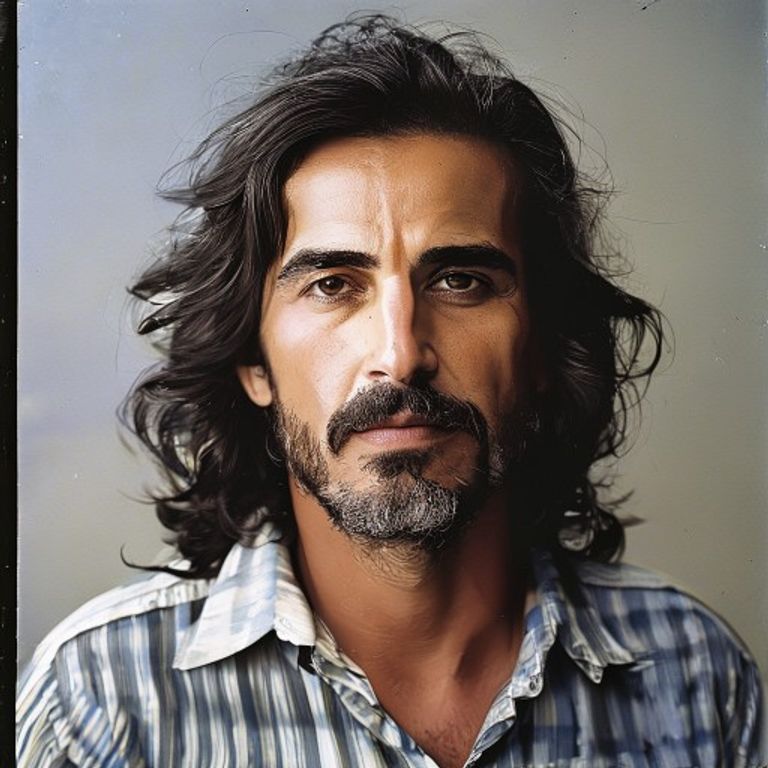
José Vieira Couto de Magalhães: The Intellectual Between the Uniform and the Pen (1837–1898)
José Vieira Couto de Magalhães is among the most complex and fascinating personalities of the Second Empire in Brazil. A military man, politician, businessman, polyglot, and folklorist, he transcended the barriers of imperial bureaucracy to delve into the deep roots of Brazilian culture.
Although born in Diamantina (MG), his trajectory is inseparable from the Center-West and North of Brazil, especially Goiás, where he governed and produced fundamental accounts for understanding the country's interior in the 19th century. He is considered one of the precursors of anthropological and ethnographic studies in Brazil.
Biography: From Diamantina to the Brazilian Backlands
Born on November 1, 1837, in Diamantina, Minas Gerais, Couto de Magalhães graduated in Law from the Law School of São Paulo (Largo de São Francisco) in 1859. He was a man of voracious intellect; in addition to law, he mastered French, English, German, and, crucially for his work, Tupi.
His political career was meteoric and itinerant. The Empire sent him to administer provinces that needed integration and development:
-
President of the Province of Goiás (1863–1864): During this period, he initiated the pioneering project of steam navigation on the Araguaia River.
-
President of the Province of Pará (1864–1866).
-
President of the Province of Mato Grosso (1867–1868): During the Paraguayan War, where he played a prominent role in organizing defenses, earning him the rank of Brigadier General.
-
President of the Province of São Paulo (1889).
He passed away on September 14, 1898, leaving a legacy that blended military rigor with the sensitivity of a myth collector.
Literary Work and Style
Couto de Magalhães was not a кабинет writer in the traditional sense; he was a "writer of action." His literary style reflects late Romanticism, but with a scientific and documentary inclination that set him apart from novelists like José de Alencar. While Alencar idealized the indigenous person, Couto de Magalhães sought to translate and understand them linguistically.
His writing is marked by:
-
Documentary Character: Detailed geographical, botanical, and ethnographic descriptions.
-
Linguistic Valorization: Uncompromising defense of the Nheengatu language (Old Tupi) as a national heritage.
-
Orality: Transcription of myths and legends directly from indigenous and caboclo oral sources.
Main Works and Summaries
1. Viagem ao Araguaia (Journey to the Araguaia) (1863)
Written during his stay in Goiás, this book is both an administrative report and an adventure diary. Couto narrates his descent down the Araguaia River, describing the fauna, flora, and, especially, the economic potential of the region. It is in this work that he reports his contacts with indigenous tribes and the challenges of implementing steam navigation in the heart of Brazil.
2. O Selvagem (The Savage) (1876)
His magnum opus. It was commissioned by D. Pedro II to be featured at the Philadelphia Universal Exposition. The book is divided into two parts:
-
Part I: A course on the living Tupi language, intended for interpreters and military personnel.
-
Part II: A collection of indigenous myths, legends, and poems (including legends of the Turtle, Curupira, and Iara), often presented in Tupi with translation. Relevance: This work served as the basis for the Modernist movement of 1922. Mário de Andrade used O Selvagem as a primary source to write Macunaíma.
3. Ensaios de Antropologia (Essays on Anthropology) (1894)
A collection of studies in which the author deepens his theories on the origin of American races and the importance of miscegenation in the formation of the Brazilian people...
4. The Raw Material of Macunaíma: Couto de Magalhães's Influence on Mário de Andrade
If Macunaíma (1928) is the "rhapsody" that defines Brazilian identity, then Couto de Magalhães provided the original scores. Mário de Andrade's masterpiece was not born solely from the author's imagination but from a voracious process of research and textual appropriation, where Couto's book O Selvagem (1876) served as the linguistic and mythological backbone.
For scholars and readers, understanding Couto de Magalhães means deciphering the source code of Macunaíma.
4.1. Literary "Anthropophagy": "I copied what I could"
Mário de Andrade never hid his sources. In letters and notes, he famously admitted: "I copied what I could, I confess." However, this was not plagiarism in the criminal sense, but a modernist technique of collage and anthropophagy.
Mário "devoured" Couto de Magalhães's text to gain its strength. While Couto recorded the legends with the cold rigor of a general and the precision of a linguist, Mário took these same texts and injected them with blood, humor, and irony.
-
The Source: Couto de Magalhães collected myths directly from Tupi oral tradition and translated them.
-
The Use: Mário de Andrade took entire passages from O Selvagem — especially the legends of the Turtle and the Curupira — and inserted them into the narrative of Macunaíma, altering only the punctuation and rhythm to sound more "Brazilian."
4.2. Tupi and the "Brazilian Language"
Couto's greatest contribution to Mário was not just the content of the legends, but the structure of the language.
Mário sought to write in "Brazilian," not Portuguese from Portugal. Couto de Magalhães, in O Selvagem, argued that Tupi (Nheengatu) shaped the way Brazilians speak (placing the object before the verb, the use of certain vowels, the sweetness of speech).
By reading Couto's literal translations from Tupi to Portuguese, Mário found the syntax he was looking for: a way of speaking "wrong" according to Lusitanian grammar, but correct for the national soul.
Practical Example:
Couto (Ethnographic Record): "Then the turtle played the flute. The jaguar ran after him."
Mário (Modernist Adaptation): Mário appropriates the cunning of the Turtle narrated by Couto to compose Macunaíma's mischievous personality, merging indigenous syntax with São Paulo slang.
4.3. The Construction of the "Hero Without Character"
Although the name "Macunaíma" comes from legends in Roraima (collected by the German Theodor Koch-Grünberg), the personality of the hero owes much to the folklore of the Center-West recorded by Couto.
Couto de Magalhães highlighted in his work that the indigenous person (and by extension, the caboclo) overcame adversity not through brute force (like European medieval knights), but through cunning and escape.
-
In O Selvagem, Couto exhaustively narrates how small animals trick larger ones.
-
Mário transposed this to the human condition: Macunaíma is the hero who "is lazy," who flees, who deceives giants (Venceslau Pietro Pietra), validating Couto's thesis that intelligence surpasses strength in the tropics.
4.4. The Myth of Ceiuci
One of the clearest cases of direct influence is the episode of Ceiuci, the greedy old woman (a giant or forest spirit).
-
In Couto: He transcribes the legend where an indigenous person is pursued by Ceiuci and uses magical tricks to escape.
-
In Macunaíma: Mário rewrites this chase in an almost identical structural way, transforming Ceiuci into "Caapora" at times or maintaining the figure of the old woman, using the same narrative traps described by the Goiás/Minas Gerais General decades earlier.
4.5. Conclusion: The Missing Link
Without José Vieira Couto de Magalhães, Brazilian Modernism would have an irreparable gap. He was the intellectual "grandfather" of 1922. He did the dirty work of entering the jungle, learning the language, and cataloging the national imaginary at a time when the elite only looked to Paris.
When we read Macunaíma today, we are, in large part, reading a brilliant remix of Couto de Magalhães's field notes.
Relevance, Tributes, and Recognition
Couto de Magalhães's importance transcends literature. He was a visionary of national integration.
The "Discoverer" of Folklore
Couto de Magalhães is often cited as the initiator of systematic folklore studies in Brazil. Before him, legends were seen merely as curiosities; he treated them as cultural structures.
-
Press Citation: Newspapers from the late 19th century, such as Gazeta de Notícias, referred to him as a supreme authority on "matters of the backlands."
-
Modernist Influence: Oswald de Andrade and Mário de Andrade rediscovered Couto in the 1920s, considering him a precursor of cultural anthropophagy, as he "ate" European culture and digested it with indigenous culture.
Tributes and Titles
-
Brazilian Academy of Letters: He is the Patron of Chair No. 31, chosen by founder Guimarães Júnior.
-
Geography: Cities bear his name (Couto de Magalhães in Tocantins and Couto de Magalhães de Minas in MG), as well as several streets and schools in Goiás and São Paulo.
-
Decorations: He received the Order of the Rose and the Order of Christ for his services to the Empire.
Critical Quotes and References
To enrich the understanding of his figure, the opinions of critics and historians are highlighted:
"O Selvagem is a book that, on its own, is worth a library of Americanism." — Batista Cepelos, literary critic from the early 20th century.
"Couto de Magalhães was not just a general who knew Tupi; he was the intellectual who realized that real Brazil was far from the Court." — Basílio de Magalhães, historian and folklorist.
Bibliographical References
For academic research and validation of this article, the following sources are used:
-
BOSI, Alfredo. História Concisa da Literatura Brasileira (Concise History of Brazilian Literature). São Paulo: Cultrix, 2006.
-
CÂNDIDO, Antônio. Formação da Literatura Brasileira (Formation of Brazilian Literature). Rio de Janeiro: Ouro sobre Azul, 2013.
-
MAGALHÃES, José Vieira Couto de. O Selvagem (The Savage). Rio de Janeiro: Typographia da Reforma, 1876. (Facsimile edition available in the Digital Library of the Federal Senate).
-
MAGALHÃES, José Vieira Couto de. Viagem ao Araguaia (Journey to the Araguaia). São Paulo: Companhia Editora Nacional, 1934 (Coleção Brasiliana).
-
ACADEMIA BRASILEIRA DE LETRAS (Brazilian Academy of Letters). Biografia de Couto de Magalhães - Patrono da Cadeira 31 (Biography of Couto de Magalhães - Patron of Chair 31). Available at: [ABL website].
-
LOPEZ, Telê Porto Ancona. Macunaíma: a margem e o texto (Macunaíma: the margin and the text). São Paulo: Hucitec, 1974. (Fundamental work comparing, side by side, passages from Couto and Mário).
-
PROENÇA, M. Cavalcanti. Roteiro de Macunaíma (Macunaíma's Guide). Rio de Janeiro: Civilização Brasileira, 1950.
-
ANDRADE, Mário de. Macunaíma: o herói sem nenhum caráter (Macunaíma: the hero without any character). (UNESCO Critical Edition).





