



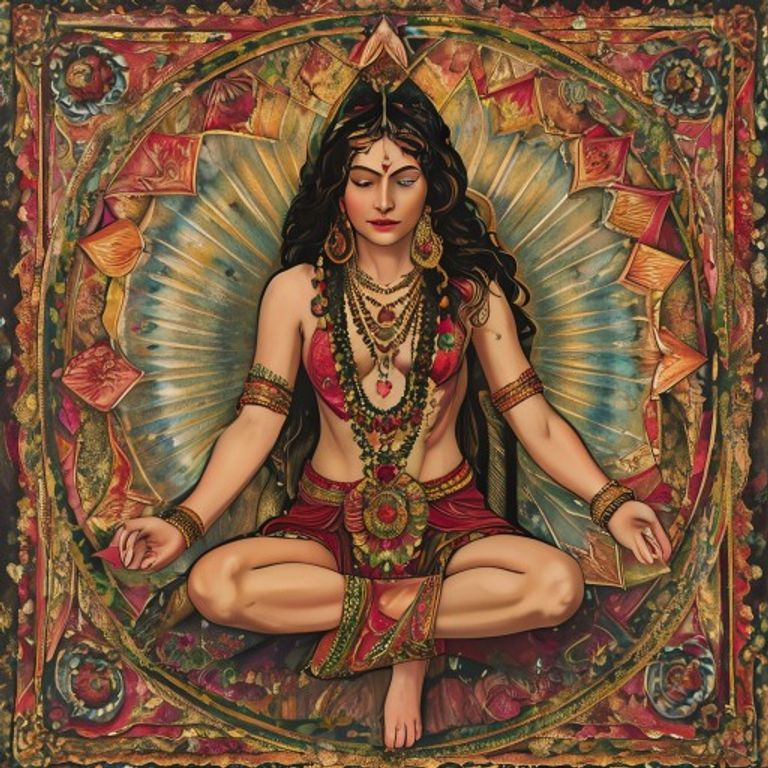

The Kama Sutra is today the most well-known book of love. Although it is a book about sex, it is important to consider that the book emphasizes the art and ways in which a person should practice sex, involving all five senses: hearing, touch, sight, taste, and smell, as well as the mind and soul. Its name comes from the Hindu male deity Kama, who symbolizes desire and carnal love, and Sutra, which means collection of teachings, in ancient Sanskrit. This Indian manual was written in the 4th century by the wise and noble Vatsyayana, for the nobility of India, and specifically for men, although women's needs were not ignored in its pages. Quite the contrary. The author reports in detail the correct instructions for a woman's arousal by her partner, including the importance of the man ensuring the woman reaches orgasm, either through sexual intercourse itself or through caresses.
The Kama Sutra offers a set of rules on the practice of love, according to the principles of Indian philosophy, which elevates sex to a magnificent sexual experience. The physical demands for performing the Kama Sutra positions have made it famous, as some seem like perfect acrobatics and others resemble poses used in yoga. The book is not just a manual of positions. In addition to describing, in detail, 64 forms of lovemaking, considered essential, it also aims to be a guide for developing the eroticism and sensuality of environments, situations, and people. Candles and aromatic oils, aphrodisiac foods, perfumes, and music are all part of the ritual. In the drawings that illustrate the manual, it is easy to see how they were always adorned with light, colorful, and sensual fabrics and full of ornaments such as necklaces and earrings. Other books emerged inspired by the Kama Sutra, following the same erotic-sensual line, many centuries later. Also in India, the “Ananga Ranga” was written, and its author, Kalyana Malla, believed that the greatest cause of separation between a couple is the monotony that arises in sexual relations, in addition to the feeling of possession. He also stated that married women and men end up in the arms of strangers only because they need varied pleasures. This was the main reason for the creation of Ananga Ranga: to keep a couple's relationship warm. Ananga Ranga, which probably means husband and wife, is actually a collection of erotic works and even includes part of the Kama Sutra. Another manual that aims to teach the art of lovemaking is the Arabic “The Garden of Delights,” written by Sheikh Nefzawi in the late 15th century, which was published in Brazil under the name “The Perfumed Garden.” This work well reflects the culture of the time, narrated with the author's somewhat chauvinistic tone. The intention was to keep the book hidden from women, as male dominance was almost total. Throughout the book, male experiences are reported, along with advice to men on how to achieve pleasure.
For today's world and with female liberation, it can be seen as an interesting manual for a reading for two. You will now learn about some of the sexual positions from the famous Kama Sutra, with illustrations of its original drawings, and also, updated photos with other types of positions that make up the Kama Sutra, Ananga Ranga, The Garden of Delights, and the Tao, which is the oldest of all these books, but which, among other things, reports the need for exchanged energies between men and women in sexual relations to bring balance and improve health. All of this is in Anne Hooper's book, from Ediouro Publicações, which was produced to be coherent with the present day.
Source: [[No known source, text available on the internet]]
Editor's note: After a few years of marriage, things tend to cool down, don't they? Well, these articles aim to provide you with healthy practices for a significant improvement in this very important part of the relationship. Value your partner, affection and attention are irreplaceable! Happy reading!





