



1. Overview and Location
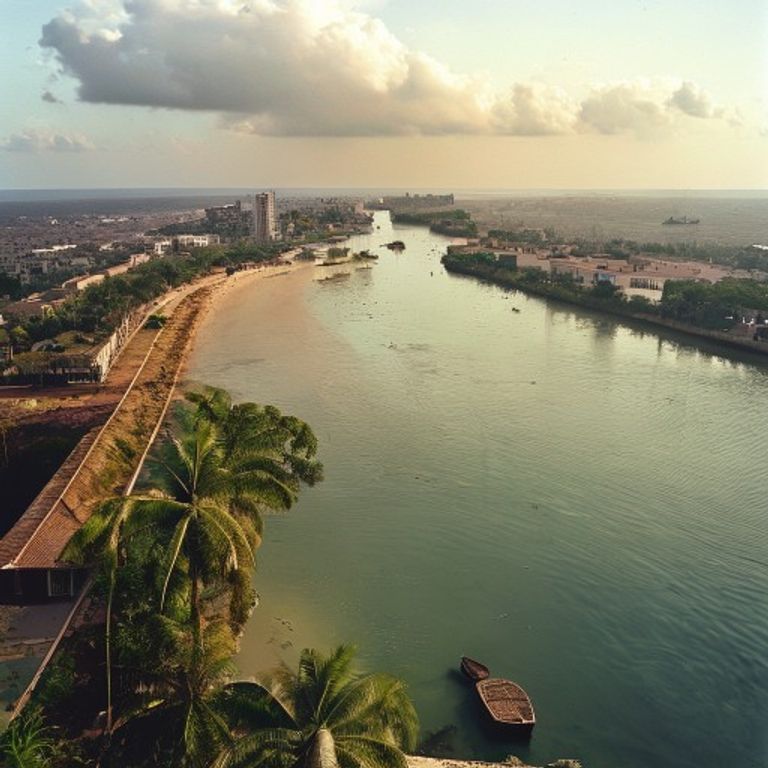
Quelimane is the capital and largest city of Zambezia province, situated on the banks of the Bons Sinais River, approximately 20–25 km from its mouth in the Indian Ocean. The city covers approximately 117 km², and its estimated population ranges between 350,000 and 400,000 inhabitants.
2. Historical Origins
Quelimane dates back to a Swahili and Arab trading center, well before the arrival of the Portuguese in 1498. From 1544, it began to have a more permanent Portuguese presence, being elevated to a town in the mid-18th century (1761–1763), and finally to a city on August 21, 1942.
3. Role in Colonial Trade and Trafficking
In the 18th and 19th centuries, Quelimane was the scene of intense agricultural and port activity, notably in the slave trade to destinations such as Brazil and the French islands. The colonial economy also involved plantations of sisal, tea, coconut, and extensive fishing activities and exports via the railway to Mocuba.
4. Climate and Environment
Quelimane has a tropical monsoon climate — with intense rains between November and March, especially from December to February, which frequently cause flooding. The dry season runs from April to October, marked by clear skies and lower precipitation. The city faces challenges with urban drainage and overflow in its collection systems.
5. Urban Infrastructure
As a provincial hub, Quelimane has a domestic airport, river ports, and highways connecting the city to places like Nicoadala and Chinde. The Trans-Zambezian railway, formerly active, is currently suspended due to lack of maintenance.
6. Architectural Heritage
The Old Cathedral (Igreja de Nossa Senhora do Livramento), built between 1776 and 1786, is an important historical monument and was elevated to a cathedral in 1954. After the inauguration of the new cathedral in 1976, it was abandoned, but there are plans for its restoration as a cultural center. The new cathedral, designed by architect Megre Pires, was inaugurated in 1969.
7. Higher Education
Quelimane is home to Licungo University (UniLicungo), established in 2019 after the split from Pedagogical University, with operations in Zambezia and Sofala provinces.
8. Current Prospects and Challenges
Recently, the city received US$500,000 (31.6 million meticais) for the reconstruction of the central market, which was a victim of a devastating fire, including funding from the Norwegian embassy and municipal funds. There are also investments in urban infrastructure such as bridges over rivers affected by cyclones, as well as improvements in roads, sanitation, and drainage.
Conclusion
Quelimane is a city with deep roots in African and Swahili history, marked by colonial eras, social and cultural struggles. Today, it maintains its regional importance as an economic, educational, and administrative center of Zambezia, facing the challenges of urban growth, climate change, and modernization. With continuous investment and appreciation of its heritage, Quelimane is preparing for more sustainable steps towards the future.
AI-generated synthesis.
1. Overview and Location
Quelimane is the capital and largest city of Zambezia province, situated on the banks of the Bons Sinais River, approximately 20–25 km from its mouth in the Indian Ocean. The city covers approximately 117 km², and its estimated population ranges between 350,000 and 400,000 inhabitants.
2. Historical Origins
Quelimane dates back to a Swahili and Arab trading center, well before the arrival of the Portuguese in 1498. From 1544, it began to have a more permanent Portuguese presence, being elevated to a town in the mid-18th century (1761–1763), and finally to a city on August 21, 1942.
3. Role in Colonial Trade and Trafficking
In the 18th and 19th centuries, Quelimane was the scene of intense agricultural and port activity, notably in the slave trade to destinations such as Brazil and the French islands. The colonial economy also involved plantations of sisal, tea, coconut, and extensive fishing activities and exports via the railway to Mocuba.
4. Climate and Environment
Quelimane has a tropical monsoon climate — with intense rains between November and March, especially from December to February, which frequently cause flooding. The dry season runs from April to October, marked by clear skies and lower precipitation. The city faces challenges with urban drainage and overflow in its collection systems.
5. Urban Infrastructure
As a provincial hub, Quelimane has a domestic airport, river ports, and highways connecting the city to places like Nicoadala and Chinde. The Trans-Zambezian railway, formerly active, is currently suspended due to lack of maintenance.
6. Architectural Heritage
The Old Cathedral (Igreja de Nossa Senhora do Livramento), built between 1776 and 1786, is an important historical monument and was elevated to a cathedral in 1954. After the inauguration of the new cathedral in 1976, it was abandoned, but there are plans for its restoration as a cultural center. The new cathedral, designed by architect Megre Pires, was inaugurated in 1969.
7. Higher Education
Quelimane is home to Licungo University (UniLicungo), established in 2019 after the split from Pedagogical University, with operations in Zambezia and Sofala provinces.
8. Current Prospects and Challenges
Recently, the city received US$500,000 (31.6 million meticais) for the reconstruction of the central market, which was a victim of a devastating fire, including funding from the Norwegian embassy and municipal funds. There are also investments in urban infrastructure such as bridges over rivers affected by cyclones, as well as improvements in roads, sanitation, and drainage.
Conclusion
Quelimane is a city with deep roots in African and Swahili history, marked by colonial eras, social and cultural struggles. Today, it maintains its regional importance as an economic, educational, and administrative center of Zambezia, facing the challenges of urban growth, climate change, and modernization. With continuous investment and appreciation of its heritage, Quelimane is preparing for more sustainable steps towards the future.
AI-generated synthesis.





