



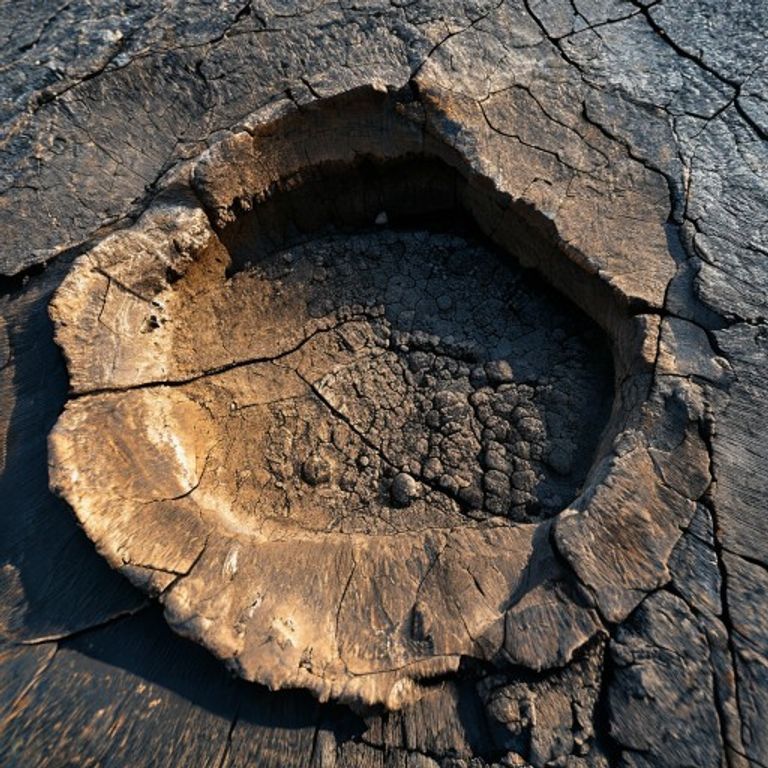
The sudden appearance of gigantic, deep holes in Siberia starting in 2014; although science points to methane explosions caused by thawing, the exact mechanism still intrigues geologists.
⚠️ Research prepared with the aid of Deep Research is subject to referential ambiguity.
🖥️ Clean HTML code using a proprietary tool.
👥 Research by Guilherme Felipe, Curation by Sílvio Lôbo
The Frozen Enigma: Unraveling the Yamal Craters Case
In the vast and frozen tundra of the Yamal Peninsula, in the far north of Russia, a geological and social mystery emerged with the force of a cataclysm: the Yamal Craters Case. What initially appeared to be a bizarre natural phenomenon quickly turned into a stage for speculation, conspiracy theories, and a disturbing reminder of how little we understand the secrets hidden beneath our planet's surface.
1. The Context and the Incident: The Cry of the Siberian Earth
The Yamal Peninsula, a land of relentless permafrost and austere beauty, houses one of the world's largest natural gas deposits. It is an ancestral territory for the Nenets people, reindeer herders who have inhabited the region for millennia. It was in this remote and inhospitable setting that the mystery began to unfold. In 2013, initial reports of underground anomalies began to circulate, but the real shock came in July 2014, when a group of geologists, investigating unusual magnetic anomalies, spotted something that defied immediate explanation: enormous circular craters, some over 30 meters in diameter, opening mysteriously in the landscape.
The craters were not meteorite impact sites, nor were they conventional explosion craters. They were immense holes with clean edges and, in some cases, residues of expelled earth that suggested a violent upward force. The sudden appearance and magnitude of these "holes" in the frozen ground generated apprehension and a wave of scientific and media curiosity.
2. Timeline of Events: A Schedule of Uncertainties
Reconstructing the exact chronology of the craters' emergence is a challenge in itself, given the remote nature and harsh climate of the region. However, the crucial events that shaped public and scientific perception of the case can be outlined:
- 2000s - Early 2013: Rumors and reports of anomalous activities beneath the tundra, including tremors and gas emissions, begin to circulate among the local population and some oil and gas exploration experts.
- August 2013: A preliminary report by Russian scientists mentions the detection of unusual methane spikes and thermal activity in certain areas of Yamal.
- July 2014: The first and most dramatic sighting of a giant crater, later dubbed the "Yamal Crater," is reported by a team of geologists. This crater, about 30 meters in diameter and 20 meters deep, becomes the focus of attention.
- September 2014: A second crater is discovered, followed by more sightings over the following months. The total number of confirmed craters reaches dozens, scattered across the peninsula.
- November 2014: The Russian Academy of Sciences sends an expedition to investigate the site. Soil, ice, and gas samples are collected for analysis.
- 2015 - Present: Research and analysis of the collected data continue. Several scientific reports have been published, but a definitive consensus on the cause of the craters has not yet been reached. Discussion regarding environmental implications and the risks associated with permafrost thawing intensifies.
3. The Main Theories: A Mosaic of Possibilities
The mystery of the Yamal craters gave rise to a myriad of theories, ranging from robust scientific explanations to more audacious speculations. It is essential to separate the wheat from the chaff, anchoring each theory in available evidence, even if circumstantial.
3.1. Scientific Hypotheses and Likely Explanations: The Force of Gas and Unstable Permafrost
- Gas Hydrate Explosions (Methane Clathrates): This is the most widely accepted scientific theory supported by preliminary evidence. Methane clathrates are compounds of water and methane trapped in a crystalline structure, which form under high-pressure and low-temperature conditions, such as those found in permafrost. Global warming and the consequent thawing of permafrost may have destabilized these clathrates, releasing large amounts of pressurized methane. When the pressure reaches a critical point, an underground explosion occurs, expelling soil and ice upward, creating the crater. Reports from the Russian Academy of Sciences and independent studies support this line of reasoning, citing the presence of high levels of methane in the craters' atmosphere and the instability of permafrost in the region.
- Underground Volcanic Activity (Rare in Yamal): Although Yamal is not a geologically active region in terms of surface volcanism, the possibility of deep geothermal activity releasing pressurized gases was considered. However, the lack of evidence of lava flows or other volcanic indicators makes this hypothesis less likely to explain the observed craters.
- Natural Gas Explosions from Exploration Activity: The Yamal region is a hub for natural gas extraction. Some have suggested that failures in exploration infrastructure or undetected underground activities could have caused gas releases and explosions. However, the nature of the craters, which appear to have emerged spontaneously and in remote areas, makes this theory less convincing as a primary cause.
3.2. Alternative, Conspiracy, or Paranormal Theories: The Realm of the Inexplicable
- Secret Military Experiments: Given the remote location and the mysterious nature of the phenomenon, the theory of secret military tests of unconventional weapons or unknown technology quickly gained traction. Russia, as a military power, is often the target of speculation regarding secret activities. However, there is no concrete evidence to support this hypothesis, beyond the uncertainty itself and the strategic location of the peninsula.
- Alien Activity (UFOs): Extraterrestrial origin is one of the most speculative and popular theories. The sudden appearance of "perfect" holes in the ground, without clear explanation, fueled the imagination that alien spacecraft could have landed, excavated, or caused the explosions. This theory lacks any empirical evidence, relying solely on fanciful interpretations.
- Paranormal Phenomena or Unknown Energies: Some more mystical theories suggest that the craters could be manifestations of unknown energies, interdimensional portals, or even the action of spiritual entities disturbed by human exploitation of nature. These explanations, while evocative, are outside the scope of science and empirical investigation.
4. Controversies and Blind Spots: The Shadows of Investigation
The investigation of the Yamal craters, despite scientific efforts, is marked by controversies and blind spots that fuel the mystery:
- Speed of Official Investigation: While the scientific community was in an uproar, the official Russian response, although it sent expeditions, was initially cautious and even minimizing in some aspects, which raised suspicions that something was being hidden.
- Limited Access to Information: Detailed reports and raw data from official investigations were not always widely released, hindering independent analysis and validation by external researchers.
- Transient Nature of Evidence: The extreme climatic conditions of Yamal and the natural process of erosion and filling of the craters mean that original evidence may be deteriorating or disappearing, making future analyses more challenging.
- Data Interpretation: Even within the scientific community, there may be disagreements in the interpretation of collected data, especially regarding the speed of global warming and its direct correlation with large-scale methane release.
- The "Escape" of Key Witnesses: Some initial reports and testimonies from local inhabitants, who might have witnessed anomalous events before the official discovery of the craters, may have been overlooked or not properly documented.
5. Curiosities and Legacy: A Frozen Warning
The Yamal Craters Case transcended the scientific and geological realm, becoming a cultural icon of the global warming era and the fragility of our planet.
- The Name and the Image: The craters quickly gained frightening nicknames, such as "The Devil's Eye" or "Gateways to Hell," fueling the popular imagination. Aerial images of these scars on the tundra went viral, symbolizing the unpredictable effects of climate change.
- Cultural Impact: The mystery inspired documentaries, articles, debates, and even works of fiction, solidifying its place in the collective imagination as one of Earth's recent enigmas.
- Current Status: The case, from an official standpoint, has not been reopened as a "criminal case" in the traditional sense, but scientific research on the craters and the Yamal permafrost remains active. The craters are seen as a crucial natural laboratory for understanding the impacts of global warming in permafrost regions. The phenomenon serves as a grim warning for the potential consequences of permafrost melting on a global scale, including the release of methane, a potent greenhouse gas, and the risk of new and unpredictable geological anomalies.
The mystery of the Yamal Craters remains, in large part, an enigma. While science offers us plausible explanations, the vastness and isolation of the Siberian tundra continue to harbor secrets, reminding us that the Earth still has much to teach us, often in frightening and unexpected ways.





