



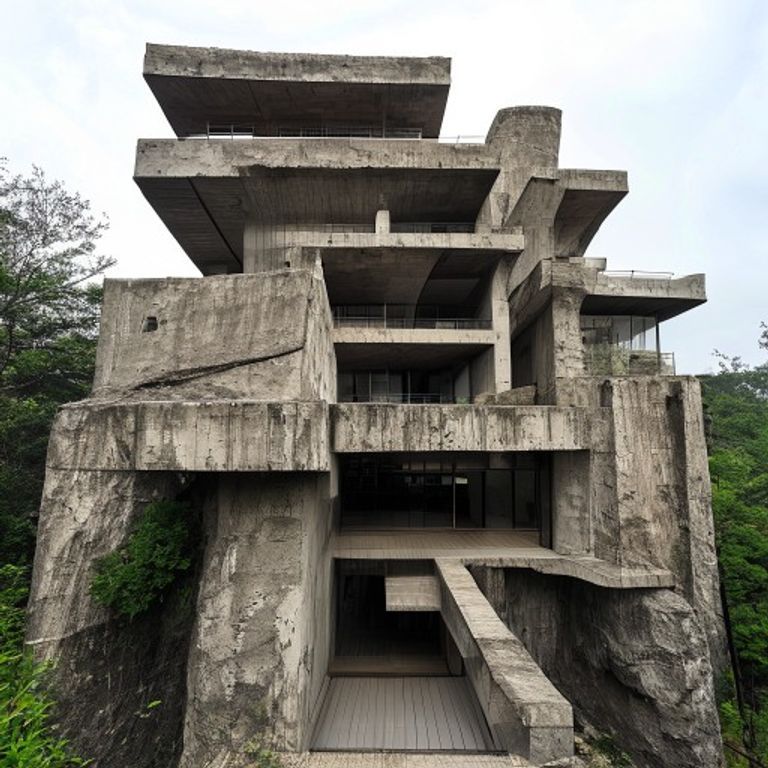
Gigantic submerged rock formations off the coast of Japan with incredibly straight angles are generating heated debates about whether they are artificial creations or simply natural geology.
⚠️ Research elaborated with the aid of Deep Research is subject to referential ambiguity.
🖥️Clean HTML code using a proprietary tool.
👥 Research by Guilherme Felipe, Curation by Sílvio Lôbo
The Submerged Enigma of Yonaguni: Unraveling the Truth Behind the Ancient Structures
In the deep blue depths of the Pacific Ocean, a short distance from the island of Yonaguni, Japan, lies a mystery that defies logic and human comprehension: the enigmatic Yonaguni Structures. These monumental geological formations, with their right angles, intricate steps, and polished surfaces, raise a fundamental question: are they works of nature or remnants of a lost civilization?
1. The Context and the Incident: The Mystery Emerged from the Depths
The discovery of the Yonaguni Structures occurred in 1986 during a reconnaissance dive by Seiichi, a local diving instructor. While exploring an area near the southwest coast of the island, Seiichi stumbled upon what appeared to be a monumental submerged artificial structure. The discovery, initially met with skepticism, quickly gained international attention as more divers and geologists explored the site and revealed the extent and complexity of the formations.
The structures are located at depths ranging from 5 to 30 meters and extend over a considerable area. The main formation, nicknamed "The Monument," has an immense rectangular shape, with steps descending at right angles to the seabed. Other formations include "The Amphitheater," "The Tower," and "The Walls," all exhibiting characteristics that lead to speculation about their origin.
2. Timeline of Events: A Chronology of Discoveries and Debates
- 1986: Seiichi, a diving instructor, discovers the submerged structures.
- 1990s: The discovery gains international notoriety. Geologists like Masaaki Kimura from the University of the Ryukyus begin more in-depth research and advocate for the hypothesis of anthropogenic origin.
- 1997: The Japanese government formally classifies the structures as natural formations, discouraging further extensive official research.
- 2000s onwards: The controversy persists. New expeditions and analyses, some independent and others linked to enthusiasts, continue to emerge, keeping the mystery alive.
3. The Main Theories: Nature vs. Ancient Engineering
The debate surrounding the Yonaguni Structures revolves around two main schools of thought, with various branches:
3.1. Scientific Hypotheses (Natural Origin)
The official explanation, supported by many geologists, attributes the formations to natural geological processes. The logic lies in how sandstone and limestone can erode and fracture over thousands of years, especially in areas subject to intense seismic activity and marine erosion.
- Erosion and Fracturing: The theory posits that the formations are the result of a natural process of erosion and fracturing of sedimentary rocks, shaped by marine currents and tectonic forces. The straight lines and sharp angles would be natural faults in the rock, accentuated by the action of water.
- Sedimentation Formations: Some formations may be the result of sedimentation and consolidation processes of sand and other marine debris over millennia.
3.2. Alternative Theories (Anthropogenic Origin)
Despite the official geological explanation, a significant portion of researchers and enthusiasts suggest that the structures are the work of an ancient, possibly prehistoric, civilization.
- Ancient Constructions: The main alternative theory argues that the structures are remnants of a civilization that flourished before the flood or major geological changes. Proponents point to features such as uniform steps, perfect right angles, "pillars," and even what appear to be "sculptures" or "hieroglyphs" on some surfaces.
- Japanese Atlantis or Mu: Some more speculative theories link Yonaguni to lost continents like Atlantis or Mu, suggesting that the structures are remnants of submerged cities from these legendary civilizations.
- Advanced Tools and Techniques: The complexity and scale of the formations challenge the technological capabilities of known ancient civilizations, leading to speculation about the use of advanced, yet unknown, tools and techniques.
4. Controversies and Blind Spots: Where the Truth Dissipates
The case is marked by a series of controversies and blind spots that fuel the mystery and make a definitive conclusion difficult:
- Ignorance of Evidence: Critics point out that the official analysis may have disregarded or minimized certain characteristics of the structures that suggest human intervention. The absence of tools or clear construction remnants is not, in itself, irrefutable proof of natural origin, especially considering thousands of years of submersion and geological activity.
- Preservation and Access: The lack of a robust preservation program and restricted access for independent studies raise suspicions about the transparency of official investigations. Declassified reports, if they exist, remain inaccessible to the general public.
- Conflicting Testimonies: While some geologists vehemently defend the natural origin, others, like the aforementioned Masaaki Kimura, present detailed analyses and photos that challenge this interpretation, but their conclusions are often marginalized.
- Nature of the "Evidence": The interpretation of "steps," "pillars," and "walls" is highly subjective. What for one observer is clear evidence of construction, for another is a peculiarity of natural erosion.
5. Curiosities and Legacy: An Enigma That Continues to Float
The Yonaguni Structures have transcended the fields of geology and archaeology, becoming a cultural icon in Japan and a global fascination.
- Mystery Tourism: The site has become a popular destination for divers and mystery enthusiasts, attracting visitors from all over the world eager to witness the enigmatic formations with their own eyes.
- Cultural Inspiration: The mystery of the structures has inspired books, documentaries, films, and academic debates, fueling imagination and curiosity about humanity's past and the secrets the ocean holds.
- Current Status: Officially, the case is considered a natural geological formation. However, the lack of scientific consensus and popular fascination ensure that the mystery of the Yonaguni Structures remains without a definitive solution, floating in the waters of uncertainty, a perennial invitation to investigation and contemplation.





