



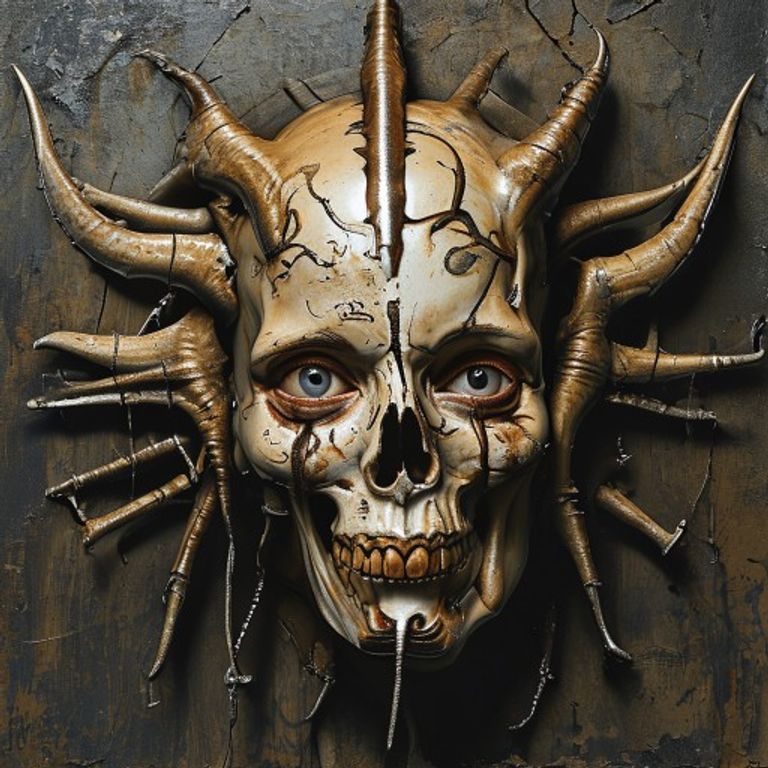
An anomalously shaped skull found in Mexico that exhibits bone and genetic characteristics diverging from the common human standard, becoming a subject of debate among scientists and external intervention theorists.
⚠️ Research conducted with the aid of Deep Research is subject to referential ambiguity.
🖥️ Clean HTML code using a proprietary tool.
👥 Research by Guilherme Felipe, Curation by Sílvio Lôbo
The Enigma of the Starchild Skull: A Mystery Without Definitive Answers
The case of the Starchild Skull is one of the most intriguing and controversial enigmas that challenge science and popular imagination. What appears to be a human skull with unusual characteristics, discovered in Mexico in the early 1930s, has triggered decades of speculation, research, and fervent debate. This article investigates the proven facts, the theories surrounding this artifact, and the shadows that persist regarding its origin.
1. The Context and the Incident: Where, When, and How the Mystery Began
The story of the Starchild Skull dates back to approximately 1930. The most accepted narrative, albeit with significant gaps, is that the skull was found in a cave near Conchos, in the state of Chihuahua, Mexico. It was reportedly discovered by a woman who took it to a local priest. He, in turn, contacted an American dentist, Dr. Newton, to evaluate the artifact. It was Dr. Newton who initiated the first observations, and subsequently, the skull passed through many hands, accumulating a history of ambiguous ownership and obscure collecting.
The skull's distinctive features—its elongated shape, eyes disproportionately large in relation to the orbits, the absence of paranasal sinuses, and the unusual bone texture—immediately distinguished it from any known human skull, fueling the belief that it was not an ordinary person.
2. Timeline of Events
- Approximately 1930: Discovery of the skull in a cave near Conchos, Chihuahua, Mexico.
- Early 1930s: The skull reaches the hands of Dr. Newton, an American dentist, who begins his observations.
- Subsequent Decades: The skull passes through various private collections, with little formal documentation of its provenance or scientific study.
- 1990s: The case gains public notoriety, largely due to the efforts of Lloyd Pye, a UFO enthusiast and independent researcher, who became the main proponent of the skull's extraterrestrial origin. Pye actively sought support and funding for scientific research on the artifact.
- 2000s: DNA testing, X-rays, and other scientific analyses are conducted. The results of these analyses, however, became a central point of discord and divergent interpretation.
- Present: The Starchild Skull remains an object of intense debate, with its current location being a question mark for the general public, although Pye was its best-known holder before his death.
3. The Main Theories
The enigmatic nature of the Starchild Skull has given rise to a range of theories, varying from the scientific to the extraordinary:
3.1. Scientific and Medical Hypotheses
- Severe Hydrocephalus: This is one of the most plausible medical explanations. Hydrocephalus is a condition characterized by the excessive accumulation of cerebrospinal fluid in the brain, which can lead to skull enlargement and other deformities. However, proponents of this theory must explain the Starchild's specific characteristics, such as the unusual bone fragility and possible changes in ocular structure.
- Microcephaly with Crouzon or Apert Syndrome: Another medical possibility involves genetic syndromes that affect craniofacial bone development. Crouzon Syndrome and Apert Syndrome cause premature closure of the cranial sutures, leading to facial and cranial deformities. Again, the peculiarity of the Starchild would require an atypical presentation of these conditions.
- Intentional Artificial Deformation: In many ancient cultures, the practice of shaping the skull in infants and children was common to achieve specific aesthetic forms. Although the Starchild's shape is extreme, some researchers raise the possibility of a much more elaborate or prolonged form of artificial deformation. However, the uniformity of the sutures and the bone delicacy are difficult to explain by this method alone.
- Rare Metabolic Bone Disease: A rare condition affecting bone structure and growth may have resulted in the observed characteristics. Identifying such a disease would require deeper analysis of genetic and biochemical markers, which have not always been conclusive.
3.2. Alternative, Conspiracy, and Paranormal Theories
- Extraterrestrial (Alien) Origin: This is the most popularized theory, defended by enthusiasts like Lloyd Pye. They believe the skull belonged to a non-human being, possibly originating from another planet, who visited Earth in ancient times. The skull's unusual features, bone fragility, and absence of paranasal sinuses are interpreted as evidence of an alien physiology. The difficulty in obtaining conclusive DNA results is also viewed as suspicious by some proponents of this theory, suggesting possible interference or the impossibility of matching non-terrestrial DNA with terrestrial databases.
- Human-Alien Hybrid: A variation of the extraterrestrial theory suggests that the Starchild is the result of crossbreeding between a human and an alien, thus explaining some human characteristics while maintaining unusual traits.
- Government Conspiracy/Cover-up: Some theorists suggest that governments or secret organizations may be aware of the skull's true nature and are actively suppressing information to avoid mass panic or to exploit alien technology. The lack of unrestricted access and the ambiguity surrounding some scientific analyses can fuel this distrust.
4. Controversies and Blind Spots
The history of the Starchild Skull is dotted with controversies and blind spots that fuel the mystery and hinder the arrival at definitive conclusions:
- Ambiguous Origin and Provenance: The lack of an official and detailed archaeological record of the skull's discovery is one of the greatest obstacles. Initial reports are imprecise and based on second-hand testimony. The exact cave of discovery has never been publicly identified irrefutably.
- Fragmented Ownership History: The skull passed through various private collections without proper curation or formal scientific study. This raises questions about authenticity and possible manipulations over time.
- Disputed DNA Results: Genetic analyses were performed at different times and by different laboratories, with results ranging from inconclusive to contradictory. One mitochondrial DNA test suggested a human maternal origin, but the sample was degraded. Other analyses, especially genomic ones, reportedly revealed significant anomalies that make a clear classification as human or non-human difficult, which is interpreted in opposite ways by different fields of research.
- Inaccessible or Contradictory Expert Reports: Reports of expert examinations performed at different times, such as X-rays and bone microscopy, often present distinct interpretations or are difficult for the general public to access, which generates distrust.
- Conflicting Testimonies: The reconstruction of initial events is hindered by accounts that may have become distorted over time or by the personal interpretations of those involved.
5. Curiosities and Legacy
The Starchild Skull has transcended the scientific realm to become a cultural icon in the universe of ufology and unsolved mysteries. Its legacy is marked by:
- Inspiration for Fiction: The enigma has inspired books, documentaries, and discussions in online forums, capturing the imagination of millions.
- Symbol of Scientific Debate vs. Belief: The case exemplifies the tension between the search for rational explanations and the attraction to more fantastic theories, especially when science does not offer definitive answers.
- Current Status: Currently, the exact fate of the skull is uncertain to the general public. After the death of Lloyd Pye, control over the artifact may have passed to his heirs or the foundation he established. The scientific community, for the most part, still awaits robust and conclusive evidence that can resolve the mystery, while proponents of alternative theories continue to seek validation for their hypotheses. The case, therefore, remains fertile ground for speculation and ongoing investigation.





