



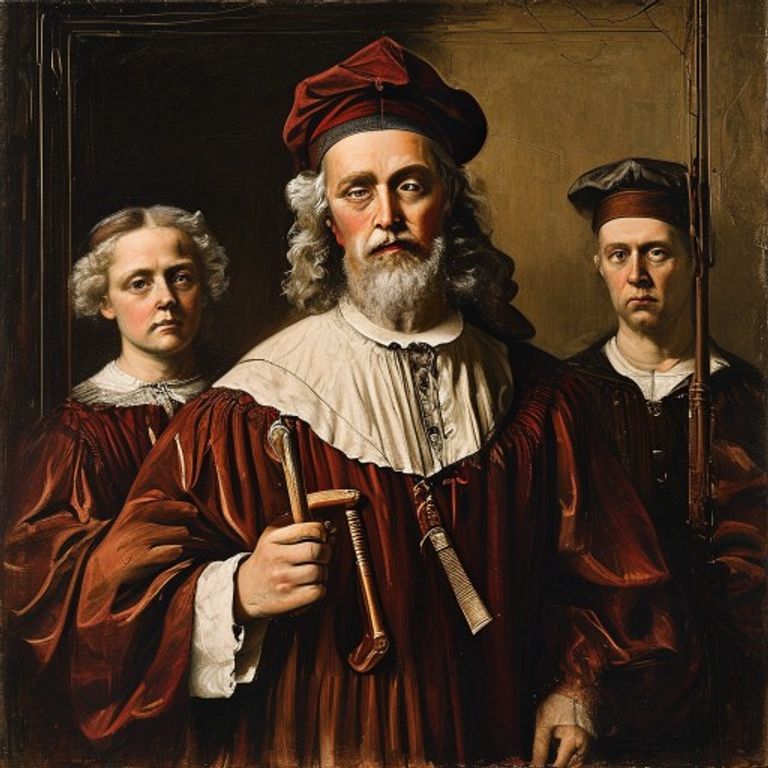
The series of trials for alleged witchcraft in seventeenth-century Massachusetts that resulted in the execution of dozens of people amidst a climate of religious hysteria.
⚠️ Research prepared with the aid of Deep Research is subject to referential ambiguity.
🖥️ Clean HTML code using a proprietary tool.
👥 Research by Guilherme Felipe, Curation by Sílvio Lôbo
The Salem Trials: The Shadow of Mass Witchcraft
In 1692, the quiet colony of Salem, in the state of Massachusetts, plunged into one of the darkest and most inexplicable episodes in American history: the infamous Salem Witch Trials. What began with the hysterical spasms of a few young girls soon turned into a witch hunt that culminated in the execution of twenty people and the imprisonment of hundreds, leaving an indelible trail of fear, paranoia, and questions that persist to this day.
The Context and the Incident: Where, When, and How the Mystery Began
New England in the late 17th century was fertile ground for religious fanaticism and fear of the supernatural. Puritan colonies lived under the constant threat of disease, conflicts with Native Americans, and a strong belief in divine and demonic intervention in human affairs. The Salem Village region (modern-day Danvers) was a stage for internal disputes and social tensions, factors that may have contributed to the explosion of hysteria.
The mystery began in January 1692, when a group of young women, including Reverend Samuel Parris's daughter, Elizabeth Parris, and his niece, Abigail Williams, began to exhibit bizarre behaviors: uncontrollable screaming, convulsions, inexplicable pain, and visions. Without an apparent medical or scientific explanation for their symptoms, the local physician, Dr. William Griggs, diagnosed the cause as the work of witchcraft.
Under pressure, the young women accused three women of having cast the "evil eye" upon them: Tituba, a slave of Caribbean origin belonging to Reverend Parris; Sarah Good, a beggar; and Sarah Osborne, an elderly woman with a history of conflicts. What followed was a devastating ripple effect.
Timeline of Events: A Chronological Reconstruction of Key Facts
- January 1692: Young women in Salem Village begin to exhibit abnormal symptoms.
- February 1692: The first accusations of witchcraft are made against Tituba, Sarah Good, and Sarah Osborne. Arrests take place.
- March to May 1692: Hysteria spreads. More accusations arise, including people of higher social status. The first trials begin.
- June 1692: The Court of Oyer and Terminer (to hear and determine) is formed by Governor William Phips to handle the growing number of cases.
- July 1692: Bridget Bishop is the first to be hanged.
- August 1692: Six people are hanged.
- September 1692: More people are hanged, and Giles Corey is pressed to death for refusing to plead guilty or innocent.
- October 1692: Governor William Phips orders the suspension of the trials and dissolves the court. New cases are prevented, and ongoing imprisonments are ended.
- 1697: A Day of Fasting and Penance is observed in Salem in recognition of the error committed.
- 1711: The provincial government offers restitution to the victims' families.
The Main Theories: Exploring Possible Explanations
The enigma behind the Salem hysteria has been the subject of intense speculation and study. Theories range from rational and scientific explanations to more fantastic interpretations:
Scientific and Psychological Theories:
- Ergot Poisoning: One of the most popular theories suggests that the young women may have consumed rye contaminated with Claviceps purpurea, a fungus that produces ergotamine, a substance with hallucinogenic and convulsive effects similar to the reported symptoms. Ergot thrives in damp, cold climates, common in the region.
- Mass Hysteria and Suggestibility: Psychological factors such as mass hysteria, influenced by an environment of fear, religious fanaticism, and the strong authority of religious figures, may have led the young women to simulate or genuinely believe in their visions. The authority of the "examiners" and the fear of punishment may also have encouraged confessions and accusations.
- Child Abuse and Trauma: Some researchers suggest that the young women may have been victims of sexual abuse or other forms of trauma, and their symptoms were a psychological manifestation of that suffering. The Puritan society of the time repressed open discussion about sexuality, making it difficult for victims to express their experiences.
Social and Political Theories:
- Conflicts of Interest and Envy: Accusations often targeted individuals who were socially disadvantaged or who had rivalries with more prominent families. The opportunity to get rid of unwanted neighbors or inherit property may have been a motivating factor for some accusations.
- War and Border Tension: The Massachusetts colony was constantly under the threat of attacks from native tribes allied with the French. The fear of war and the presence of refugees from the frontier may have increased paranoia and distrust, leading to a greater propensity to see enemies everywhere.
Alternative, Paranormal, and Conspiracy Theories:
- The Role of the Devil and Real Witchcraft: For the Puritans of the time, the existence of witches and the direct influence of the Devil were unquestionable truths. The classic theory, widely accepted at the time, was that the accusations were true and that the accused women were indeed witches making pacts with the evil one.
- Extraterrestrial Intervention or Non-Terrestrial Phenomena: More modern and speculative theories suggest the possibility of alien intervention or other inexplicable phenomena that might have induced the young women's behavior or the events in general. This line of reasoning lacks any empirical evidence.
- Religious Manipulation and Conspiracy: Some theories point to possible manipulations by religious leaders or figures of power who may have orchestrated the hysteria for their own ends, such as consolidating power or eliminating opponents.
Controversies and Blind Spots: Inconsistencies in Official Investigations
The judicial process in Salem was marked by glaring flaws and controversies that undermined its credibility from the start:
- Use of "Spectral Evidence": Confessions and accusations were often based on "spectral evidence," that is, reports of visions and tortures inflicted by the accused in their spiritual form. This type of evidence was highly subjective and impossible to verify, being accepted by the courts under the pressure of fear.
- Conflicting and Forced Testimonies: Many testimonies were obtained under coercion, torture, or the promise of clemency. The young accusers changed their stories, contradicted themselves, and often accused more people when pressured to do so.
- Disappearance of Evidence: Information about the initial inquiries and some documents related to the trials disappeared over time, hindering a complete and impartial analysis of the facts. Official reports from the time are incomplete.
- The Absence of a Defense Attorney: The accused did not have the right to a defense attorney, which placed the defendants in a position of extreme disadvantage against the prosecution, which was often conducted by the judge himself.
- The Role of Reverend Parris: The influence and involvement of Reverend Samuel Parris in the events, as well as the fact that his house was the site of the first incidents, raise questions about his role and possible bias.
Curiosities and Legacy: The Cultural Impact of the Case
The Salem Witch Trials transcended geographical and temporal boundaries, becoming an enduring symbol of unjust persecution, intolerance, and the dangers of mass hysteria.
- Cultural Legacy: The case inspired countless literary works, plays, films, and television series, consolidating Salem as a place of morbid fascination and reflection on the extremes of human nature. Arthur Miller's play "The Crucible" is one of the most prominent examples, using the historical event as an allegory for McCarthyism.
- Rehabilitation of the Victims: Over the centuries, there have been continuous efforts to rehabilitate the memory of the victims. In 2001, Massachusetts Governor Jane Swift signed a law that claimed the innocence of all people convicted and executed in the trial.
- Current Status: The Salem Trials are considered a closed historical case in legal terms, but they remain a topic of debate and academic study. The search for a complete understanding of the motives and mechanisms that led to this tragedy remains active, with new research and interpretations emerging periodically.
- Tourism and Memorialization: The city of Salem capitalizes on its dark past with a thriving tourism sector focused on the history of witches. There are museums, memorials, and attractions dedicated to preserving the memory of the events and educating the public about the lessons learned.
The Salem Witch Trials serve as a grim reminder of how easily fear, ignorance, and irrationality can overcome justice and reason, leaving behind a legacy of unanswered questions and a continuous call for vigilance against the ghosts of intolerance.





