



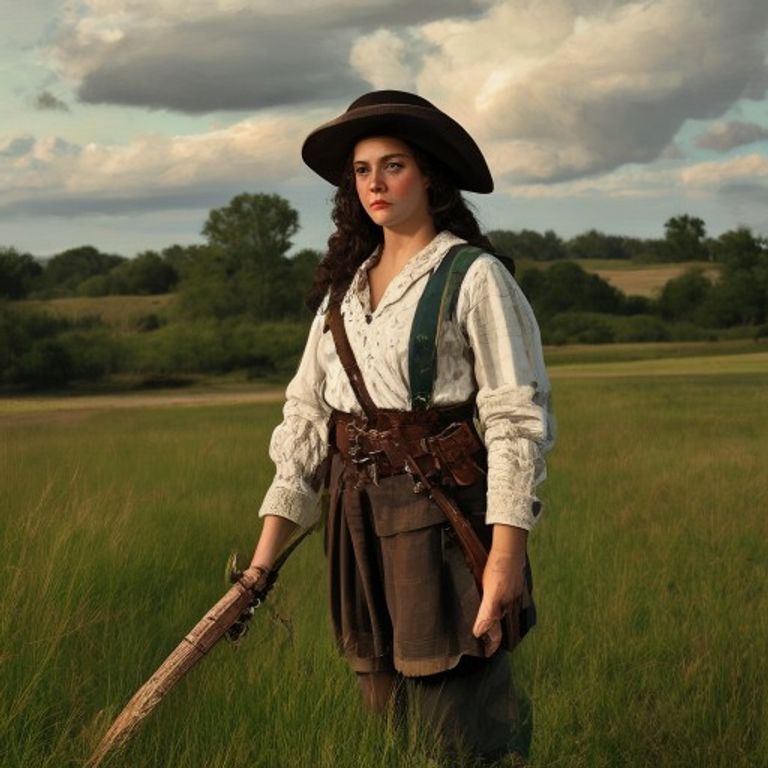
An entire English colony in North America disappeared, leaving only the word Croatoan carved into a tree.
⚠️ Research conducted with the assistance of Deep Research may be subject to referential ambiguity.
🖥️Clean HTML code using a proprietary tool.
👥 Research by Guilherme Felipe, Curation by Sílvio Lôbo
The Whispering Enigma of Roanoke: A Trail of Bones and Silence
The history of North America is filled with legends and mysteries, but few resonate with the same melancholy and perplexity as the case of the Roanoke Colony. An audacious attempt to establish the first permanent English settlement in the New World, which vanished without a trace, except for a single word carved into a post: "CROATOAN." This is the account of one of the oldest and most persistent enigmas in American history, a case that, even after centuries, continues to challenge investigators and fuel the popular imagination.
1. The Context and the Incident: The Seed of Disappearance
The late 16th century was buzzing with the spirit of exploration and expansion of European powers. England, under the reign of Elizabeth I, sought to consolidate its presence on the American continent, rivaling Spain. It was in this scenario that Sir Walter Raleigh obtained permission from the Crown to found colonies in the New World. In 1584, a first exploratory expedition mapped the coastal region of present-day North Carolina, where they found Roanoke Island. Enchanted by the beauty and strategic potential of the location, the English decided to establish an outpost.
The first colonization attempt, in 1585, led by Ralph Lane, was marked by tensions with native peoples and supply difficulties, culminating in the return of the colonists to England the following year. However, Raleigh's dream persisted. In 1587, a new expedition, this time with about 115 men, women, and children, under the leadership of John White, landed on Roanoke with the intention of founding a more solid and self-sufficient colony. The goal was to establish a base for future incursions and commercial development. But fate held a dark and inexplicable destiny for these pioneers.
2. Timeline of Events: An Echo in the Void
The reconstruction of the events that led to the disappearance of the Roanoke Colony is fragmented, based on incomplete reports and later testimonies. What is known is:
- July 1587: The third expedition, led by John White, arrives at Roanoke Island and settles. White leaves the colony in August 1587 to seek urgent supplies in England, leaving behind his daughter Eleanor Dare and her newborn granddaughter, Virginia Dare, the first English child born in America.
- August 1590: After a delay of almost three years due to the Anglo-Spanish War, which prevented navigation, John White finally returns to Roanoke. He finds the colony completely deserted. The houses were dismantled, and there were no signs of immediate struggle or violence. The only clue left by the colonists was the word "CROATOAN" carved into a wooden post and "CRO" on a nearby tree.
3. Main Theories: Deciphering the Code of Silence
The absence of concrete evidence has opened a wide range of speculation. Theories about what happened to the Roanoke colonists vary from logical and documented explanations to the most fantastic and conspiratorial ones.
Most Probable Theories (Scientific and Historical):
- Integration with Native Tribes: This is the most widely accepted theory among historians and archaeologists. The word "CROATOAN" refers to a Native American tribe that lived on a nearby island, now known as Hatteras Island. The hypothesis is that the colonists, unable to survive on their own or facing hostilities, dispersed and sought refuge and assimilation with the Croatoan or other allied tribes. Later Spanish accounts, such as that of Captain Carlos de Amézquita in 1609, mention the existence of bearded men in European clothing living among the natives of the region, which could corroborate this theory.
- Famine and Diseases: The lack of supplies, the difficulty in cultivating food on foreign soil, and exposure to new diseases could have decimated the colony. The colonists might have perished gradually, and the survivors, desperate, would have dispersed in search of better conditions.
- Voluntary Incorporation and Resettlement: It is possible that the colonists, realizing the infeasibility of the colony on Roanoke, chose to voluntarily join native communities, perhaps attracted by the promise of a more stable life.
Alternative and Speculative Theories:
- Violent Conflict with Hostile Natives: Although there is no direct evidence of a battle, it is possible that a surprise attack by enemy tribes resulted in the annihilation or capture of the colonists, with the survivors being taken captive and dispersed. The lack of signs of struggle could be explained by the speed and brutality of the attack.
- Natural Disaster: A devastating hurricane or other extreme weather events could have destroyed the settlement and killed most of the colonists, with the few survivors succumbing later.
- Shipwreck and Drowning: The North Carolina coast is notoriously dangerous, with strong currents and reefs. An escape attempt or a maritime rescue effort could have resulted in a collective shipwreck.
- Conspiracy Theories: Some suggest that the colonists were intentionally eliminated by political enemies of Raleigh, or that they were victims of secret experiments.
- Paranormal/Extraterrestrial Theories: For the more imaginative, the inexplicable disappearance leads to speculation about alien abductions or supernatural phenomena.
4. Controversies and Blind Spots: The Gaps in the Investigation
The main source of frustration for investigators is the lack of detail in existing reports. John White, the leader who returned, was desperate to find his family and may have been influenced by his desire for reunion, focusing on clues that could indicate a peaceful fate.
- The Absence of Signs of Struggle: The lack of skeletal remains, broken weapons, or signs of violence is a constant question mark. If there was an attack, why are there no traces? If there was a dispersal, why so complete?
- The Message "CROATOAN": The carved word is both a clue and an enigma. Was it left as a warning? A destination? A greeting? The ambiguity is frustrating.
- Spanish Accounts: Sightings of Europeans among natives were vague and were not thoroughly investigated by the English, who were more concerned with establishing their own colonies.
- White's Limited Search Time: John White stayed for only a short period on his search, eager to return to England and secure supplies, which may have prevented a more in-depth investigation.
5. Curiosities and Legacy: A Ghost in History
The case of the Roanoke Colony has become one of the most enduring mysteries in American history, influencing literature, film, and popular culture. The story of the "Lost Colonists" inspires fear, fascination, and an eternal questioning of what really happened.
- The Name "Croatoan": It has become synonymous with mysterious disappearance. The Croatoan tribe itself was eventually absorbed by other tribes, and its historical identity became diluted.
- Ongoing Archaeological Research: Over the years, archaeologists have excavated the island and surrounding areas in search of traces of the colonists. Recently, the discovery of artifacts, such as a signet ring with the Dare family crest, has rekindled interest and hopes of unraveling the enigma.
- Status of the Case: Officially, the Roanoke Colony case has not been "reopened" in a legal sense, but it remains an active field of historical and archaeological research. Each new discovery is met with great anticipation. The mystery persists, a somber reminder of the fragility of human life in the face of nature and the unknown.
The silence of Roanoke echoes through the centuries, an eternal invitation for us to unravel its secrets. The truth, like the island itself, may be hidden in plain sight, waiting only for the right lens to reveal it.





