



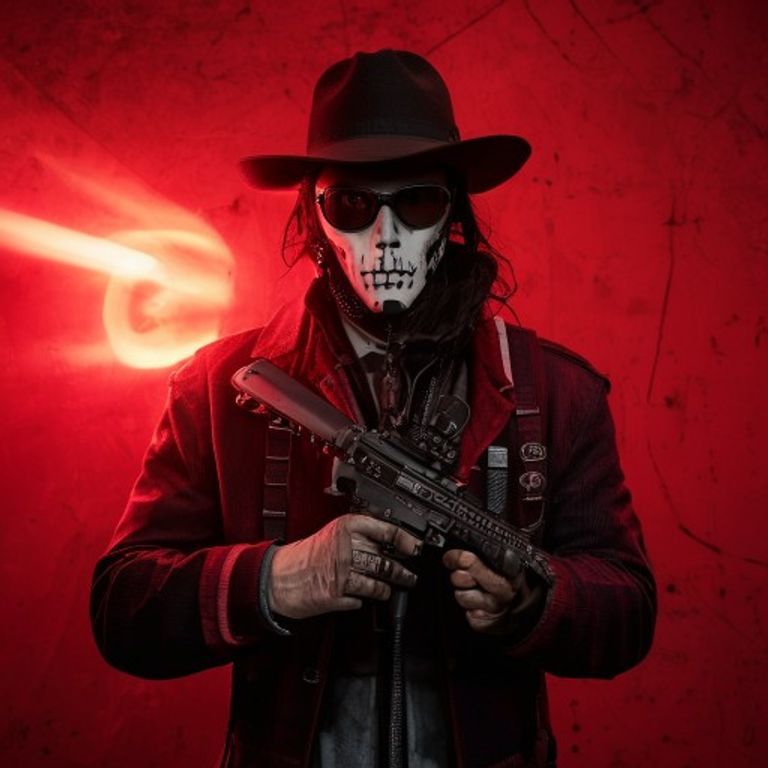
João Acácio Pereira, a criminal who terrorized São Paulo in the sixties by invading mansions and using a red-lens flashlight, becoming a figure of urban folklore.
⚠️ Research prepared with the aid of Deep Research is subject to referential ambiguity.
🖥️ Clean HTML code using a proprietary tool.
👥 Research by Guilherme Felipe, Curation by Sílvio Lôbo
The Red Light Bandit Case: A Ghost in the Night of São Paulo
Between the late 1960s and the early 1970s, São Paulo was haunted by a figure who became synonymous with terror and mystery: the Red Light Bandit. An audacious criminal whose methods and identity remained elusive, he robbed luxury residences with a cruelty that shocked society and fueled the popular imagination, leaving a trail of crimes that, to this day, echo as an unsolvable enigma. This article delves into the dark details of this case, separating indisputable facts from nebulous speculations.
1. The Context and the Incident: Where, When, and How the Mystery Began
Panic set in the capital of São Paulo in 1967, when a series of violent and daring robberies began to be recorded. The modus operandi was distinctive: the criminal, usually acting at night, would invade mansions and high-end apartments, hold residents at gunpoint, steal valuables, and, in some cases, commit sexual crimes and murders. The nickname "Red Light Bandit" arose from the robber's trademark: he used a flashlight with a red filter to illuminate rooms and intimidate his victims, creating a sinister and terrifying atmosphere.
The first occurrences were reported with perplexity. The apparent ease with which the bandit entered residences considered secure and his ability to disappear without leaving concrete traces intrigued the police and the press. The social landscape of the time, marked by rapid urban growth and the concentration of wealth, may have created fertile ground for the actions of such a sophisticated and audacious criminal.
2. Timeline of Key Events
- 1967: Beginning of the series of robberies with the "red light" characteristic. First victims, usually in upscale neighborhoods like Higienópolis and Pacaembu.
- 1968-1970: Intensification of crimes. The number of victims and the level of violence increase. The name "Red Light Bandit" is consolidated in the media. Witness reports describe a man of medium height, well-dressed, and with cultured speech.
- 1971: A turning point. The robbery of the mansion of the couple Jorge and Lúcia Telles, on June 16, 1971, culminates in a double homicide. The cruelty shocked public opinion even further, increasing pressure on authorities to capture the criminal.
- 1972: Police apprehend Domingos José Alves, a mechanic who possessed a flashlight with a red filter and a criminal record. He is quickly associated with the case and confessed to some crimes, but his connection to all the murders and robberies remains controversial.
- 1973: Domingos José Alves is sentenced to 30 years in prison. The official police narrative points to him as the sole Red Light Bandit.
- Subsequent Years: Despite Alves' conviction, many doubts persist as to whether he was the only one responsible, if he acted in conjunction with other individuals, or even if he was a scapegoat.
3. Main Theories
The enigma of the Red Light Bandit gave rise to a myriad of theories, some based on police investigations and others in the realm of speculation. We present the most relevant ones:
Most Likely Police and Scientific Theories:
- Domingos José Alves as the Sole Bandit: This is the official thesis defended by the police after his arrest. It is argued that Alves, with his characteristics and confession, would be the one responsible. However, inconsistencies in testimonies and the impossibility of Alves having committed all the crimes emerge as counterpoints.
- Organized Gang: Some investigators suggest that the name "Red Light Bandit" may have been used to mask the actions of an organized group of criminals, with different individuals carrying out the robberies. The sophistication and audacity could be the result of collective planning.
- Impostors or Copycats: It is plausible that, after the fame of the Red Light Bandit, other criminals adopted the same modus operandi to generate fear and confusion, or to divert attention from their own activities.
Alternative, Conspiracy, or Paranormal Theories:
- The Bandit as a Social Symbol: A sociological interpretation suggests that the Red Light Bandit, more than a criminal, became a symbol of revolt against social inequality and the ostentation of the São Paulo elite of the time. His robberies would be a form of "wealth redistribution," albeit a violent one.
- Participation of Influential Figures: A more diffuse conspiracy theory suggests that the Red Light Bandit could have had protection from powerful figures in politics or the underworld, explaining his ability to escape unpunished for so long and the difficulties in the investigation. There is, however, no concrete evidence to support such an allegation.
- Paranormal or Supernatural Influence: Although devoid of any scientific basis, the almost mythical nature of the bandit and his ability to "disappear" fueled, in less skeptical circles, speculations about non-human influences or even the character being a supernatural entity. This line of reasoning is purely folkloric and has no support in formal investigations.
4. Controversies and Blind Spots
The investigation of the Red Light Bandit Case is full of gaps and inconsistencies that fuel the mystery to this day:
- Confession of Domingos Alves: The confession of Domingos José Alves is one of the most controversial points. Reports indicate that he could have been coerced into confessing. Furthermore, the physical descriptions and the modus operandi in some crimes did not match those of Alves.
- Missing or Ignored Evidence: There are reports that important clues were lost or ignored by the police. The handling of the crime scene in some situations is questioned.
- Ambiguous Official Reports: Although Alves' conviction formally closed the case for the police at the time, several reports and testimonies collected over the years left room for doubts about the completeness and veracity of the investigation.
- Conflicting Testimonies: Witnesses presented different descriptions of the bandit, which made it difficult to create a faithful portrait and increased the feeling that more than one person could be involved or that the descriptions were inaccurate due to fear.
- The Absence of a Definitive Psychological Profile: The lack of an in-depth and conclusive psychological analysis contributed to the criminal remaining an enigmatic, almost abstract figure.
5. Curiosities and Legacy
The Red Light Bandit transcended the criminal realm to become an icon of Brazilian popular culture, inspiring films, books, and plays. His ghostly figure and the mysterious contours of his crimes made him a fascinating and terrifying character at the same time.
- Cultural Impact: The fear and curiosity generated by the case shaped the imagination of the time. The image of the bandit with his red flashlight became a symbol of urban crime in the São Paulo of the 60s and 70s.
- Cinematography: The case was adapted for the cinema on several occasions, with the film "The Red Light Bandit" (1968), directed by Rogério Sganzerla, being a landmark of Brazilian marginal cinema, which explored the figure of the criminal in an anarchic and experimental way.
- Current Status: Officially, the case of Domingos José Alves was closed with his conviction. However, for many researchers and enthusiasts of unsolved cases, the mystery about the true identity and the extent of the Red Light Bandit's crimes remains open. There is no official reopening of the case, but it continues to be the subject of studies and speculations.
- Legacy of Fear: The legacy of the Red Light Bandit is proof that some mysteries, even after decades, continue to haunt the collective memory, inviting reflection on justice, truth, and the limits of human investigation.





