



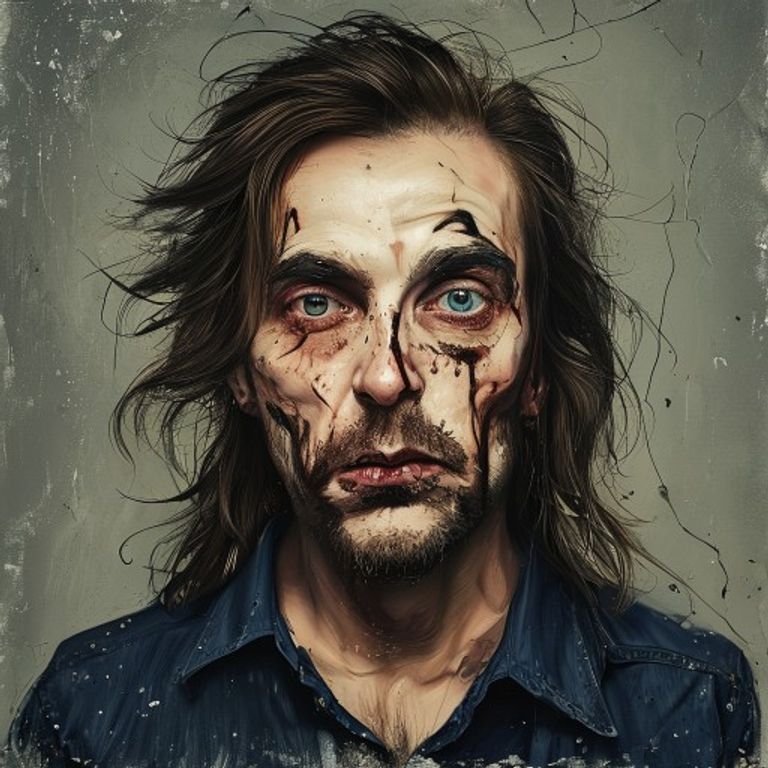
One of the biggest music conspiracy theories claims that the Beatles member died in 1966 and was replaced by a look-alike, based on supposed hidden clues in albums.
⚠️ Research conducted with the aid of Deep Research is subject to referential ambiguity.
🖥️Clean HTML code using a proprietary tool.
👥 Research by Guilherme Felipe, Curation by Sílvio Lôbo
The Mystery That Wouldn't Die: Unraveling "Paul Is Dead"
For decades, one of the greatest enigmas in the modern music industry has haunted fans and researchers: the supposed death of Sir Paul McCartney, the iconic bassist and songwriter for The Beatles. The phenomenon, known as "Paul Is Dead" (PID), transcends mere speculation, fueling a universe of conspiracy theories, obsessive analyses of album covers and song lyrics, and a persistent doubt about the reality presented to us. As an investigative journalist dedicated to uncovering hidden truths, we will delve into the depths of this case, separating proven facts from the most audacious fictions.
1. The Context and the Incident: Where, When, and How the Mystery Began
The rumor about Paul McCartney's death emerged in October 1969, amidst growing internal tension within The Beatles and rumors of the band's imminent end. The seed of discord was planted by a university publication, the Drake University's Times-Delphic, in a humorous article that hinted at the musician's death.
Shortly after, a DJ at Detroit radio station WKNR-FM, Russ Gibb, received an anonymous call detailing supposed clues about McCartney's death in a car accident in 1966. The story quickly gained traction, spreading like wildfire among young fans eager to uncover secrets in a pre-internet era. The main narrative claimed that McCartney had died in a car crash on the night of November 9, 1966, after an argument with the other band members. To maintain The Beatles' profitability, the band and their managers allegedly replaced McCartney with an identical look-alike, a musician named William Shepherd Campbell.
2. Timeline of Events: A Chronological Reconstruction of Key Facts
The timeline of events, and the supposed clues that support it, is complex and often contradictory:
- 1966: The alleged car accident of Paul McCartney. Fans point to a period of the musician's absence and changes in his appearance.
- 1967: Release of the album Sgt. Pepper's Lonely Hearts Club Band. This album would become a cornerstone of the theories, with its covers and tracks analyzed for hidden messages.
- October 1969: The humorous article in the Times-Delphic from Drake University. The article, though unofficial, catalyzed the spread of the rumor.
- October 9, 1969: The anonymous call to DJ Russ Gibb of WKNR-FM in Detroit. Gibb, intrigued, began broadcasting the theory on his radio show, triggering a media frenzy.
- October 10, 1969: The Michigan Daily newspaper published an article about the rumor, further amplifying the story.
- October-November 1969: The international press began covering the story. Fans worldwide embarked on a "clue hunt," meticulously analyzing The Beatles' albums and photos.
- 1970: Paul McCartney appeared publicly, vehemently denying the rumors and, ironically, releasing his debut solo album, McCartney, where the cover shows him in front of his home on Cavendish Avenue, London, an image that would later be interpreted as a "confirmation" of his death on another street.
3. The Main Theories: Possible Explanations
The "Paul Is Dead" case unfolds into a spectrum of theories, from the most rational to the most fantastical:
Conspiracy and Occult Theories:
- The Perfect Look-alike: The central theory states that Paul McCartney died in 1966 and was replaced by a look-alike, William Shepherd Campbell, chosen for his physical and vocal resemblance. The logic behind this theory lies in the supposed subtle substitution of details in McCartney's appearance and behavior after 1966.
- Hidden Messages in Albums: This is perhaps the most popular and enduring branch of PID. Fans believe that The Beatles, under pressure from the record label and management, deliberately left "clues" on album covers, song lyrics, and even in reversed speech (backmasking) to announce Paul's death. Examples include:
- The cover of Sgt. Pepper's Lonely Hearts Club Band, with McCartney facing away from the camera, wearing a black armband, and holding an instrument with three fingers raised (interpreted as a symbol of death). The inscription "Wednesday, 9th Nov. 1966" seen on flowers on the grave on the cover is also frequently cited.
- The title "I Am The Walrus" and the supposed reversed message "Paul is dead, miss him, miss him, miss him" at the end of the track.
- The image of the hand over McCartney's head on the cover of Magical Mystery Tour, interpreted as a sign of death in ancient Egypt.
- The release of Abbey Road with McCartney barefoot (a symbol of death in many cultures) and out of step with the other band members.
- The Deal with the Devil: Some more esoteric branches suggest that McCartney made a pact with occult forces, and his premature death was the price. The release of clues would be a way to "free" the musician's soul.
Rational and Psychological Hypotheses:
- The Cultural Phenomenon and the Search for Meaning: In the absence of clear official information and during a period of great social and cultural upheaval, the rumor about McCartney's death became a "mythos." The human need to find patterns and meaning in chaotic events led many to interpret mundane details as clues.
- The Radio Generation and Obsessive Fans: The culture of radio DJs, the most devoted fans, and the conspiratorial nature of the era created fertile ground for the rumor's dissemination. The lack of rigorous fact-checking contributed to the story's proliferation.
- The Marketing Game (or not): A less conspiratorial theory suggests that The Beatles themselves, or their team, might have deliberately planted some subtle clues as a prank or a marketing experiment, capitalizing on the air of mystery surrounding the band.
Scientific and Police Hypotheses:
From a strictly scientific and police perspective, there is no credible evidence to support the death of Paul McCartney in 1966. He is alive, has produced a vast body of work post-1969, and continues to perform publicly. The "clues" frequently cited are interpreted as coincidences, visual coincidences created by graphic design, and deep subjectivity on the part of the analysts.
4. Controversies and Blind Spots
The informal investigation of "Paul Is Dead" is rife with inconsistencies and blind spots:
- Lack of Concrete Sources: The origin of the rumor, the anonymous call to Russ Gibb, has never been confirmed or traced. The "testimonies" of supposed people close to The Beatles are mostly anonymous or unverified.
- Subjective Interpretations: The vast majority of "clues" rely on highly subjective interpretations. A black armband can signify mourning, but also fashion or a casual accessory. An instrument with three fingers could be a coincidence or a design flaw.
- Ignored or Distorted Evidence: Paul McCartney's very existence, his constant public presence and recordings after 1969, is the strongest evidence against the theory. However, theorists tend to ignore this reality or reinterpret it as part of the "conspiracy."
- Media Pressure and News Fabrication: The press coverage at the time, driven by curiosity and sensationalism, often amplified rumors without proper verification.
- Contradictory Statements: Over the years, Paul McCartney has denied the rumors countless times, in interviews and in his music. However, some fans interpret these denials as part of the elaborate staging.
5. Curiosities and Legacy
The "Paul Is Dead" case has become a lasting cultural phenomenon, demonstrating the power of collective imagination and the search for mysteries in an apparently predictable world:
- Impact on Pop Culture: PID has inspired countless articles, books, documentaries, songs, and even films. It has become a landmark in the history of music conspiracy theories.
- Symbol of an Era: The mystery reflects a period of social change, questioning of authority, and the rise of youth culture, where truth could be obscured by alternative narratives.
- The Legacy of Detailed Analysis: PID popularized the practice of analyzing album covers and song lyrics for hidden messages, influencing generations of music fans to scrutinize their favorite bands.
- Current Status: The "Paul Is Dead" case has not been reopened by any official authority, as there was never a formal investigation. It remains a topic of debate and fascination among enthusiasts, but is widely considered a cultural myth without factual basis. Sir Paul McCartney, for all practical and legal purposes, remains alive and active, enjoying an unparalleled career and debunking the rumor that has haunted him for decades.
The "Paul Is Dead" case reminds us that, in a world saturated with information, the line between fact and fiction can be thin. And sometimes, the most intriguing mysteries are those we create ourselves, fueled by our own relentless quest to uncover what lies hidden in the shadows.





