



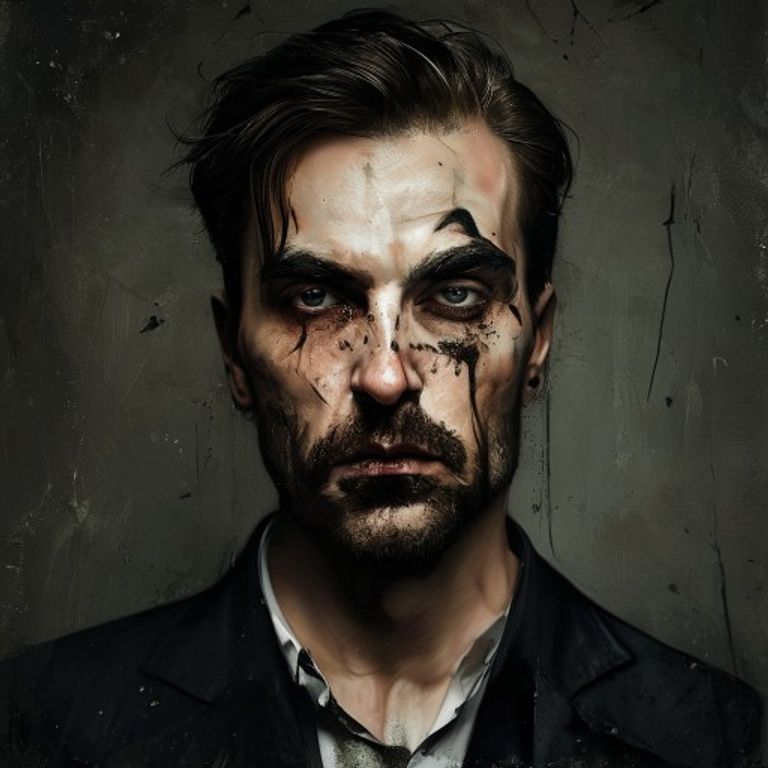
The 1946 Chicago criminal who left messages written in lipstick at crime scenes, begging to be caught before he killed again.
⚠️ Research conducted with the aid of Deep Research is subject to referential ambiguity.
🖥️ Clean HTML code using a proprietary tool.
👥 Research by Guilherme Felipe, Curation by Sílvio Lôbo
The Lipstick Killer Case: A Whisper in the Night of São Paulo
Amidst the vibrant and sometimes dark metropolis of São Paulo, a mystery took hold, echoing through the decades without ever reaching a definitive conclusion. The "Lipstick Killer Case" is not just a series of brutal crimes, but a labyrinth of incomplete clues, controversial investigations, and the persistent feeling that the truth still hides in the shadows.
The Context and the Incident: A Nightmare That Began in 1992
The nightmare began in the early hours of August 17, 1992, when the body of 19-year-old Marluce Pereira Lima was found in a vacant lot in the Vila Maria neighborhood, in the North Zone of São Paulo. The brutality of the crime shocked the city: Marluce was found semi-nude, with signs of sexual violence and strangulation. The particularity that gave the case its name, however, was the discovery of red lipstick smeared on the victim's lips, a macabre detail that suggested a sinister signature.
In the months that followed, the city lived in panic. Between 1992 and 1993, three more women were found dead under similar circumstances. The victims, all young women with similar physical traits, were found in peripheral areas with the same modus operandi: sexual violence and strangulation. The press, eager to unravel the mystery, coined the nickname "Lipstick Killer," a title that would become synonymous with fear and an investigation that seemed to be stalling.
Timeline of Events
- August 17, 1992: Discovery of Marluce Pereira Lima's body, marking the beginning of the case.
- September 1992: Second body is found, increasing public fear. The similarity to the first crime is noted.
- November 1992: Third victim is identified, solidifying the hypothesis of a serial killer on the loose.
- February 1993: Fourth victim is found, reinforcing the line of investigation and social panic.
- Subsequent years: Intense police investigations, but without the arrest of a definitive suspect. The case gains national notoriety.
- Following decades: The case becomes one of the most famous unsolved mysteries in Brazil, with countless theories and few concrete answers.
The Main Theories
The absence of a confessed or identified culprit opened space for various theories, some more grounded in police investigations and others bordering on the supernatural.
Police and Scientific Theories
- The Lone, Opportunistic Killer: This is the most likely official line of investigation. The theory posits that a single individual, possibly with personality disorders and specific fixations, acted methodically, taking advantage of the victims' vulnerability and the darkness. The lipstick would be a signature chosen randomly or with personal meaning.
- Group of Killers: A less popular but considered hypothesis is that more than one aggressor was involved, either acting together or independently, but with similar patterns. The difficulty would be proving the connection between the crimes beyond the modus operandi.
- Investigation Errors and Lack of Clue Connection: Critics point out that the police may have failed to connect crucial evidence or follow promising leads, allowing the killer to continue acting. Lack of resources or public pressure may have compromised the investigation.
Alternative, Conspiracy, and Paranormal Theories
- The "Phantom Woman" Killer: This theory, which emerged at the time and was fueled by sensationalist press, speculated on the participation of a female figure, possibly linked to the cosmetics industry or with some type of trauma that led her to "decorate" the victims with lipstick. However, there is no concrete evidence to support this hypothesis.
- Dark Ritual or Cult: In a country with a strong presence of diverse beliefs, the possibility of crimes with ritualistic connotations was raised. The lipstick, in this context, could have symbolism within an unknown ritual. Again, the lack of concrete evidence prevents validation.
- External Interference or Misdirection: Some conspiracy theories suggest that the crimes may have been orchestrated by third parties with other interests, or that the police may have deliberately diverted the focus from a culprit to protect someone.
- Paranormal Phenomena: Although not the subject of official investigations, some mystery enthusiasts speculate about the influence of supernatural forces or entities that could have induced the crimes or left clues "beyond the veil."
Controversies and Blind Spots
What makes the "Lipstick Killer Case" an eternal enigma are the countless controversies and blind spots that permeated the official investigation.
- The Lipstick: The exact origin of the lipstick used on the victims was never conclusively determined. The police collected samples, but the lack of a robust comparative database at the time or the possible contamination of evidence may have prevented a definitive analysis.
- Conflicting Testimonies and Lack of Strong Evidence: Eyewitness accounts, when they existed, were often vague, contradictory, or impossible to corroborate. The nature of the crime scenes, generally desolate and difficult to access, limited the collection of fingerprints and other conclusive forensic evidence.
- Lack of Concrete Suspects: Despite investigations and potential suspects over the years, no one was ever formally charged or convicted of the crime. The police did release composite sketches and investigate individuals, but without lasting success.
- It is believed that some police reports from the time may have been lost or disorganized, making it difficult to reopen and fully reanalyze the case.
Curiosities and Legacy
The "Lipstick Killer Case" transcended police news, shaping the popular imagination and fueling the fascination with unsolved mysteries in Brazil.
- Cultural Impact: The case inspired books, documentaries, and reports that, to this day, seek to shed new light on the crimes. The name "Lipstick Killer" became an archetype of the hidden predator, an urban ghost that haunts the collective memory.
- Current Status: Officially, the case remains unsolved. Although direct police investigations were closed many years ago due to a lack of new leads, the mystery remains alive in the police's cold case files and in the hearts of those who seek justice for the victims and their families. The possibility of reopening, depending on new evidence or forensic technologies, still exists, albeit remotely.
- The Legacy: The Lipstick Killer serves as a grim reminder of the fragility of urban security and the persistence of human evil, a mystery that may never be completely unraveled, but which continues to echo like a whisper in the night of São Paulo.





