



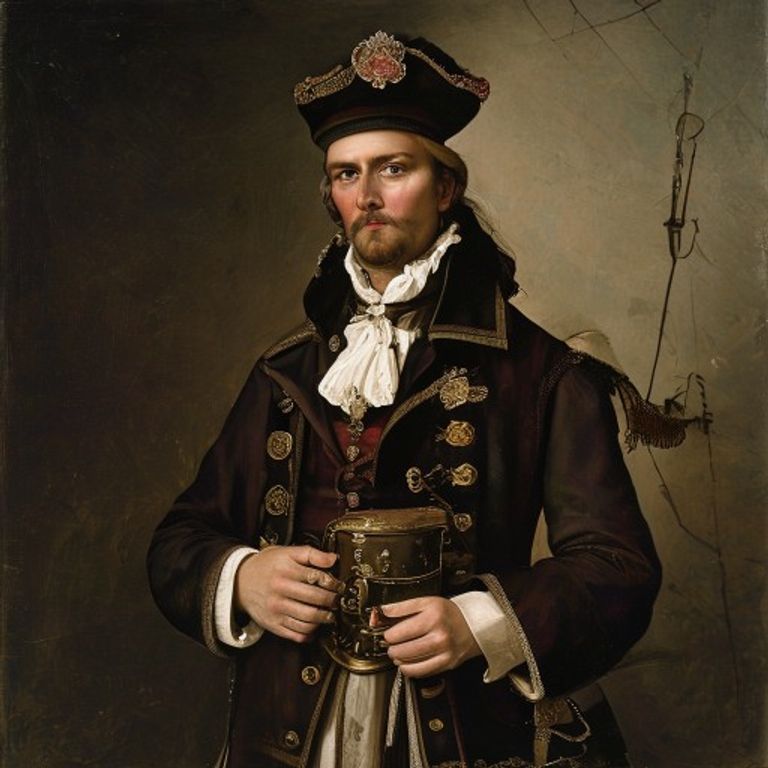
A famous Prussian explorer and his entire team disappeared into the unforgiving Australian outback in the nineteenth century, and their remains have never been found.
⚠️ Research elaborated with the aid of Deep Research is subject to referential ambiguity.
🖥️Clean HTML code using a proprietary tool.
👥 Research by Guilherme Felipe, Curation by Sílvio Lôbo
The Australian Enigma: The Disappearance of the Leichhardt Expedition
In the vast and unforgiving lands of the Australian interior, where the relentless sun and treacherous geography can hide secrets for centuries, one of modern exploration's greatest mysteries persists: the disappearance of Ludwig Leichhardt and his final expedition in 1848. This article delves into the facts, theories, and gaps surrounding the enigma, seeking to unravel what happened to the audacious German explorer and his men.
Leichhardt's case is not just the story of a lost explorer; it is a reflection of the colonial aspirations of the era, the brutality of the Australian wilderness, and the frustration of a nation searching for its geographical and historical identity. We will dive into the depths of one of the continent's most intriguing unsolved cases, where the silence of the Outback speaks louder than any word.
1. The Context and the Incident: The Call of the Unknown
Ludwig Leichhardt, a German geologist and botanist, had already gained renown for his exploratory expeditions in the then British colony of New South Wales. His most notable achievement was the 4,800-kilometer crossing of what is now Queensland in 1844-1845, a feat that catapulted him to fame. However, the desire to explore the unknown did not cease.
In 1848, Leichhardt embarked on his most audacious ambition: to cross the Australian continent from east to west, starting from Darling Downs in Queensland, heading towards the west coast at Port Henderson. The expedition, comprising Leichhardt, four European companions, and some Aboriginal guides, departed on February 3, 1848. The chosen route was challenging, traversing vast stretches of unexplored and hostile territory.
The last confirmed communication from the expedition occurred on April 3, 1848, when Leichhardt sent a letter from Cogoon River in the Queensland interior to his family in Berlin. In this letter, he expressed optimism about the expedition's progress, despite climatic challenges and supply shortages in some sections. After this date, silence. The expedition simply vanished without leaving any clear traces.
2. Timeline of Events: Tracing the Last Steps
Reconstructing the events that led to the disappearance of Leichhardt's expedition is an exercise in deduction and analysis of fragmented information. The chronology of the main events, based on historical records and subsequent accounts, is as follows:
- 1844-1845: Ludwig Leichhardt successfully completes his first major expedition, crossing what is now Queensland.
- February 3, 1848: Leichhardt's expedition, with five Europeans and Aboriginal guides, departs from Darling Downs, Queensland, with the objective of crossing the continent towards the west coast.
- April 3, 1848: Leichhardt's last known communication, a letter sent from Cogoon River. The letter describes the expedition's progress and expresses hope despite difficulties.
- April 1848 onwards: No further contact is established. The expedition mysteriously disappears.
- 1849: Concerns over Leichhardt's disappearance lead to the launch of a rescue expedition led by John Richard Parry. Parry's expedition finds only minor traces and no concrete information.
- Following decades: Several expeditions and searches are conducted, driven by Leichhardt's fame and the hope of finding answers. Some fragmented clues emerge, but nothing conclusive.
- Recent years: Interest in the case is revived by new research, archaeological discoveries, and public interest in historical mysteries.
3. Main Theories: Deciphering the Silence
The mystery of Leichhardt's disappearance has fueled a myriad of theories, ranging from rational explanations to more fantastical speculations. We will analyze the most prominent ones:
3.1. Scientific and Police Hypotheses (Most Likely):
- Death by Thirst or Exhaustion: The most straightforward theory suggests that the expedition succumbed to the extreme conditions of the Outback. Scarce water sources, scorching heat, lack of food, and disorientation could have led to death by dehydration, exhaustion, or starvation. The vastness of the territory makes locating the bodies extremely unlikely.
- Attack by Wild Animals: While not the primary theory, attacks by dingoes or other wild animals cannot be entirely ruled out, especially if the expedition was weakened or unprotected.
- Getting Lost and Disoriented: Navigation in the Australian interior at that time was rudimentary. A miscalculation, a sandstorm that erases tracks, or an illness incapacitating the main navigator could have led the expedition to become irrecoverably lost.
- Conflict with Aboriginal Populations: Although many interactions between European explorers and Aboriginal populations were peaceful, conflicts also occurred. Some accounts suggest that the expedition might have entered hostile Aboriginal territory, resulting in a fatal confrontation. However, this theory lacks direct concrete evidence.
- Illness or Accident: A sudden and fatal illness affecting everyone, or an isolated but catastrophic accident (such as horses falling, a sudden flood), could have decimated the expedition without leaving clear signs.
3.2. Alternative and Speculative Theories:
- Survival and Assimilation into Aboriginal Society: A more romantic theory, but with little factual basis, suggests that Leichhardt and some of his men may have survived and integrated into an Aboriginal tribe. There have been some vague reports of Europeans living among Aboriginal people in remote regions, but no concrete proof linking Leichhardt to such cases.
- Mutiny or Desertion: The possibility of an internal mutiny, where one or more members of the expedition might have rebelled against Leichhardt, leading to conflict and subsequent disappearance, is speculated. However, the apparent cohesion of the expedition, as portrayed in the last correspondence, makes this hypothesis less likely.
- Discovery of Gold and Attempt to Hide It: A more conspiratorial theory suggests that Leichhardt may have discovered a large gold deposit and, fearing that others would exploit or steal it, decided to hide the discovery and disappear with the information. This theory is fueled by the history of other gold discoveries in Australia at the time.
3.3. Paranormal or Supernatural Theories:
While generally dismissed by serious investigators, it is important to note that the isolation and vastness of the Outback, along with the persistent mystery, generate speculation about inexplicable events. However, there is no scientific or testimonial evidence to support paranormal or supernatural theories.
4. Controversies and Blind Spots: The Gaps in the Investigation
The official investigation and subsequent searches following Leichhardt's disappearance were marked by logistical challenges and, possibly, by failures. Several blind spots and controversies emerge from the analysis of the events:
- Fragmentation of Clues: The few pieces of evidence found were fragmented and inconclusive. A dagger found years later at Maranoa River was associated with the expedition, but its exact provenance is questionable.
- Conflicting Testimonies: Accounts from local Aboriginal people, often obtained indirectly and years after the disappearance, presented inconsistencies, making it difficult to triangulate reliable information. The difficulty of communication and cultural interpretation is also a factor.
- Logistical Difficulty of Searches: The rescue expeditions faced the same adverse conditions as Leichhardt, making the search in such a vast and inhospitable territory a monumental challenge. The lack of modern mapping and communication technology of the time also severely limited the chances of success.
- Missing or Ignored Evidence: It is possible that some clues were left behind, lost in the vastness, or simply not recognized as significant at the time. Official archives from the search expeditions may contain information that, re-analyzed today, could offer new perspectives.
- The Silence of the Aboriginal Guides: The Aboriginal guides who accompanied part of the expedition might have had crucial information, but their knowledge and experiences, often transmitted orally, were difficult for European investigators to capture and validate.
5. Curiosities and Legacy: Leichhardt's Shadow
The case of the Leichhardt Expedition has transcended the realm of exploration to become a cultural element in Australia. Its influence can be seen in:
- Inspiration for Generations: Leichhardt became a symbol of the explorer's audacity and perseverance, inspiring future generations to unravel the continent's mysteries.
- Folklore and Legends: Stories about the disappearance have become part of Australian folklore, with legends and speculations about the expedition's final fate persisting to this day.
- Continuous Searches: Interest in the case has never completely disappeared. Amateur researchers and historians continue to scour archives and explore the interior in search of new clues, fueling the hope that one day the enigma will finally be solved.
- Impact on Cartography and Geographical Knowledge: Despite its tragic end, Leichhardt's expeditions contributed significantly to Australia's geographical knowledge, mapping routes and identifying resources.
- Current Status: The case of Ludwig Leichhardt remains officially unsolved. Although the official recognition of his death is implicit due to his disappearance, the exact truth about his end and that of his expedition remains shrouded in mystery.
The case of the Leichhardt Expedition is a powerful reminder that, even in an increasingly mapped world, nature still holds secrets. The silent vastness of the Australian Outback continues to be the guardian of one of exploration's greatest mysteries, challenging humanity to seek the truth amidst the ancestral silence of the land.





