



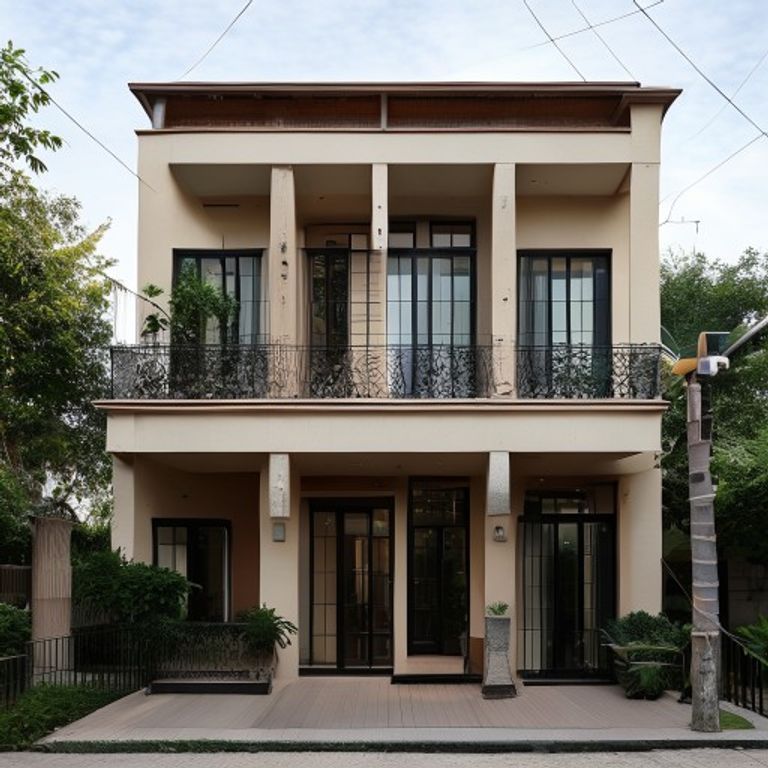
The investigation into the ownership of a coastal apartment that led to the first conviction of a former president in Brazil, which was later annulled by the Supreme Federal Court.
⚠️ Research conducted with the aid of Deep Research is subject to referential ambiguity.
🖥️ Clean HTML code using a proprietary tool.
👥 Research by Guilherme Felipe, Curation by Sílvio Lôbo
The Triplex Enigma: A Real Estate Mystery Haunting the São Paulo Coast
The Guarujá Triplex Case, a complex tangle of investigations, accusations, and judicial reversals, transcended the criminal sphere to become a symbol of discord and questioning regarding justice in Brazil. What began as an investigation into corruption and money laundering evolved into a complex puzzle, where factual truth blends with divergent narratives and bold speculations.
1. The Context and the Incident: Where, When, and How the Mystery Began
The saga of the Guarujá Triplex dates back to the early 2010s. At the epicenter of the controversy is a luxury property, a triplex with an ocean view in the city of Guarujá, on the coast of the state of São Paulo. The property, registered under the name of the company OAS Empreendimentos, became a key piece in Operation Car Wash (Lava Jato), launched in March 2014.
The investigation targeted an alleged scheme of diverting public funds in Petrobras contracts. OAS, one of the main construction companies involved, was accused of paying bribes to politicians and executives. The triplex, according to the main accusation, had been offered and renovated as part of these bribe payments, with former president Luiz Inácio Lula da Silva as the final beneficiary.
The mystery does not lie in the existence of the property or its connection to OAS, but rather in clarifying the actual ownership and the existence of a proven link of possession or effective benefit by Lula, something that has always been categorically denied by the former president and his defense team.
2. Timeline of Events: A Chronological Reconstruction
The complexity of the case requires a detailed timeline to attempt to lift the veil of uncertainty:
- 2005-2009: Period during which OAS allegedly acquired the property and carried out improvements.
- March 2014: Start of Operation Car Wash.
- 2015: The investigation into the triplex gains momentum, with testimonies from whistleblowers pointing to Lula as the beneficiary.
- September 2016: The Federal Public Prosecutor's Office (MPF) files charges against Luiz Inácio Lula da Silva, Marisa Letícia Lula da Silva (the former president's wife at the time), and Léo Pinheiro (former president of OAS) for passive corruption and money laundering.
- July 2017: Judge Sérgio Moro, of the 13th Federal Court of Curitiba, sentences Lula to 9 years and 6 months in prison. The decision was based on whistleblower testimonies and documents that, according to the prosecution, linked the former president to the triplex.
- January 2018: The Federal Regional Court of the 4th Region (TRF-4) confirms Lula's conviction and increases the sentence to 12 years and 1 month.
- April 2018: Lula is imprisoned in Curitiba.
- March 2019: The Superior Court of Justice (STJ) denies Lula's habeas corpus.
- November 2019: The Supreme Federal Court (STF) decides that Car Wash convictions must be judged in Curitiba, not Brasília, validating Moro's jurisdiction.
- June 2021: The Second Panel of the STF annuls Lula's convictions in the triplex case (and others from Car Wash), determining that the cases should be judged by the Federal District Justice, arguing the territorial incompetence of the Curitiba Court.
- February 2022: The MPF decides to archive the Guarujá triplex case due to a lack of evidence directly linking Lula to the property. The decision was based on the analysis of new evidence and the recognition that the property was never occupied or registered in the name of the former president or his family members.
3. Main Theories: From Factual to Paranormal
The Guarujá Triplex Case generated a range of theories, some anchored in police and judicial investigations, others floating in the realm of speculation:
-
Official Theory (Initial Accusation):
Based on plea bargains, mainly from Léo Pinheiro, and documents indicating works carried out by OAS in the triplex. The theory maintains that the property was given as an undue advantage to Lula in exchange for favors in contracts with Petrobras. The police and judicial logic sought to prove the transfer of ownership or hidden benefit.
-
Theory of Innocence (Lula's Defense):
Maintains that Lula was never the owner of the triplex, never visited it, nor even benefited from it. The defense claims that the property was an asset of OAS, which might have had plans to sell it later, and that the allegations were fabricated to politically harm the former president. The defense's logic focuses on the absence of concrete evidence of possession or benefit.
-
Theory of Political Persecution (Expanded View):
Argues that the triplex case was instrumentalized as part of a strategy of political and judicial persecution against Lula, aiming to prevent his candidacy and participation in politics. The logic here is the analysis of the political context and the motivations behind the investigations and charges.
-
Alternative and Conspiracy Theories (Speculation):
Although less grounded in concrete evidence, theories have emerged suggesting that the triplex could have been acquired by unknown third parties, that the property was just a scapegoat in a wider money laundering network, or that the evidence was forged or manipulated by external or internal agents of the judicial system. These theories often lack official documentation and are based on perceived gaps and inconsistencies.
4. Controversies and Blind Spots: Cracks in the Official Narrative
The Guarujá Triplex Case is full of controversies and blind spots that fueled the debate and doubts about the conduct of the investigations and the process:
-
Lack of Concrete Evidence of Ownership:
Despite the strong accusatory narrative, there was never a formal registration of the triplex in the name of Lula or his family members. The defense always pointed to the lack of unequivocal documents of possession.
-
Dependence on Plea Bargains:
A significant part of the accusation was based on testimonies from whistleblowers, such as Léo Pinheiro. The credibility and impartiality of these testimonies were frequently questioned.
-
Change of Jurisdiction and Annulment of Convictions:
The STF's decision to annul Lula's convictions in the triplex case, due to the territorial incompetence of the Curitiba Court, raised questions about the fairness of the original process and the actions of some magistrates.
-
Evidence of OAS Business:
Subsequent documents and testimonies suggested that OAS owned other properties in Guarujá with the intention of selling them, and that the triplex could be just another one of these developments, without a direct link to Lula. Expert reports and independent investigations brought new perspectives.
-
Archiving Due to Lack of Evidence:
The MPF's decision to archive the case in 2022, after the annulment of the convictions, reinforced the perception that the evidence presented previously was not sufficient to support a solid accusation.
5. Curiosities and Legacy: The Shadow of the Luxury Property
The Guarujá Triplex Case left a complex legacy and an indelible mark on the political and legal history of Brazil. The curiosities surrounding the property and the process are many:
-
Property Value and the Popular Imagination:
The triplex, with its privileged location and luxury features, became a symbol of wealth and, for the accusers, of corruption. Its estimated value and the costs of renovation were widely discussed.
-
The Symbol of Operation Car Wash:
For many, the triplex became the emblematic case of Operation Car Wash, representing the fight against corruption and, for others, an example of excesses and injustices committed during the operation.
-
Cultural and Media Impact:
The case dominated the news for years, generating heated debates, political and legal analyses, and influencing public perception about justice, politics, and the actions of the judiciary.
-
Current Status: Shelved, But Not Forgotten:
With the archiving of the case by the MPF in 2022, the Guarujá triplex, from a criminal perspective, is shelved. However, the case remains alive in public debate and collective memory as a controversial and intriguing chapter of Brazil's recent history, a constant reminder of the complexity of uncovering the truth amidst conflicting interests and narratives.





