



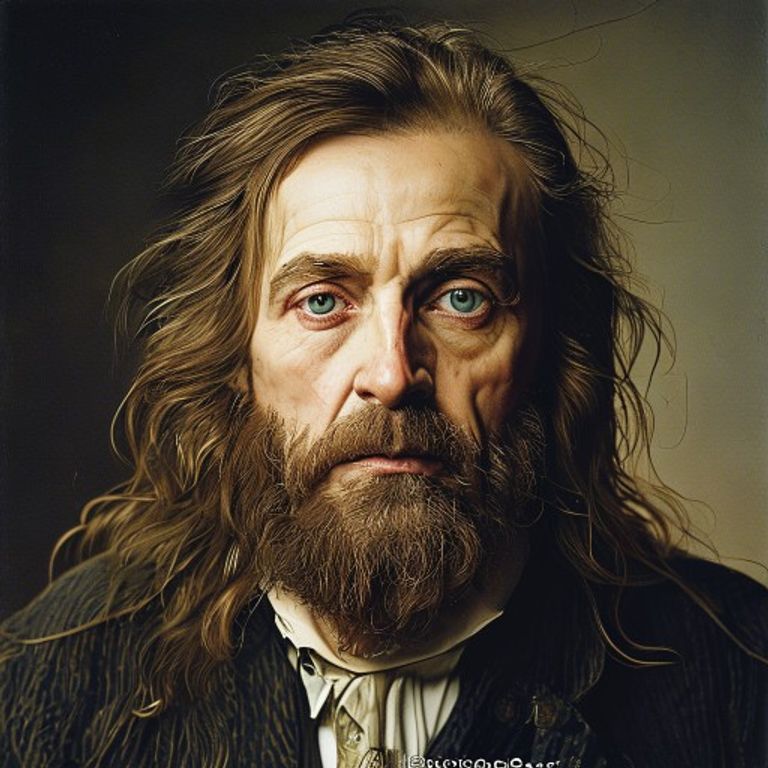
A twenty-year-old artist and wanderer who disappeared in the remote canyons of Utah in 1934, leaving only the word 'NEMO' carved into rocks and fueling legends of a nomadic, hidden life.
⚠️ Research elaborated with the aid of Deep Research is subject to referential ambiguity.
🖥️Clean HTML code using a proprietary tool.
👥 Research by Guilherme Felipe, Curation by Sílvio Lôbo
The Enigma of Everett Ruess: The Shadow of Desolation and the Call of Adventure
In the vast and unforgiving American Southwest desert, where the relentless sun sculpts breathtaking landscapes and silence is a palpable force, lies one of the 20th century's most enduring mysteries: the disappearance of Everett Ruess. A young artist and nature enthusiast, Ruess voluntarily immersed himself in the wilderness in 1934 but was never seen again. His story, marked by poetic writings and a deep connection to the land, has transformed into a cautionary tale, an invitation to speculation, and a lasting symbol of humanity's fascination with the unknown.
1. The Context and the Incident: Where, When, and How the Mystery Began
Everett Ruess, born in 1914 in Oakland, California, was a free-spirited young man with an artistic soul. From an early age, he showed a profound love for nature, especially the deserts of Arizona and Utah. His diaries and letters reveal a growing fascination with solitude, the austere beauty of desert landscapes, and a desire to distance himself from conventional society. In 1934, at the age of 20, Ruess embarked on his final and most ambitious expedition, planning to explore the remote region of Canyon de Chelly in northeastern Arizona.
He set off in November 1934, taking with him supplies, painting equipment, and his camera. His intention was to remain isolated for an extended period, documenting his experiences and seeking a deeper connection with the natural environment. However, his family and friends lost contact with him, and concern gradually turned into despair.
2. Timeline of Events
- November 1934: Everett Ruess sets off alone to explore Canyon de Chelly in Arizona. He leaves behind a legacy of vibrant writings about his admiration for nature and his yearning for solitude.
- After November 10, 1934: Ruess's last known contact is a letter sent from Kayenta, Arizona, to his family, detailing his plans to explore the region further.
- December 1934 - February 1935: Ruess's family, concerned about the lack of news, initiates the first searches.
- 1935: Several search expeditions are organized, including one led by Ruess's own brother, Woodford. Ruess's belongings, such as his burro, are found in different locations, but without any sign of his whereabouts.
- 1945: A macabre discovery in a remote canyon, hundreds of miles from where Ruess was last seen, casts a new and disturbing perspective on the case. A partial skeleton, found in a cave known as "Bone Cave," is initially associated with Ruess.
- 2008: More advanced DNA analysis is performed on the remains found in Bone Cave. The results confirm, with high probability, that the bones belong to Everett Ruess.
3. The Main Theories
The absence of a definitive body for decades fueled a myriad of speculations. The theories can be categorized as follows:
Most Probable Theories (Police and Scientific Perspective):
- Desert Accident: The most accepted theory, especially after the confirmation of the remains, is that Ruess suffered a fatal accident in the desert. This could include a fall, an encounter with wild animals (though rare in such remote areas), or exhaustion and dehydration in extreme weather conditions. The vastness and perilous nature of the terrain he ventured into make an accident a real possibility.
- Suicide: Although Ruess expressed a deep love for life and nature, some interpret his writings as signs of melancholy and a desire for transcendence. Extreme isolation could have led to a mental state resulting in a deliberate act.
Alternative and Conspiracy Theories:
- Murder: Rumors circulated at the time and continue to this day about the possibility of Ruess being a victim of murder. The motives would vary from conflicts with locals, theft of his belongings, or even involvement with illicit activities he might have witnessed. However, concrete evidence to support this theory is lacking.
- Voluntary Escape and New Identity: Some believe that Ruess, dissatisfied with his life or seeking a complete escape, may have deliberately staged his disappearance to start a new life under a different name. His writings about the beauty of solitude and his desire to detach from society could provide a basis for this hypothesis.
- Integration with Native Tribes: A more romantic theory suggests that Ruess, in his admiration for Native American culture, may have sought to integrate with an isolated tribe, renouncing his previous life. Although there are no reports of such integration, Ruess's deep admiration for Native Americans could inspire such speculation.
Paranormal and Supernatural Theories:
- Mystical Disappearance: The mystical and inspiring nature of the desert has led to speculation that Ruess may have been "taken" or transcended in some inexplicable way, either by unknown natural forces or by a spiritual calling that drew him beyond the physical plane. These theories are generally based on the enigmatic atmosphere of his disappearance site and the poetic nature of his writings.
4. Controversies and Blind Spots
The official investigation into Everett Ruess's disappearance was marked by challenges and, for some, a certain lack of diligence. Several blind spots and controversies have emerged over the years:
- Location and Dating of the Bone Discovery: The cave where the remains were found, "Bone Cave," is a considerable distance from the locations where Ruess was last seen and where his belongings were recovered. The difficulty of access and the time elapsed until the discovery raise questions about how the bones got there and whether the site is truly the end point of his journey.
- Lost or Ignored Evidence: During the initial searches, some of Ruess's belongings were found in isolated locations, but the lack of evidence of a struggle or a clear trail made it difficult to reconstruct the events. The possibility that important clues were overlooked or lost in the vast expanses of the desert is a constant concern.
- Initial Forensic Examination: The forensic examination of the remains in the 1940s was limited compared to modern methods. The subsequent confirmation by DNA in 2008 helped solve part of the puzzle but did not fully explain the circumstances of his death.
- Inconsistencies in Search Reports: Official reports from the search expeditions presented inconsistencies regarding the exact locations where Ruess's belongings were found and the estimated time to cover certain areas, generating confusion and fueling alternative theories.
5. Curiosities and Legacy
The case of Everett Ruess has transcended the scope of a simple disappearance, becoming a cultural phenomenon.
- The Fascination of Poetry and Nature: Ruess's diaries and letters, filled with profound reflections on the beauty of the desert, solitude, and the search for meaning, continue to inspire readers and adventurers. His writings are frequently cited in books and articles about the American desert and the hermit lifestyle.
- The Documentary "Lonewolf": Filmmaker Daniel Miller produced the acclaimed documentary "Lonewolf," which explores Ruess's life, writings, and the mystery of his disappearance, rekindling public interest in the case.
- Current Status: With the DNA confirmation in 2008, the case is officially considered a disappearance followed by death due to accident or natural causes. However, for many, the mystery of Everett Ruess persists, fueled by the poetic aura of his departure and the unsolvable enigma of his final days in the desert. The case has not been reopened in terms of new criminal investigations, but the debate and speculation about the exact circumstances of his end remain alive in the collective imagination.
The story of Everett Ruess is a poignant reminder of human fragility in the face of nature's grandeur and the enduring power of mystery. His call to adventure, which led him to become lost in stunning landscapes, echoes through the decades, inviting us to contemplate the limits of existence and what it truly means to find oneself by getting lost in the vast and silent desert.





