



A crime that occurred in São Paulo in 1937, where two brothers and their mother were found shot to death in a mansion; the circumstances of the scene defy the logic of forensic ballistics to this day.
⚠️ Research conducted with the aid of Deep Research is subject to referential ambiguity.
🖥️ Clean HTML code using a proprietary tool.
👥 Research by Guilherme Felipe, Curation by Sílvio Lôbo
The Rua Apa Castle: An Enigma Perpetuated by Crimes and Disappearances
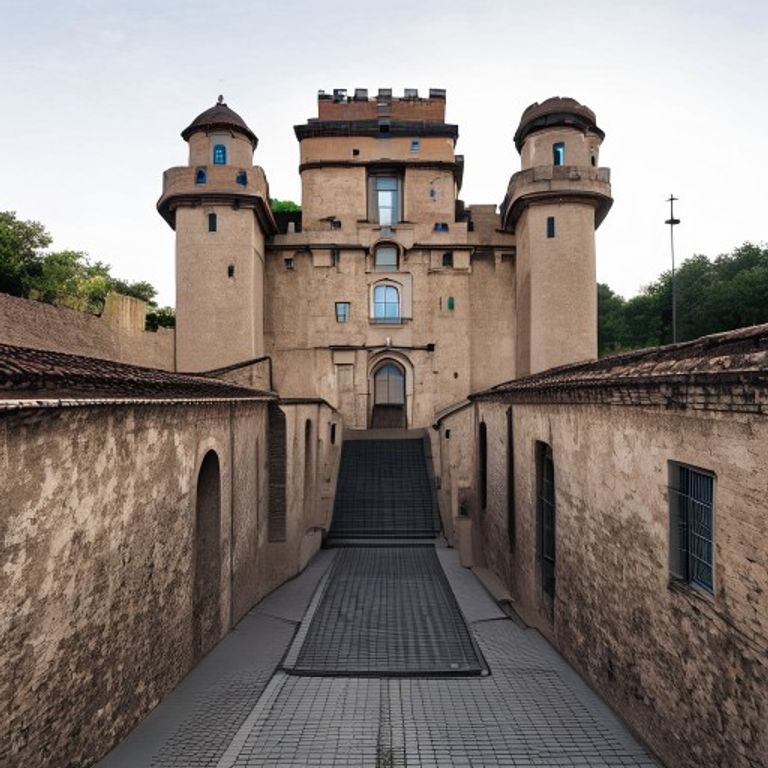
In São Paulo, in the heart of Rua Apa, a mansion that once housed dreams and stories became the stage for one of the darkest and most persistent mysteries in Brazilian police chronicles. What unfolded between the 1930s and 1940s at number 494 Rua Apa was not a singular event, but a succession of tragedies and disappearances that wove a veil of mystery over the property and its residents. This is the investigative report on the Rua Apa Castle Case, an enigma that defies definitive explanations and continues to haunt the memory of São Paulo.
1. The Context and the Incident: Where, When, and How the Mystery Began
The "Rua Apa Castle" was, in fact, an imposing semi-detached mansion built in the early 20th century. Its macabre fame began to solidify in the 1930s, when the Motta family, owners of the property, became associated with a series of tragic events. The mystery did not originate from a single incident, but rather from a conjunction of disappearances and deaths that, over time, were linked to the location and its occupants.
The narrative unfolds from the mysterious disappearance of Renata Motta, one of the family's daughters, in 1934. A few years later, in 1937, her husband, Jonas da Silva, also vanished without a trace. These events, intriguing in themselves, took on even darker contours with the death of Henrique Motta, the patriarch, under equally nebulous circumstances, allegedly murdered at home. The scarcity of official information and the atmosphere of fear that settled in the neighborhood fueled speculation, turning the mansion into a true "castle" of secrets.
2. Timeline of Events
The reconstruction of events in this case is marked by fragmented information, but the main milestones can be outlined as follows:
- 1930s: The mansion at 494 Rua Apa is owned by the Motta family.
- 1934: Disappearance of Renata Motta, daughter of the Motta couple. The police investigation at the time did not reach definitive conclusions.
- 1937: Disappearance of Jonas da Silva, husband of Renata Motta. Again, the police provided no concrete answers.
- 1938: Death of Henrique Motta, the family patriarch. The official version points to murder in his own residence, but the details and authorship remain obscure. Some reports suggest he was found wounded and died days later.
- Subsequent Years: Other disappearances and strange events are associated with the property, although many are difficult to prove and possibly the result of urban folklore.
3. Main Theories
The vacuum left by the lack of official answers gave rise to a myriad of theories, ranging from the rational to the fantastic. It is crucial to separate what is based on investigations, however flawed, from what belongs to the realm of speculation.
3.1. Scientific and Police Hypotheses (Most Likely Theories)
These theories attempt to find explanations within a logical criminal framework, even though the lack of concrete evidence makes them difficult to prove.
- Murder and Concealment of Bodies: The most direct theory suggests that the disappearances and the death of Henrique Motta were interconnected in a series of homicides. The bodies were allegedly hidden in a way that made discovery impossible. The central question would be: who had the motives and capacity to commit such crimes and keep them secret? Suspicions fell on family members or close acquaintances, but no official investigation could support this hypothesis with robust evidence.
- Running Away or Abandonment: In an era with fewer tracking mechanisms and different social customs, the possibility of voluntary flight or abandonment, especially in cases of family conflicts or debts, cannot be completely ruled out. However, the simultaneous disappearance of multiple family members, and the way some were recorded, makes this theory less plausible as a sole explanation.
- Family Crime and Pact of Silence: A hypothetical line of investigation could point to a crime committed by a member of the Motta family against the others, with the support of others to cover up the facts. The lack of detailed investigation records makes this speculation difficult to validate or refute.
3.2. Alternative, Conspiracy, or Paranormal Theories
These hypotheses explore less conventional paths, often fueled by the mystery and the almost legendary nature of the case.
- Involvement with Organized Crime of the Time: Rumors circulated about the Motta family's ties to illicit activities, suggesting that the disappearances could be the result of settling scores. However, there are no official records or concrete evidence to corroborate this connection.
- Macabre Rituals or Cults: The sinister aura of the mansion and the inexplicable nature of the events led to speculation about occult rituals or satanic cults. These theories, lacking factual basis, arose mainly from the popular imagination and the tendency to seek supernatural explanations for the inexplicable.
- Hauntings and Paranormal Phenomena: The very name "Castle" evokes images of mystery and the supernatural. Reports of apparitions, strange noises, and feelings of unease in the mansion, passed down from generation to generation, fueled the belief that the place was haunted, with the tragic events being manifestations of spiritual forces.
- Unknown Serial Killer Theory: The possibility of a serial killer operating in São Paulo at the time, using the mansion as a strategic point for their crimes, was also suggested. However, the absence of a consistent modus operandi and victims outside the family circle hinders this line of reasoning.
4. Controversies and Blind Spots
The official investigation of the Rua Apa Castle Case is marked by gaps and inconsistencies that leave room for the most diverse speculations:
- Lack of Robust Forensics: Reports from the time indicate that the forensic examinations carried out at the scenes of the disappearances and the death of Henrique Motta were superficial, with little documentation and little objectivity. The scarcity of forensic evidence is one of the biggest obstacles to resolving the case.
- Conflicting Testimonies: Witnesses at the time allegedly presented contradictory versions of the events, which may have confused investigators or been used to divert attention. Preserving these testimonies, if they exist in archives, is a challenge.
- Ignored Clues: There are reports that some relevant clues were neglected by the police, whether due to a lack of investigative structure, external pressures, or a disinterest that bordered on negligence.
- Lost or Declassified Files and Documents: The difficulty in accessing detailed police reports, forensic reports, and investigation records regarding the disappearances prevents an in-depth and impartial analysis of the facts. Many documents from that era may have been lost or were not properly archived.
- The Silence of the Motta Family: The Motta family, who should have been the primary source of information, maintained a notorious silence about the events, which, instead of bringing clarity, only added more mystery.
5. Curiosities and Legacy
The Rua Apa Castle Case transcended police annals to become part of the urban folklore of São Paulo. The history of the mansion and its tragedies inspired books, articles, documentaries, and various narratives that explore the dark side of the city.
- Cultural Impact: The mansion itself became an icon of mystery. Its peculiar architecture and the aura of disgrace that surrounded it attracted the curiosity of residents and visitors. The story fueled the popular imagination, being frequently cited in conversations about unsolved crimes and urban legends.
- The Fate of the Property: Over the years, the mansion changed owners several times. The legends and stigma associated with the location often hindered its sale and occupation. The house, which was once a home, became a symbol of tragedy and mystery.
- Current Status: The Rua Apa Castle Case remains officially **cold**. The lack of conclusive evidence and the passage of time make it practically impossible to reopen the investigations with any chance of reaching a definitive resolution. However, the mystery persists in the collective memory, with new generations discovering the story and wondering about the secrets kept within the walls of the Rua Apa mansion. The truth, if it ever comes to light, may be buried in some forgotten archive or, perhaps, has dissipated forever with the winds of São Paulo.





