



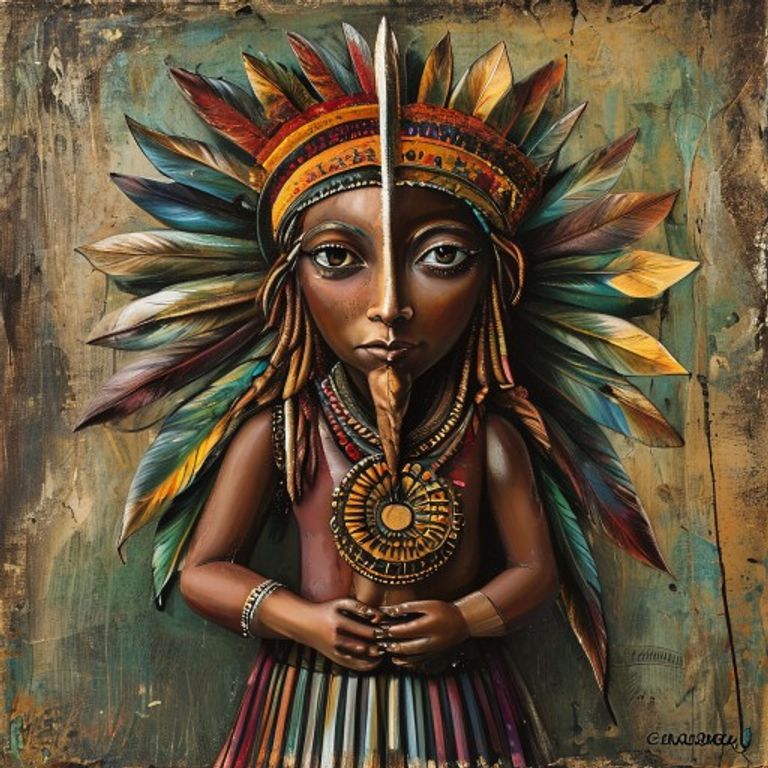
The largest refuge for enslaved people during the Brazilian colonial period, led by Zumbi, which resisted for decades as a symbol of freedom and Black resistance.
⚠️ Research conducted with the aid of Deep Research is subject to referential ambiguity.
🖥️ Clean HTML code using proprietary tools.
👥 Research by Guilherme Felipe, Curation by Sílvio Lôbo
The Enigma of the Quilombo dos Palmares: An Investigation in Search of Lost Truth
For over three centuries, the lands that now make up Brazil were the stage for one of the most brutal and complex stories of resistance: that of the quilombos (maroon communities). Among them, the Quilombo dos Palmares, a symbol of freedom and autonomy for thousands of escaped enslaved people, emerges as a particularly dark chapter, and in many respects, one not yet fully unraveled. This article delves into the mysteries surrounding the rise and, especially, the fall of this iconic refuge, seeking to separate proven facts from the speculations that fuel a perennial fascination.
1. The Context and the Incident: Where, When, and How the Mystery Began
The Quilombo dos Palmares, located in the Serra da Barriga region, in the current state of Alagoas, flourished from the end of the 16th century. Born from the systematic flight of enslaved people from sugar cane plantations and other agricultural activities in the Captaincy of Pernambuco, Palmares was not a monolithic entity, but a set of interconnected settlements, administered under its own system of government, with laws, customs, and a strong military organization. Over the course of approximately a century, the quilombo became a mirror of resistance, sheltering not only enslaved Africans but also Indigenous people and marginalized Europeans.
The "mystery" surrounding Palmares does not lie in its existence, which is widely documented in chronicles of the time, official reports, and accounts of military expeditions. The true enigma intensifies when we analyze the continuous efforts of the Portuguese Colonial State for its destruction, the unprecedented resilience of the quilombo, and, crucially, the exact circumstances of its final collapse and the fate of many of its inhabitants. The definitive fall of Palmares in 1694, after a relentless military campaign led by the bandeirante Domingos Jorge Velho, marks a turning point, but official narratives are often ambiguous and fragmented, leaving room for questioning.
2. Timeline of Key Events
The trajectory of Palmares is marked by cycles of growth, resistance, and confrontation. A chronological reconstruction of the main facts reveals the magnitude of the struggle:
- c. 1595: First reports of the existence of a significant quilombo in the Serra da Barriga.
- 17th Century: Period of consolidation and expansion of Palmares, with the founding of several "mocambos" (villages).
- 1630-1654: Period of the Dutch invasion in Pernambuco. Palmares, at times, established tactical alliances with the Dutch against the Portuguese and their allies.
- 1670s: Intensification of Portuguese military campaigns against Palmares. Leadership of Ganga Zumba and, subsequently, Zumbi dos Palmares.
- 1678: The peace agreement proposed by Ganga Zumba, which resulted in his deposition and death by his internal opponents, including Zumbi.
- 1680s-1690s: The expeditions of Domingos Jorge Velho, marked by extreme violence and scorched-earth strategies.
- 1694: The definitive fall of the capital of Palmares, Macaco, by the troops of Domingos Jorge Velho. The official narrative describes the flight of many, but details about the extermination and capture of prisoners are controversial.
- 1695: The capture and execution of Zumbi dos Palmares. His head was publicly displayed in Recife as a warning.
3. Main Theories on the Fall and Post-Collapse Fate
The fall of Palmares is not universally seen as an absolute end. Theories range from military and social explanations to hypotheses bordering on the paranormal. Let us analyze the most relevant ones:
3.1. Theory of Portuguese Military and Technological Superiority
Logic: This is the most "official" explanation and widely accepted by traditional historiography. It is based on the idea that Portuguese expeditions, especially the one led by Domingos Jorge Velho, possessed superior weaponry (including artillery and cavalry) and more effective tactics to penetrate the rugged terrain and dense forest where Palmares was located. The war of attrition, the burning of crops, and the brutality of colonial troops would have made resistance unsustainable.
Anchoring Evidence: Expedition reports, descriptions of weapons used, accounts of violence against the quilombolas.
3.2. Theory of Internal Divisions and Social Attrition
Logic: It argues that, in addition to external pressure, Palmares suffered from internal conflicts. The peace agreement attempt by Ganga Zumba in 1678, which provided for the surrender of part of the population in exchange for freedom, created a deep rift. The rise of Zumbi represented a harder line, but the wear and tear of decades of war, lack of resources, and constant external threat would have weakened social cohesion and long-term resistance capacity.
Anchoring Evidence: Accounts of the deposition and death of Ganga Zumba, the existence of different factions within the quilombo.
3.3. Theory of Survival and Dissimulation (The "Mystery" of Continuity)
Logic: This theory postulates that the destruction of Palmares in 1694 was not as complete as reported. A significant part of the population, led by Zumbi, would have managed to flee to remote and difficult-to-access regions, dispersing into small nuclei that continued to exist clandestinely. The execution of Zumbi in 1695 would be the confirmation of the capture of an important leader, but not necessarily the end of all pockets of resistance.
Anchoring Evidence: Fragmented reports about mass escapes, the existence of other lesser-known quilombos that emerged after 1694, the very mythology of Zumbi as a leader who "was never captured" (although his capture and death are documented).
3.4. Theory of Conspiracy and Protection by Third Parties (Speculation)
Logic: On a more speculative level, it is suggested that elements of colonial society, perhaps with economic interests diverging from those of the landowners and the State itself, could have offered refuge or assisted in the escape of some quilombolas. The theory may even involve the idea that some leaders of Palmares were taken out of the country to avoid their capture and exploitation.
Anchoring Evidence: Absent in official documents. Based on gaps and the need to explain the survival of part of the population against all odds.
3.5. Paranormal or Mystical Theories (Highly Speculative)
Logic: Some popular interpretations, often fueled by folklore and spiritual beliefs, suggest that the leaders or members of Palmares possessed ancestral knowledge or connections to the supernatural that allowed them to "disappear" or "transcend" physical violence. This view fits into a context of seeking explanations for extraordinary resilience in the face of oppression.
Anchoring Evidence: Non-existent in scientific terms. Rooted in oral traditions and spiritual interpretations of history.
4. Controversies and Blind Spots in Official Investigations
Official narratives about the fall of Palmares are full of "blind spots" and inconsistencies that fuel investigative debate:
- Fragmented Accounts of Destruction: The descriptions of the destruction of Macaco in 1694 are brutal but do not exhaustively detail the number of dead, the fate of prisoners, and the exact number of fugitives. The lack of precise records leaves room for questioning the completeness of the military action.
- The Leadership of Zumbi: Although the capture and execution of Zumbi are documented by Domingos Jorge Velho and other sources, the way he led the resistance and the details of his escape after the fall of Macaco are shrouded in a certain mist. Some speculate about the possibility of there having been more than one Zumbi or that the main leader managed to escape.
- The Silence on Survivors: What happened to the thousands of quilombolas who supposedly survived the 1694 attack and the capture of Zumbi? Most were recaptured and sent back to slavery, but there are few official mentions of the dispersion and the possible formation of new clandestine settlements.
- Lost or Ignored Material Evidence: The difficulty in carrying out precise archaeological excavations in the Serra da Barriga, due to the density of the forest and subsequent occupation of the land, prevents the confirmation of material traces that could corroborate or refute certain theories. Reports on the looting of Palmares mention the seizure of objects, but much of this material may have been lost or incorporated into private collections without proper registration.
- The Role of Domingos Jorge Velho: Although he is a consolidated historical figure, the details of his strategies, the organization of his troops, and the psychological impact of his "scorched earth" campaign could be deepened with the analysis of more documents.
5. Curiosities and Legacy
The Quilombo dos Palmares transcended its physical existence, becoming a powerful cultural and political symbol:
- The Legacy of Zumbi: Zumbi is revered as a national hero and martyr of the fight against slavery. Black Consciousness Day, celebrated on November 20, the date of his death, is a milestone in the fight for racial equality in Brazil.
- The Continuity of Quilombos: The "spirit" of Palmares inspired the formation of countless other quilombos throughout Brazil's history. Currently, remaining quilombola territories are recognized and fight for their territorial and cultural rights.
- Artistic and Literary Fascination: The history of Palmares has inspired novels, films, songs, and plays, keeping the theme alive in the public consciousness.
- Current Status of the Case: The Palmares "case" has not been reopened in terms of a formal criminal investigation, as it occurred centuries ago. However, academic and public interest in unraveling the mysteries of its fall and the lives of its inhabitants remains intense. Historical archives continue to be researched, and new interpretations emerge with the advancement of archaeology and historiography.
- The Symbol of Resistance: Palmares represents not only the escape from slavery but also the ability to build an alternative society, with its own rules and values, in the face of an oppressive system. The fight for the preservation of its memory is, therefore, a fight for the appreciation of Afro-Brazilian history and culture.
The Quilombo dos Palmares remains, in many respects, like a book with pages still blank. The search for answers, fueled by the need for historical justice and admiration for human resilience, continues to drive researchers and keep the flame of memory alive in the face of time and oblivion.





