



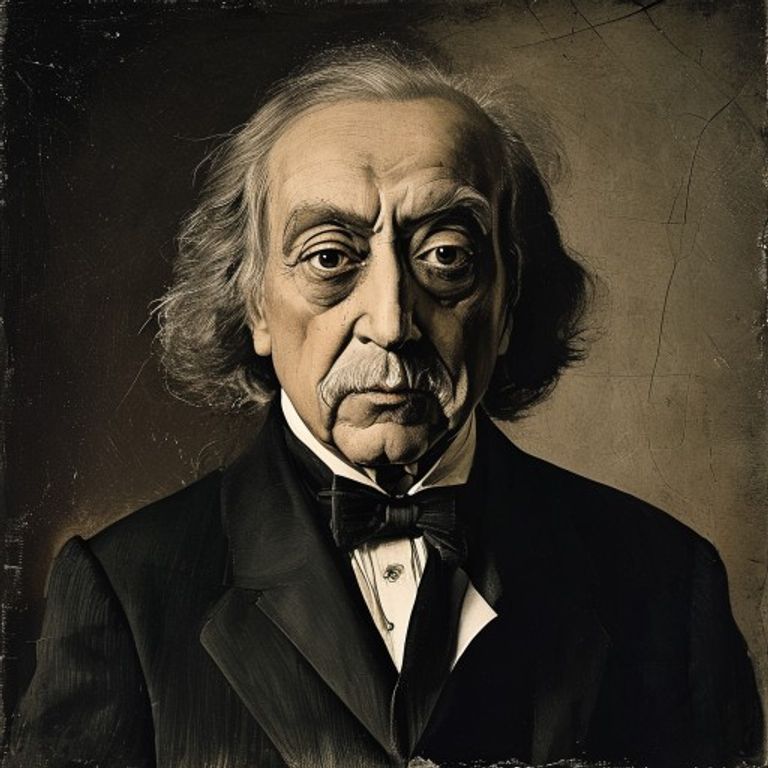
The criminal who terrorized the city in 1918 and sent a letter claiming he would spare houses where jazz was playing, whose identity was never discovered.
⚠️ Research conducted with the aid of Deep Research is subject to referential ambiguity.
🖥️ Clean HTML code using a proprietary tool.
👥 Research by Guilherme Felipe, Curation by Sílvio Lôbo
The Case of the New Orleans Axeman: A Dark Whisper in the Mystic City
New Orleans, a city that breathes history, culture, and at times, a veil of mystery. Amidst its winding alleys, melancholic jazz, and the palpable humidity of the Gulf, a dark and inexplicable chapter unfolded in the early 20th century, leaving a trail of terror and unanswered questions: the case of the Axeman.
The Context and the Incident: The Shadow Settles
The setting is the year 1918, in New Orleans, Louisiana. World War I still echoed across the globe, but in the vibrant port city, a more immediate and brutal threat began to haunt its inhabitants. The killer, nicknamed by the press as the "Axeman" due to the preferred weapon used to claim lives, emerged from anonymity to sow panic in unsuspecting homes.
The first victims were predominantly Italian and Italian-American, many of them merchants and business owners. The cruelty of the crimes, the home invasions, and the use of an axe as an instrument of death shocked the community, casting a shadow of fear that lasted for months. The absence of clear motives, the lack of a consistent pattern among the victims, and the audacity of the attacks made the case a true puzzle for local authorities.
Timeline of Events: A Trail of Blood and Panic
- May 1918: The first murders are recorded. The victims, usually found in their own homes, were brutally attacked with an axe.
- Summer 1918: The series of crimes intensifies, with new attacks being reported with alarming frequency. The local press begins to cover the case prominently, coining the nickname "Axeman".
- September 1918: The killer seems to reach a new level of audacity, carrying out multiple attacks in a single night. The city enters a state of panic.
- October 1918: The famous letter attributed to the killer appears, sent to the Times-Picayune newspaper, promising a new attack on the night of October 27th, on the condition that the city play jazz in all establishments.
- October 27, 1918: Known as the "Jazz Night," the date marked in the letter passes with unusual calm. No new attacks are recorded, leading many to believe that the killer kept his word or that the warning forged a moment of artificial truce.
- The End (and the Beginning?): After the "Jazz Night," the attacks attributed to the Axeman cease abruptly. It is believed that the last crime occurred in 1919, marking the apparent end of his wave of terror. However, the identity and fate of the killer remain a mystery.
Main Theories: Seeking Answers in the Darkness
The disconcerting nature of the crimes gave rise to a myriad of theories, ranging from plausible police investigations to darker and more fantastic speculations.
Police and Investigative Theories:
- Individual Suspects and Hidden Motives: The police investigated several suspects over time, including individuals with criminal records, business rivals of the victims, or people with personal grudges. The main theory revolved around a possible motive of revenge or extortion, where the killer tried to silence or punish certain people. One of the most prominent suspects was Joseph Momfre, an Italian mobster with ties to the city's underworld. However, the evidence against him was never conclusive.
- Organized Crime or Large-Scale Revenge: Some believe the crimes could be linked to internal disputes within the Italian mafia or an attempt to create a climate of fear to facilitate criminal activities.
Alternative and Conspiracy Theories:
- The Axeman as a Psychopathic Phenomenon: The lack of a logical pattern, the cruelty, and the apparent randomness of the attacks lead some to believe that the killer suffered from severe psychological disorders, acting on uncontrollable impulses or a sadistic desire to cause terror.
- The "Jazz Night" and a Tacit Agreement: The most intriguing theory related to the "Jazz Night" suggests that the killer somehow negotiated a ceasefire with the city. The hypothesis is that the killer, perhaps feeling exhausted or just wanting to assert his power, set an ultimatum: if the city played jazz, he would cease the attacks. The city, in panic and desperation, complied, and the killer, satisfied, disappeared.
- Paranormal and Supernatural Theories: In a city like New Orleans, where mysticism and voodoo are intrinsically linked to the culture, it is not surprising that more esoteric theories have emerged. Some suggest the killer could be a supernatural entity, a vengeful spirit, or a practitioner of dark arts who used his influence to inflict fear.
Controversies and Blind Spots: Gaps in the Investigation
The investigation of the Axeman was marked by several failures and controversies that contributed to its elusive nature:
- Limited and Contradictory Evidence: The police had little concrete evidence. Crime scenes were often messy, making it difficult to collect fingerprints or other high-quality forensic clues. Eyewitnesses were rare, and their accounts, when they existed, were often vague or contradictory.
- The Failure to Capture Joseph Momfre: Although Momfre was arrested and investigated, the lack of definitive proof allowed him to be released. Years later, he was murdered, but the mystery regarding his involvement in the Axeman case was never fully resolved.
- Loss of Files and Reports: Over time and with the lack of resolution, many original files and reports on the Axeman's crimes were lost or deteriorated, hindering the reopening of investigations or modern forensic analysis.
- Media Influence: The intense and sometimes sensationalist coverage by the press may have influenced public perception and even the official investigation, creating pressures and assumptions that were not always based on facts.
Curiosities and Legacy: The Persistent Echo of the Axe
The case of the New Orleans Axeman left a lasting legacy in popular culture and the city's imagination.
- Inspiration for Popular Culture: The case inspired countless books, films, and documentaries, solidifying its position as one of the most notorious mysteries in the United States. The film The Phantom of the Opera (1925), with the famous "man in the mask" scaring and killing people, is often cited as a work influenced by the atmosphere of terror created by the killer.
- The "Jazz Night" as an Icon: The legend surrounding the "Jazz Night" became a central element of the mystery, adding a layer of suspense and intrigue. The idea that a serial killer could be calmed by music is a fascinating and disturbing concept.
- Current Status: The case of the New Orleans Axeman remains officially unsolved. Although the wave of crimes ceased, the identity and fate of the perpetrator were never confirmed. The lack of closure ensures that the city of New Orleans continues to whisper stories about the relentless ghost who once wielded an axe.
The New Orleans Axeman is a dark reminder that, even in the most vibrant and lively cities, mystery can lodge itself in the shadows, defying logic and justice for generations.





