



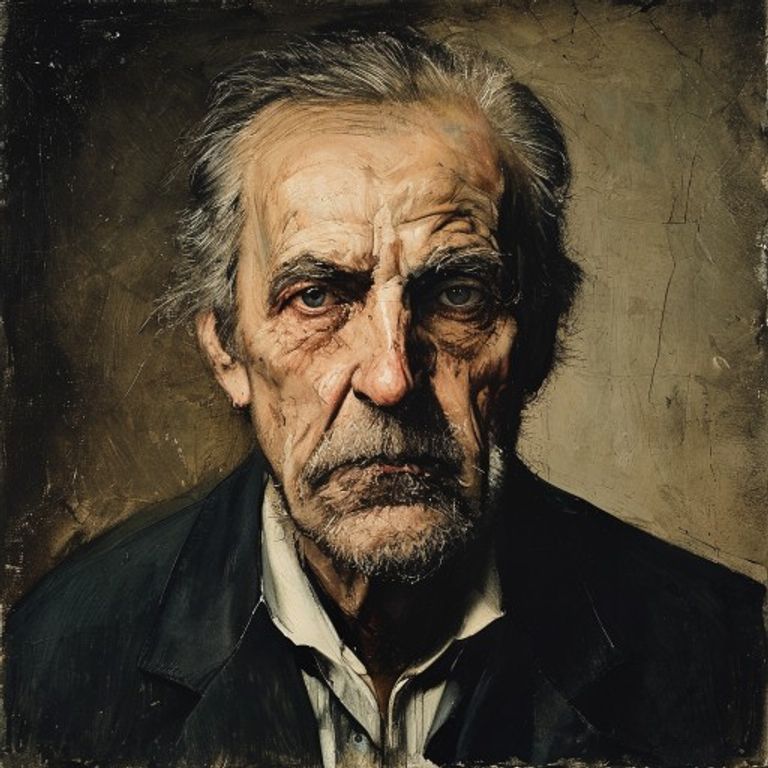
A German engineer shouted the enigmatic word 'YOGTZE' before fleeing his home in a panic in 1984; hours later, he was found severely injured in his overturned car on the shoulder, dying before he could explain what happened.
⚠️ Research elaborated with the aid of Deep Research is subject to referential ambiguity.
🖥️Clean HTML code using a proprietary tool.
👥Research by Guilherme Felipe, Curation by Sílvio Lôbo
The Case of the Gunter Stoll Killer: The Unexplained Shadow Over the Old Continent
In the intricate labyrinth of unsolved mysteries, few echo with the dark persistence of the Case of the Gunter Stoll Killer. What began as a brutal and seemingly isolated crime unfolded into decades of speculation, frustrated investigations, and an unsettling question that hangs over Europe: who was the Gunter Stoll Killer, and why do so many other cases seem to have been attributed to him, or to a phantom bearing his name?
1. The Context and the Incident: Terror in Half of Europe
The name Gunter Stoll, a taxi driver from Hamburg, Germany, became synonymous with a mystery that transcended borders. The brutality and secrecy surrounding his initial murder are merely the prelude to a much larger saga. The incident that catapulted Stoll to notoriety occurred on the night of December 13, 1981. His body was discovered on a rural road near Schwarzenbek, a few kilometers from his hometown.
The crime scene was shocking. Stoll, 60, was found with multiple stab wounds and had met a violent death. The nature of the attack suggested disproportionate fury, but the immediate circumstances of the murder remained obscure. The initial investigation, conducted by German authorities, struggled to find clear motives or concrete suspects. It was only later, as other crimes occurred, that the magnitude and complexity of what would become the Case of the Gunter Stoll Killer began to manifest.
2. Timeline of Events: Patterns and Aberrations
Reconstructing the timeline of the Case of the Gunter Stoll Killer is a complex exercise, as the narrative expands beyond a single incident, encompassing a series of events that may or may not be connected. However, some milestones are crucial:
- December 13, 1981: Gunter Stoll, a taxi driver from Hamburg, is found murdered on a rural road near Schwarzenbek. The cause of death is multiple stab wounds.
- Period After 1981: A series of other crimes, mainly murders and assaults, occur in different parts of Germany and, it is speculated, in neighboring countries like Austria and Switzerland. Some of these crimes bear disturbing similarities to Stoll's murder, leading the police to consider the possibility of a serial killer at work.
- Early 1990s: German police, particularly the serious crimes department (Mordkommission), begin to connect seemingly unrelated cases. The hypothesis of a recurring offender gains traction, and the name Gunter Stoll, the first emblematic victim, becomes associated with these new crimes.
- 2000s Onward: Despite decades of investigation, the case remains unsolved. The lack of a concrete suspect or definitive evidence leads to a stalemate, turning the case into one of Europe's greatest unsolved criminal mysteries.
- Present Times: The case continues to be a subject of public and police interest, with periodic reviews and the hope that new forensic technologies may one day bring answers.
3. Main Theories: Between Police Logic and the Shadow of the Unexplained
The lack of a clear resolution to the Case of the Gunter Stoll Killer has given rise to a range of theories, each attempting to fill the gaps left by the investigations. We analyze the most prominent ones:
3.1. Theory of the Isolated Serial Killer (Conventional Police Hypothesis)
This is the most widely considered theory by police authorities. It is based on the assumption that a single individual, or a very small group, committed a series of violent crimes. The logic here lies in identifying recurring patterns in the methods, victims, or circumstances of the crimes. Police reports and forensic analyses (when available and not confidential) would have sought this connection.
- Evidence: Similarities in the types of injuries, geographical areas of the crimes, dates of occurrence, and possible characteristics of the victims. The idea is that a "fixed" offender would have a recognizable modus operandi.
- Limitations: The lack of a consistent suspect who fit all cases, the geographical dispersion of the crimes, and the absence of a clear link between victims at certain times made validating this theory difficult.
3.2. Theory of Multiple Criminals (Alternative Police Hypothesis)
In contrast to the idea of a single killer, this theory suggests that the name Gunter Stoll became a kind of "label" for a series of violent crimes that, while possibly having some superficial similarities, were committed by different individuals. The police might have erred in grouping cases that were, in fact, not interconnected.
- Evidence: Subtle differences in criminal methods, victim selection, or crime scenes that, under closer scrutiny, would indicate multiple perpetrators. The difficulty in finding a single suspect who fit all profiles could also support this view.
- Limitations: Police often cling to observed patterns, and ignoring possible connections, however weak, can lead to incomplete investigations.
3.3. Theory of Connection with Organized Crime or Specific Groups
This line of investigation speculates that the crimes could be linked to organized criminal activities, such as drug trafficking, human trafficking, or even extremist groups. Gunter Stoll, in particular, or other victims, might have been targeted for specific reasons related to these activities.
- Evidence: Victims with connections to questionable circles, or the discovery of suspicious financial movement patterns. The brutal nature of the crimes could indicate a "warning" or an execution.
- Limitations: Often, the lack of access to confidential intelligence information prevents the confirmation of these theories. Concrete proof of a link to organized crime is difficult to obtain without access to secret files.
3.4. Alternative Theories: Paranormal and Conspiracy
The inexplicable nature of some aspects of the case has fueled less conventional theories, which, while lacking scientific support or concrete evidence, capture the popular imagination.
- Possible Paranormal Explanations: Some suggest the involvement of supernatural entities, hauntings, or even negative energies that could be linked to the deaths. The absence of rational clues and the apparent "invisibility" of the perpetrator fuel this speculation. However, there are no official reports to corroborate such hypotheses.
- Conspiracy Theories: Other theories point to the existence of government conspiracies or secret organizations. The idea would be that the crimes were staged or that the real killer was protected by powerful figures. The declassification of files in similar cases in other countries has led to increased speculation about hidden agendas.
- Limitations: The main limitation of these theories is the lack of any verifiable evidence. They are based on assumptions and the absence of proof, making them difficult to refute but impossible to prove.
4. Controversies and Blind Spots: The Fissures in the Investigation
The Case of the Gunter Stoll Killer is haunted by inconsistencies and clues that, for many, were overlooked or misinterpreted. The official investigation, although conducted by competent professionals, seems to have stumbled over insurmountable obstacles.
- Ignored Clues: Initial reports mentioned the existence of an unidentified vehicle circulating in the area on the night of Stoll's murder. The lack of a thorough investigation into this vehicle is often cited as a crucial failure.
- Conflicting Testimonies: In cases with multiple victims, it is common for witness testimonies to vary. However, in some stages of the investigation, conflicting information about the suspect's description or the events might have led to false leads or a fragmentation of police intelligence.
- Missing or Unused Evidence: The allegation that some physical evidence or important testimonies may have been lost or poorly stored over the years is a constant concern in long-running cases. Declassified files in other historical cases have revealed the importance of documents previously considered secondary.
- Lack of Effective International Cooperation: If the case involved perpetrators who crossed borders, the lack of robust and agile international police cooperation in the 1980s and 1990s could have been a significant limiting factor.
5. Curiosities and Legacy: The Persistent Shadow
The Case of the Gunter Stoll Killer has transcended police headlines to become a persistent element in popular culture and a symbol of frustration for justice.
- Cultural Impact: The mystery has inspired books, documentaries, and discussions in online forums dedicated to unsolved crimes. The story of a killer who escapes punishment for so long resonates with humanity's fascination with the unknown and injustice.
- The Name as a Label: The use of Gunter Stoll's name as a starting point for a series of crimes suggests a possible initial confusion by the police, or the killer's intention to obscure his actions.
- Current Status: The case remains officially unsolved by German authorities. While there is no active large-scale investigation effort as in the early years, it is likely that the files remain open and that any new evidence will be considered. Hope lies in the evolution of forensic technology, such as advanced DNA analysis, which in other cases has already brought answers decades after the crimes.
The Case of the Gunter Stoll Killer remains a grim reminder that not all crimes find their logical conclusion. It stands as an enigma, a shadow that hangs over the European continent, fueling debate and the hope that one day the truth, however terrifying, will finally come to light.





