



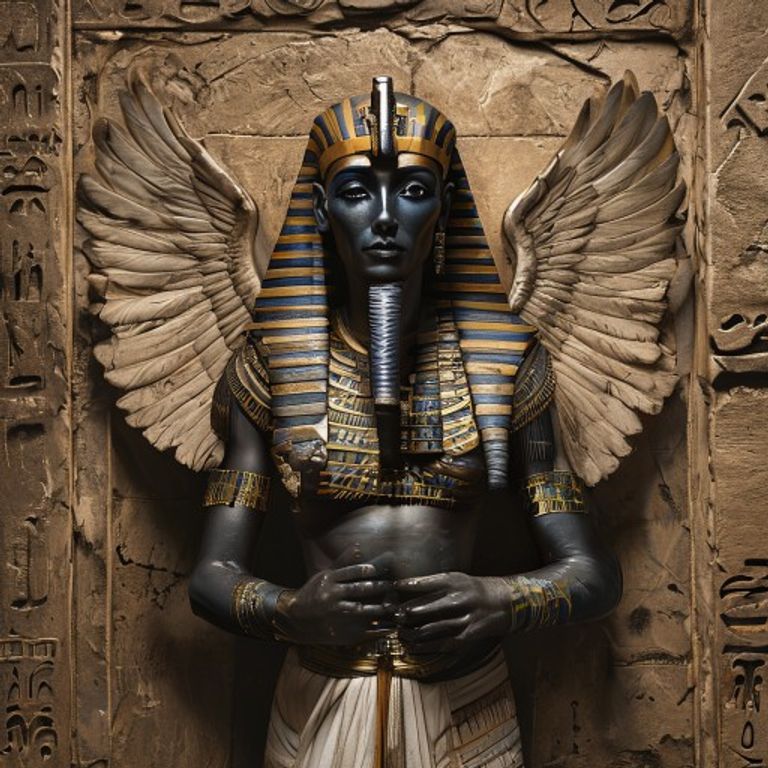
The famous opening of the intact tomb of the ancient Egyptian pharaoh in the 1920s was followed by a frightening series of tragic deaths and sudden illnesses among the archaeological team.
⚠️ Research elaborated with the aid of Deep Research is subject to referential ambiguity.
🖥️Clean HTML code using a proprietary tool.
👥 Research by Guilherme Felipe, Curation by Sílvio Lôbo
The Enigma of the Tomb: Investigating the Alleged Curse of Tutankhamun
In 1922, British archaeologist Howard Carter unearthed in the Valley of the Kings, Egypt, a discovery that would shake the world: the nearly intact tomb of the young pharaoh Tutankhamun. However, what followed the glorious revelation was not just admiration for the historical and artistic wealth, but the prelude to a series of inexplicable deaths that gave rise to one of the most persistent legends of the 20th century: the "Pharaoh's Curse." This article aims to unravel the facts, separate myth from reality, and analyze the theories surrounding this case that, decades later, still echoes with mystery.
Context and the Incident: The Awakening of the Pharaoh
After years of fruitless searching, Howard Carter, funded by Lord Carnarvon, finally found the entrance to tomb KV62, a monumental find that promised to rewrite chapters of Egyptian history. The discovery was met with global frenzy. However, a few months after the tomb's opening, in April 1923, Lord Carnarvon died under circumstances that were quickly attributed to the wrath of a vengeful pharaoh.
Carnarvon, an eccentric aristocrat and an enthusiast of Egyptology, was bitten by a mosquito on his face. The bite became infected, and he developed sepsis. Transferred to the Continental Hotel in Cairo, he died unexpectedly. The press, eager for sensationalism, exploited the temporal link between the tomb's opening and the death of the main financier, weaving the narrative of an ancient curse directed at the desecrators.
Timeline of Key Events
- November 4, 1922: Howard Carter and his team discover the entrance to Tutankhamun's tomb in the Valley of the Kings.
- February 16, 1923: The burial chamber is opened, revealing the pharaoh's priceless treasures.
- April 5, 1923: Lord Carnarvon dies in Cairo. The official cause was sepsis resulting from an infected mosquito bite.
- 1923-1930: A notable number of people connected, directly or indirectly, to the excavation or visitation of the tomb die. Among them are:
- George Jay Gould I: A wealthy American who visited the tomb and died of pneumonia shortly after.
- Arthur Mace: A member of Carter's team who fell gravely ill during the tomb's cleaning and died in 1928.
- Richard Bethell: Carter's private secretary, found dead in his bed in 1929, with the cause not entirely clear.
- Douglas Reed: A journalist who covered the discovery and, years later, published a book about the curse, dying of an unspecified illness.
- 1930: Howard Carter, the last living link between the discovery and the "curse," dies of lymphoma at the age of 56.
Main Theories
The proliferation of deaths, real or perceived, generated a range of explanations, from the rational to the supernatural:
Scientific and Forensic Hypotheses (Probable)
- Latent Pathogenic Agents: The most scientifically accepted theory suggests that the tomb, sealed for millennia, could harbor spores of pathogenic bacteria or fungi, possibly from mold or decomposition, which would have been released upon opening. Exposure to these agents, especially for individuals with compromised immune systems or in the poor sanitation conditions of the time, could lead to severe and fatal infections. Toxicological reports from the era were rudimentary, but the possibility of exposure to toxins or pathogens cannot be ruled out.
- Accidents and Pre-existing Medical Conditions: Many of the deaths, when analyzed individually, can be explained by natural causes or accidents. Lord Carnarvon, for example, was already a man of fragile health and an enthusiast of risky activities. His pre-existing health conditions made him more susceptible to complications from an infection. Similarly, other individuals may have died due to common illnesses of the time that, without current medical advancements, were more dangerous.
- Psychosomatic Effect and Suggestion: The intense media coverage of the "curse" may have created a state of anxiety and fear among those involved. Fear can manifest physically, exacerbating existing medical conditions or making people more susceptible to illness. The expectation of death, fueled by the curse narrative, may have played a significant role.
Alternative, Conspiracy, or Paranormal Theories
- The Literal Curse (Paranormal): This is the popular theory that attributes the deaths to a supernatural enchantment cast by the ancient Egyptians to protect the tomb. It was believed that inscriptions on the tomb walls or artifacts could have released a malevolent force against anyone disturbing the pharaoh's rest. There is no physical evidence of such enchantments in archaeological reports.
- Conspiracy of Silence: A more conspiratorial theory suggests that the deaths were not accidental and that there was an attempt to cover up something related to the tomb, perhaps a dangerous artifact or a secret that threatened influential figures. This theory lacks any solid evidentiary basis and resides in the realm of speculation.
- The Pharaoh's "Spirit": Variations of the literal curse focus on the idea that the spirit of Tutankhamun, or his guardians, retaliated against the intruders. This perspective is largely based on spiritual beliefs rather than investigative facts.
Controversies and Blind Spots
The curse narrative is marked by several inconsistencies and blind spots that favored the legend:
- Selectivity in Death: The count of deaths associated with the tomb is often exaggerated. The press of the time, seeking a dramatic angle, tended to attribute any death of a person linked to the discovery to the curse, ignoring deaths that did not fit the narrative. Many people who visited or worked in the tomb lived long and healthy lives.
- Howard Carter's Longevity: Howard Carter, the main "desecrator," lived for 17 years after the discovery and 10 years after Lord Carnarvon's death. If the curse were real and relentless, he would be expected to be one of the first victims. His death, although it occurred, was due to a recognized disease (lymphoma), not a sudden event attributable to a curse.
- Lack of Rigorous Investigation of Deaths: At the time, forensic science and police investigation did not possess the resources and knowledge of today. The causes of death were often attributed to obvious factors or simply not investigated further when a "convenient" explanation like the curse was available.
- Ignorance of Sanitary Conditions: Egypt in the 1920s did not have modern sanitation standards. The presence of open sewers and the proliferation of insects were common, factors that contributed to the spread of infectious diseases, regardless of any curse.
Curiosities and Legacy
The "Case of the Curse of Tutankhamun" transcended archaeology to become a pop culture icon. The story of the cursed tomb has inspired films, books, documentaries, and a lasting fascination with ancient Egypt and its mysteries.
Cultural Impact: The curse served as a catalyst for public interest in Egyptology. It added an element of danger and mysticism to a discovery that was already spectacular in itself. The figure of the vengeful pharaoh became an archetype of horror and adventure.
Current Status: The case was never formally reopened as a police investigation, as there is no clear crime to be solved. The "curse" has, in practice, been demystified by science and logic over time. However, as a historical mystery and a cultural phenomenon, the case remains alive. Official archaeological reports detail the discovery and preservation of the tomb, focusing on historical and scientific aspects. The legend, however, continues to fascinate generations, a testament to the power of storytelling and our quest for explanations for the inexplicable.





