



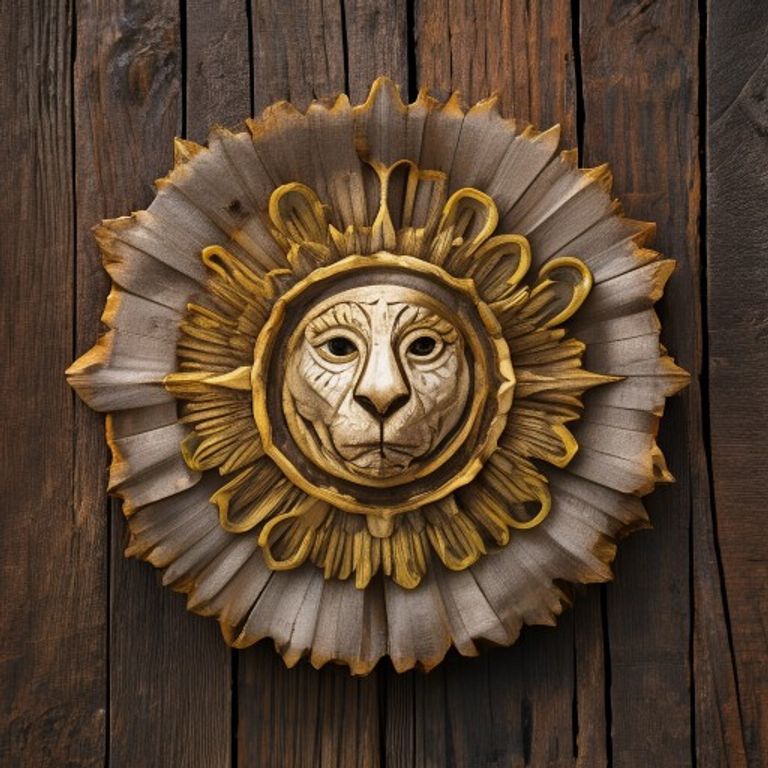
A theory that the ruins of an immense continent lost in the central Pacific Ocean once housed an advanced human civilization before sinking into the sea.
⚠️ Research elaborated with the aid of Deep Research is subject to referential ambiguity.
🖥️Clean HTML code using a proprietary tool.
👥 Research by Guilherme Felipe, Curation by Sílvio Lôbo
The Lost Continent of Mu: A Legend Unearthed or a Scientific Hoax?
For centuries, humanity has delved into the unfathomable mysteries of our past, seeking answers in ancient ruins, forgotten texts, and sometimes, in legends that defy logic itself. Among these enigmas, few capture the imagination as much as the alleged existence of a lost continent in the Pacific Ocean – Mu. More than just a story of submerged lands, the case of Mu has evolved from an academic hypothesis into a cultural phenomenon, filled with conspiracy theories and plot twists worthy of a movie script. But what is the truth behind this story? Was Mu a remnant of an advanced civilization swallowed by the depths, or merely the product of a fanciful interpretation of scarce evidence?
1. The Context and the Incident: Where, When, and How the Mystery Began
The "incident" of the Continent of Mu does not refer to a single catastrophic event, but rather to a long process of interpretation and dissemination of ideas that culminated in the popularization of the concept. The seed was planted in the late 19th and early 20th centuries, with the rise of interest in ancient civilizations and the exploration of new scientific frontiers. The main architect of this narrative was the French writer and occultist, Augustus Le Plongeon. Working in the Yucatan Peninsula, Mexico, during the 1870s and 1880s, Le Plongeon dedicated himself to the study of Mayan ruins, especially those of Chichen Itza.
Based on his decipherment (highly contested by modern linguists and archaeologists) of inscriptions on Mayan stelae and codices, Le Plongeon postulated the existence of a mother civilization, ancestral to the Maya, which he called Mu. According to his interpretations, Mu was a vast land, located somewhere in the Pacific Ocean, that disappeared beneath the waves in a millennial cataclysm. His theory was widely disseminated in books such as "Queen Moo and the Egyptian Sphinx" (1896), where he described Mu as a prosperous and technologically advanced land, whose remnants had given rise to ancient civilizations worldwide, including Egypt and America.
Later, Le Plongeon's theory was embraced and expanded by other authors, notably the British Colonel James Churchward. Between 1926 and 1935, Churchward published a series of books, such as "The Lost Continent of Mu," which detailed Mu's geography, culture, and history, based on "Naacal tablets" – ancient scriptures he claimed to have found in a temple in India. Churchward's narrative painted a picture of a utopian civilization, with millions of inhabitants, imposing cities, and surprising technology, which had existed about 12,000 years ago and submerged after a natural disaster.
2. Timeline of Events
The timeline of the Mu "case" is less about specific events and more about the development and dissemination of an idea:
- Late 19th Century (1870s-1880s): Augustus Le Plongeon researches Mayan ruins in Yucatan and develops the hypothesis of a lost civilization called Mu, based on his interpretations of Mayan inscriptions.
- 1896: Publication of "Queen Moo and the Egyptian Sphinx," where Le Plongeon formally presents his theory about Mu.
- Early 20th Century: The concept of Mu begins to gain traction in esoteric and pseudoscientific circles.
- 1920s-1930s: Colonel James Churchward greatly expands and popularizes the theory of Mu through his book series, claiming to have found ancient scriptures (Naacal tablets) that would support his narrative.
- 1926-1935: Publication of Churchward's main books on Mu, solidifying the idea of a submerged Pacific continent.
- Mid-20th Century Onward: The concept of Mu becomes a pillar in science fiction, occultism, and conspiracy theory literature, often associated with other lost continents like Atlantis.
- Present Day: The case of Mu remains a popular enigma in culture, with little to no scientific validation, but with a lasting legacy in various media.
3. Main Theories
The "mysterious" nature of the Continent of Mu lies in the absence of concrete evidence and the profusion of interpretations. The explanations vary drastically:
3.1. Scientific and Geological Hypotheses (Devoid of Evidence for Mu)
The fields of geology and oceanography recognize the existence of tectonic plates that move and subside, leading to the formation and destruction of landmasses over geological eras. The idea of a continent that submerged is not, in itself, impossible from a geological standpoint. However, current scientific evidence does not support the existence of a large continent, as described in the theories of Mu, in the Pacific Ocean in times recent enough to have housed advanced civilizations.
- Argument: Continental landmasses are primarily composed of lighter continental crust, while the ocean floor is made of denser oceanic crust. Subduction, where one tectonic plate dives beneath another, is a continuous process.
- Failure for Mu: There is no geological, seismic, or geophysical evidence pointing to the recent existence of a vast continent in the Pacific region that was swallowed by a cataclysm. Large landmasses have emerged and submerged over much longer geological timescales, not associated with human civilizations.
3.2. Linguistic and Archaeological Interpretations by Le Plongeon and Churchward (Highly Questionable)
The foundations of the Mu theory rest on the interpretations of Le Plongeon and Churchward, which are widely rejected by the academic community.
- Le Plongeon's Theory: Based on his decipherment of Mayan inscriptions, he postulated that the word "Mu" in an ancient language meant "Motherland" or "the place from which the gods came." He believed that the history of Mu was preserved in Mayan hieroglyphs.
- Churchward's Theory: Churchward claimed that the "Naacal tablets" were sacred documents from Mu, written in an ancient, sacred language, which he had access to. These tablets supposedly described the history of Mu, its civilization, its fall, and the migration of its survivors to other parts of the world.
- Criticisms: Modern linguistics considers Le Plongeon's "decipherments" as fanciful and without scientific basis. Churchward's "Naacal tablets" have never been presented or verified by independent sources, and many scholars believe they are fabrications.
3.3. Alternative and Esoteric Theories
The lack of scientific and archaeological proof has not prevented Mu from becoming a central element in various schools of esoteric and pseudoscientific thought.
- Perfect Advanced Civilization: Mu is often portrayed as a lost paradise, inhabited by spiritually and technologically superior beings. Its destruction is seen as a punishment for some transgression or an inevitable consequence of a cosmic cycle.
- Origin of Other Civilizations: The theory posits that the survivors of Mu migrated and founded or influenced famous ancient civilizations, such as the Egyptians, Sumerians, Maya, Incas, and even the inhabitants of Easter Island. The similarity of myths and structures in distant cultures would be proof of this migration.
- Connection with Atlantis: In many narratives, Mu and Atlantis are presented as contemporary or interconnected lost continents, both victims of cataclysms, and with advanced civilizations that left a mysterious legacy.
3.4. Conspiracy and Paranormal Theories
The mystery of Mu lends itself easily to conspiracy theories, especially in the context of supposed lost technologies and governments hiding the truth.
- Government Cover-up: Some speculate that governments or secret organizations possess evidence of Mu's existence but keep it hidden to avoid panic, preserve the scientific status quo, or monopolize lost knowledge.
- Alien Threats: In more extreme narratives, Mu's destruction is attributed to extraterrestrial interventions or a conflict with alien races.
- Supernatural Causes: Mu's disappearance is sometimes explained by mystical, energetic, or cosmic forces that transcend human understanding.
4. Controversies and Blind Spots
The main blind spot in the case of Mu is the absolute lack of verifiable physical evidence. The controversies revolve around the credibility of the sources and the interpretation of the data:
- Lack of Conclusive Geological Evidence: There is not a single geological or oceanographic study that supports the idea of a continent of the size described by Churchward having existed recently in the Pacific and submerged. Modern ocean floor mapping is extensive and detailed.
- Interpretations of Ancient Texts: Le Plongeon's and Churchward's translations and interpretations of Mayan texts and the supposed "Naacal tablets" are considered fraudulent or, at best, fanciful by linguists and archaeologists. The very existence of the "Naacal tablets" is doubtful.
- Patterns of Selective Evidence: Proponents of Mu tend to select superficial similarities between distant cultures (such as megalithic monuments or flood myths) and attribute them to a common origin, ignoring fundamental differences and more plausible explanations (such as independent cultural diffusion or universal parallels).
- Absence of Archaeological Remains: If Mu existed and had an advanced civilization, it would be reasonable to expect to find significant archaeological remains on Pacific islands or coastal areas that might have been influenced. Archaeological research in these regions has not revealed anything resembling the scale and sophistication described.
- Reliance on Personal and Unverifiable Accounts: Much of Mu's narrative is built on the accounts of Le Plongeon and Churchward, whose primary sources (the interpreted hieroglyphs and the Naacal tablets) are not accessible or independently verifiable.
5. Curiosities and Legacy
Despite its scientific fragility, the Continent of Mu has left an indelible mark on popular culture and the collective imagination. Its legacy is vast and multifaceted:
- Literary and Cinematic Inspiration: Mu has been a recurring theme in science fiction, fantasy, and adventure books. It has appeared in comics, video games, and films, often associated with ancient mysteries and lost civilizations.
- Esoteric and New Age Movements: The concept of Mu is embraced by many practitioners of alternative spirituality, who see it as a symbol of ancient knowledge and forgotten wisdom.
- Theories of Lost Continents: Mu frequently figures alongside Atlantis and Lemuria as one of the "big three" lost continents that, for some, constitute a forgotten part of human history.
- Endurance of the Legend: The attraction to lost lands and advanced civilizations that have disappeared is a recurring theme in the human psyche. Mu capitalizes on this fascination, offering a narrative of a grand and enigmatic past that continues to intrigue.
- Current Status: The case of Mu is considered, by the overwhelming majority of the scientific and academic community, as a modern myth or pseudoscience. There are no official investigations underway, and the theory has been largely debunked. However, the legend persists, kept alive in alternative interest circles and as a testament to the enduring power of human imagination in the face of the unknown.





