



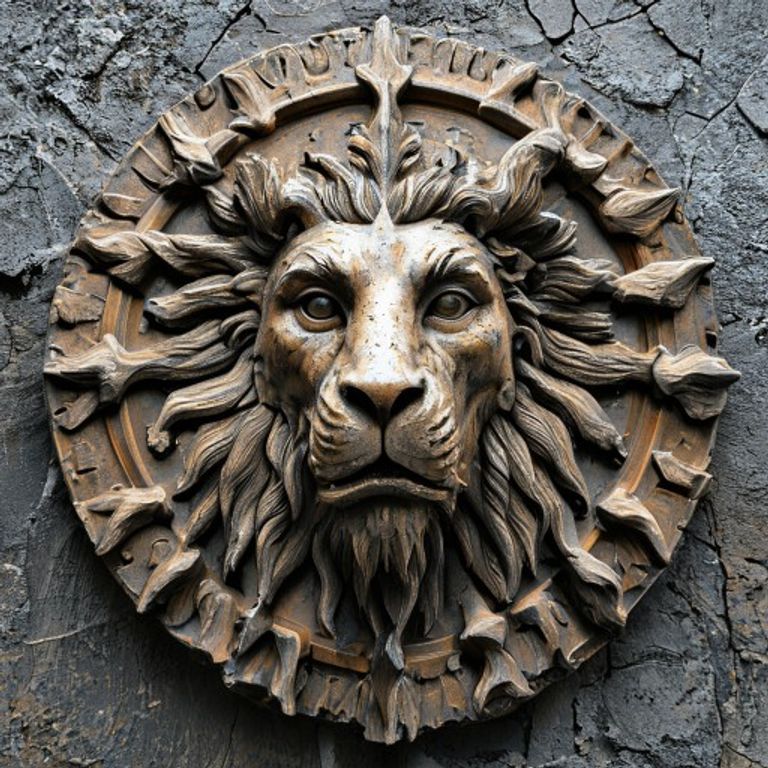
A giant bronze statue erected in Ancient Greece that was toppled by an earthquake, remaining in the collective imagination as one of the seven wonders of the ancient world.
⚠️ Research conducted with the aid of Deep Research is subject to referential ambiguity.
🖥️ Clean HTML code using a proprietary tool.
👥 Research by Guilherme Felipe, Curation by Sílvio Lôbo
The Silent Colossus: Unraveling the Enigma of the Colossus of Rhodes
As an investigative journalist with decades dedicated to unearthing hidden truths in historical mysteries and inexplicable phenomena, few cases capture the imagination and frustration quite like the Colossus of Rhodes. A wonder of the ancient world, which once stood majestically, today confronts us with a deafening silence, punctuated by echoes of conjecture and the absence of definitive answers. This article seeks to shed light on one of antiquity's most enduring enigmas, separating the traces of fact from the mists of speculation.
1. The Context and the Incident: Where, When, and How the Mystery Began
The Colossus of Rhodes was not a mysterious incident in itself, but rather its fall and the disappearance of its remains. Erected in the city of Rhodes, on the island of the same name, around 280 B.C., the monument celebrated the city's victory over the siege of Demetrius Poliorcetes in 305 B.C. Built of bronze and with an estimated height of 30 to 33 meters, it was a masterpiece of engineering and art, representing the sun god, Helios. The mystery lies not in its construction, but in its destruction and the fate of its fragments.
Historical accounts diverge on the exact cause of its fall. The most widely accepted explanation points to a devastating earthquake that struck the region. The question that lingers, however, is about the precise nature of this event and what happened to the immense structure after its ruin. The lack of conclusive excavations and the scarcity of direct testimonies about the fall and the subsequent period fuel the debate.
2. Timeline of Events
Reconstructing the timeline of events surrounding the Colossus of Rhodes is challenging due to the fragmented nature of ancient sources. However, we can outline the main milestones:
- 305 B.C.: Rhodes resists a prolonged siege by Demetrius Poliorcetes. The victory is attributed to divine intervention and the heroism of the Rhodians.
- c. 280 B.C.: The construction of the Colossus of Helios is completed. The statue becomes a symbol of the city and one of the Seven Wonders of the Ancient World.
- c. 226 B.C.: A violent earthquake strikes Rhodes. Most ancient accounts agree that this was the event that toppled the Colossus. The exact magnitude and the extent of the damage to the city are subjects of debate.
- Post-Earthquake Period (c. 226 B.C. - 653 A.D.): For centuries, the remains of the Colossus remained on site, attracting visitors and pilgrims. Accounts by Strabo and Pliny the Elder describe the grandeur of the fallen fragments.
- c. 653 A.D.: The Arab invasion of Rhodes. A later account by the Christian chronicler John of Nikiu suggests that the remains of the Colossus were sold as scrap metal to a Jewish merchant from Edessa, who allegedly transported it on 900 camels. This is one of the most controversial narratives and lacks official confirmation.
3. The Main Theories
Explanations for the fall and the final fate of the Colossus range from the scientific to the fantastical. It is crucial to distinguish between what is grounded in evidence and what is pure speculation.
Scientific and Historical Theories
- Earthquake Theory (Fact supported by most accounts): This is the most widely accepted explanation, supported by accounts from ancient authors such as Posidonius of Apamea (whose work was lost but cited by others) and Strabo. The seismic event would have caused the base where the Colossus was seated to rupture, causing it to topple. The debate here focuses on the magnitude of the earthquake and the precise details of the fall.
- Unstable Base Theory (Speculation): Although there is no direct evidence, some engineers and historians suggest that the original base of the Colossus may not have been as robust as necessary to support a monument of such magnitude in an earthquake-prone area. However, the monument's longevity for over five decades before its fall suggests that the initial engineering was, at the very least, functional.
Alternative and Conspiracy Theories
- Scrap Metal Sale Theory (Controversial, no solid evidence): The narrative of John of Nikiu regarding the sale of the Colossus's remains to an Arab merchant is frequently cited. However, there is a lack of contemporary archaeological and documentary proof to corroborate this version. The immense amount of bronze required and the logistics of transport would have been monumental.
- Sabotage or Deliberate Dismantling Theory (Highly Speculative): In scenarios of conflict or political instability, theories of sabotage or even deliberate dismantling to prevent it from falling into enemy hands may arise. However, there are no historical indications suggesting such an event, and the cost and complexity of such an operation would be prohibitive.
- Paranormal or Mystical Theories (Pseudoscience): While it is tempting to attribute ancient events to supernatural forces, there is no concrete evidence to support any paranormal theories related to the fall of the Colossus.
4. Controversies and Blind Spots
The main blind spot in the case of the Colossus of Rhodes is the lack of conclusive physical evidence. Archaeological excavations on the island of Rhodes, although extensive, have not revealed significant traces of the massive fragments of the Colossus, leading to questions about the accuracy of historical accounts regarding its fall and subsequent fate.
- Fragmented and Contrasting Ancient Accounts: Although many ancient authors mention the Colossus, descriptions of its fall and what happened afterward are scarce and sometimes contradictory. The work of Posidonius, considered one of the primary sources on the earthquake, was lost, leaving the field open to third-party interpretations.
- Lack of Direct Archaeological Evidence: The absence of a clear "ruin layer" indicating the fall of a bronze structure of such proportions is intriguing. This raises the possibility that the fragments were dispersed, reused, or even taken far from the original site.
- The Narrative of John of Nikiu: The story of the sale as scrap, despite being popular, is based on a text written centuries after the event and lacks independent validation. The absence of contemporary Arab accounts or other sources confirming this transaction is a major obstacle.
- Interpretation of the "Base": The exact location where the Colossus stood is still a subject of archaeological debate. Identifying a single, robust base is crucial to understanding the mechanics of the fall.
5. Curiosities and Legacy
The Colossus of Rhodes, even in its physical absence, left an indelible legacy on human culture. It became a symbol of grandeur, human ingenuity, and, paradoxically, fragility in the face of the forces of nature.
- Cultural Impact: The name "Colossus" became synonymous with something of gigantic proportions. The image of the Colossus, although reconstructed through conjecture, endures as an icon of antiquity.
- Current Status: The case of the Colossus of Rhodes remains, essentially, an unsolved historical case. Archaeological and historical investigations continue, but the lack of new revolutionary evidence keeps the mystery alive. There is no formal "reopening" in the sense of a police inquiry, but rather a continuous academic and public interest.
- Inspiration for Myths and Legends: The magnitude and disappearance of the Colossus fueled countless speculations over the centuries, contributing to its legendary status.
The Colossus of Rhodes is a poignant reminder that even the greatest wonders humanity builds can be reduced to dust and unanswered questions. The silence of its pedestal, once echoing the glory of Helios, today resonates with the echoes of a mystery that may never be completely unraveled.





