



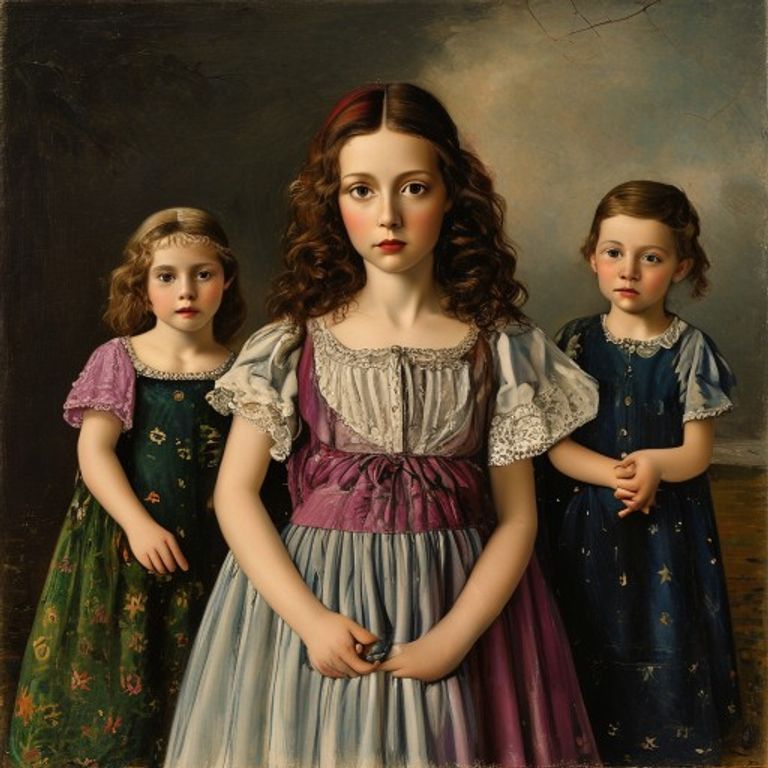
Three siblings who vanished from an Australian beach in 1966 after being seen with an unknown man; the event caused national trauma and changed child protection laws in Australia.
⚠️ Research conducted with the aid of Deep Research is subject to referential ambiguity.
🖥️ Clean HTML code using a proprietary tool.
👥 Research by Guilherme Felipe, Curation by Sílvio Lôbo
The Silent Abyss: The Inscrutable Case of the Beaumont Children Disappearance
The sun on January 26, 1966, in Adelaide, South Australia, did not bring only the familiar summer heat. It brought an unbearable void and a mystery that, decades later, still casts its shadow over the history of Australian crime: the case of the Beaumont children.
1. The Context and the Incident: Where, When, and How the Mystery Began
On that fateful day, Jane Beaumont (9 years old), Arnna Beaumont (7 years old), and Grant Beaumont (4 years old) left their mother's home, Nancy Beaumont, in Glenelg, a coastal suburb of Adelaide. The instruction was simple: go to the nearby beach, a frequented and considered safe location. Nancy expected them back for lunch, a daily ritual that would be broken for the first time in a drastic and irreversible way.
The children, accustomed to the routine, were not considered problematic. Their absence, initially met with mild concern, quickly turned into panic when lunchtime passed and no sign of them appeared on the horizon. The beach, once a scene of childhood joy, became the epicenter of an anguish that would echo throughout the nation.
2. Timeline of Events: A Chronological Reconstruction of Key Facts
- January 26, 1966: The Beaumont children leave home to go to the beach in Glenelg.
- Around 10:30 AM: A caretaker of a residential building across from the beach, Arthur Thomson, reports seeing the children playing on the sand, near where Arnna's body would be found years later. He described them as "very happy."
- 11:00 AM: The expected time for the children's return home.
- Afternoon of January 26: Nancy Beaumont, upon noticing her children's prolonged absence, begins preliminary searches and, without success, contacts the police.
- January 27, 1966: A large-scale search begins, involving police, volunteers, and the local community. The beach and surrounding areas are exhaustively combed.
- Following days and weeks: The search intensifies, expanding beyond Glenelg. The media covers the case extensively, generating a national outcry for answers.
- August 1966: A local boy, Peter Rees, finds human remains on a beach about 25 km from Glenelg, at Christies Beach. Subsequent forensic analysis would confirm they were the bones of Jane Beaumont.
- 1973: In a macabre twist, a group excavating a lot in North Plympton, owned by George "Bunny" Connors—a man with a history of peculiar behavior who frequented the area where Jane was found—unearths more remains. Subsequent analysis would confirm they belonged to Arnna Beaumont.
- 2016: New forensic technologies are applied to the remaining evidence.
- 2018: The case is formally reopened by South Australian authorities with the promise of a new investigation.
3. Main Theories: Possible Explanations for the Abyss
Over the years, countless theories have emerged, each attempting to fill the void left by the absence of the Beaumont children. The fragility of the initial evidence and the lack of a complete body in both discoveries fuel fertile ground for speculation.
-
Kidnapping and Murder Theory (Police/Scientific)
This is the hypothesis most widely accepted by authorities and the basis of the official investigation. It is believed that the children were kidnapped by an individual or group and subsequently murdered. The absence of a complete body for Grant, and the way the remains of Jane and Arnna were found in separate locations, suggest the deliberate action of a criminal aiming to hide the bodies.
- Relevant Suspects:
- Arthur McLay: A repeat sex offender who lived near Glenelg and disappeared shortly after the incident.
- George "Bunny" Connors: Owner of the land where Arnna's remains were found. He had a history of sex crimes and eccentric behavior.
- James O'Neill: A man who confessed to the murder in 1968, but his confession was considered unreliable and he had an alibi.
-
Accident or Drowning Theory
An initial, though less likely, hypothesis is that the children drowned in the sea, or that some accident occurred on the beach, and their bodies were carried away by the current. However, the absence of complete bodies and the nature of the later discoveries make this theory less plausible.
-
Abandonment or Running Away Theory
Although the children's personalities and the lack of evidence supporting this idea make it remote, the possibility that they got lost and wandered off irretrievably, or even a planned escape, has never been entirely ruled out in some speculations.
-
Conspiracy and Paranormal Theories
The Beaumont case, like many unsolved mysteries, has attracted more extravagant theories:
- Child Trafficking: Some theories suggest the children were victims of a trafficking ring, taken far from Adelaide and sold.
- Involvement of Powerful Figures: More conspiratorial speculations mention the possibility of prominent figures being involved, seeking to silence the investigation.
- Paranormal Phenomena: Inevitably, the mystery has attracted theories about UFO sightings, alien abductions, or paranormal activities, though without any concrete evidence.
4. Controversies and Blind Spots: The Scars on the Investigation
The official investigation, despite its efforts, was marked by failures and controversies that fuel debate to this day:
- Fragmented Evidence: The fragmented and late discovery of the remains hindered the exact reconstruction of events. The total absence of Grant's body remains a central enigma.
- Deadlines and Ignored Leads: Reports from witnesses who may have seen something that day, but were not properly investigated or whose statements were contradictory. The delay in initiating a large-scale search is also frequently cited.
- Location of Remains: The distance between Glenelg and the locations where the bodies were found raises questions about how the remains were transported, indicating the deliberate action of a perpetrator.
- Disappearance of Evidence: Over the decades, the possibility that some crucial evidence may have been lost or poorly stored is a constant concern in long-term cases.
- Contested Statements: Interviews with key witnesses, including George Connors, were marked by contradictions and hesitations, raising doubts about the veracity of their statements.
5. Curiosities and Legacy: An Echo That Does Not Silence
The Beaumont case transcended police headlines to become a landmark in the Australian psyche. It is a grim reminder of childhood vulnerability and the anguish that uncertainty can inflict.
- Cultural Impact: The case inspired books, documentaries, and television programs, fueling public fascination with unsolved mysteries. The image of the three children smiling in old photographs has become a symbol of lost innocence.
- Public Pressure: The relentless pressure from the media and public opinion played a crucial role in the reopening of the case and the adoption of new forensic technologies.
- Current Status: In 2018, the South Australia Police officially reopened the case, using advanced forensic techniques and reviewing all existing evidence. Although there is still no definitive outcome, the hope of bringing some peace to the family and the nation persists. The search for Grant Beaumont remains the core of this new investigative endeavor.
The case of the Beaumont children remains a silent abyss in criminal history, a test of human patience and determination. The truth, however cruel it may be, still waits to emerge from the shadows that hang over the sunny coast of Adelaide.





