



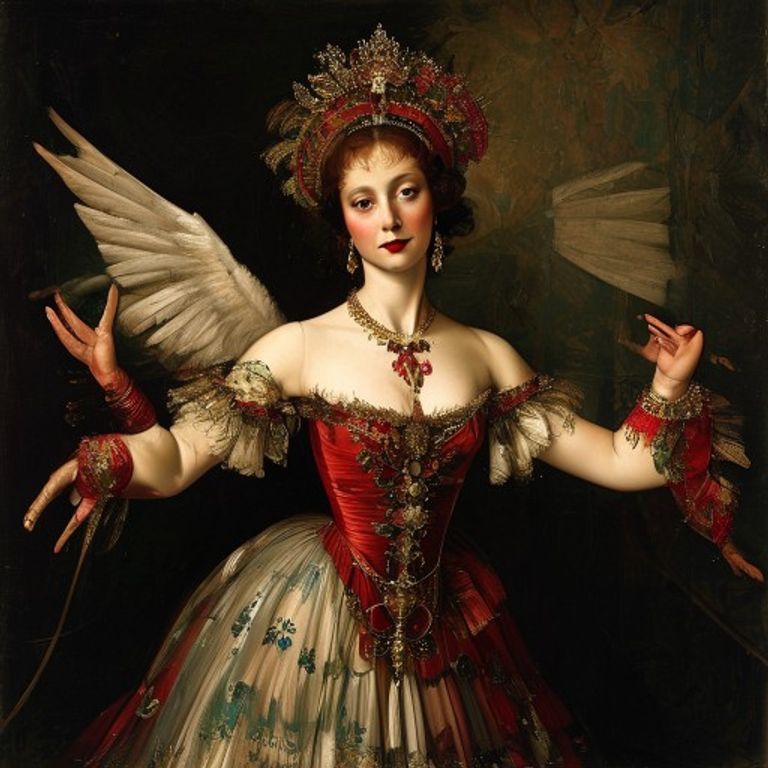
Hundreds of people in the city of Strasbourg began to dance uncontrollably and without rest through the streets for weeks, resulting in literal deaths from exhaustion.
⚠️ Research elaborated with the aid of Deep Research is subject to referential ambiguity.
🖥️Clean HTML code using a proprietary tool.
👥 Research by Guilherme Felipe, Curation by Sílvio Lôbo
The Unshakeable Mystery: The 1518 Dancing Plague
In Strasbourg, in the summer of 1518, a bizarre and terrifying event unfolded, casting a shadow of incomprehension that has endured for centuries. An epidemic of uncontrollable dancing swept through the city, claiming dozens, perhaps hundreds, in a macabre spectacle of exhaustion and death. This is not a work of fiction, but a historical enigma that defies the most rational explanations, a case that, although officially "solved" by some currents, still echoes with unanswered questions.
1. The Context and the Incident: A City Under Pressure
Europe in the 16th century was a cauldron of tensions. The Protestant Reformation was dividing the continent, religious wars were imminent, and daily life was permeated by superstitions and deep religiosity. Strasbourg, a prosperous city and a center of commerce, was not immune to these pressures. Famine, poverty, and disease were constant companions.
It was in this scenario of social and physical fragility that the phenomenon began. In July 1518, a woman, identified in records as Frau Troffea, left her home and began to dance frantically in the street. It was not a festive dance; it was a compulsive performance, without music, without pause, driven by an unknown force. Within days, she was joined by dozens of other citizens, all drawn into the same involuntary choreography.
2. Timeline of Events: The Spread of Chaos
The chronological reconstruction of events, based on chronicles of the time, such as those by physician Paracelsus and poet Nikolaus Prugger, reveals a frightening escalation:
- July 1518 (First Week): Frau Troffea begins the compulsive dance in the streets of Strasbourg. Initially, the population watches with curiosity and perplexity.
- July 1518 (Second Week): The number of dancers increases dramatically, reaching about 50 people. The authorities, confused, attempt an initial approach.
- July 1518 (Third Week): The "plague" intensifies, with over 100 people dancing non-stop. The gravity of the situation leads the authorities to take drastic measures.
- August 1518 (First Weeks): The dancers are taken to a shrine in Koppeberg, in the hope that pilgrimage and prayer will cease the compulsion. Many continue dancing until exhaustion.
- August 1518 (End): The dancing finally begins to subside, but not before claiming a significant number of lives, possibly hundreds, due to heart attacks, strokes, or extreme exhaustion.
3. The Main Theories: Seeking Logic in the Absurd
The inexplicable nature of the event has fueled a myriad of theories over the centuries. Let's analyze the most prominent ones:
3.1. Scientific and Medical Hypotheses (Most Likely):
- Ergot Poisoning: This is one of the most accepted theories. Ergot is a fungus that grows on grains (mainly rye) and can cause a poisoning called ergotism. In its rarer forms, it can induce hallucinations, muscle spasms, and a feeling of restlessness. The logic lies in the possibility of a contaminated batch of grains being consumed in Strasbourg. Critique: While possible, it does not explain the compulsive and coordinated dancing. Ergotism generally causes painful muscle contractions and delirium, not prolonged "dancing."
- Mass Hysteria / Collective Post-Traumatic Stress Disorder: In an environment of extreme deprivation, stress, and fear, it is possible that a group of people were affected by acute stress disorder, manifesting physically. The dance would be a physical and external expression of overwhelming internal suffering. Critique: The persistence of the dance for days and the number of "dancers" suggest something more than a purely psychological manifestation.
- Encephalitis: Some forms of encephalitis (inflammation of the brain) can cause involuntary movements and abnormal behaviors. However, the specific nature of the "dance" and its rapid spread make this hypothesis less likely as the sole cause.
3.2. Alternative and Supernatural Theories:
- Demonic Possession: In the religious mindset of the time, uncontrollable dancing would be interpreted as the action of demons possessing the bodies of the victims. The religious solution, such as pilgrimage, fits this logic. Critique: An explanation based on faith, without empirical evidence.
- Curse: Similar to possession, the idea of a curse cast upon the city or specific individuals. Critique: Pure speculation without factual basis.
- St. Vitus' Dance: A known historical phenomenon, involving muscle spasms and involuntary movements. However, the chronicles of Strasbourg describe a more organized and intentional dance, not random spasms. Critique: The descriptions from the time differ from what is known about St. Vitus' Dance.
3.3. Conspiracy Theories (Modern):
- Mass Experimentation: Some modern theorists speculate about the possibility of a substance or method being deliberately administered to the population for social control or experimentation purposes. Critique: There is no concrete evidence to support an organized and secret conspiracy in 16th-century Strasbourg. The technology and knowledge for such an undertaking would have been limited.
4. Controversies and Blind Spots: The Gaps in the Investigation
The main controversy lies in the lack of a formal investigation in the modern sense. The "investigations" of the time were conducted by local authorities and the church, whose understanding was limited.
- Lack of Medical Expertise: There are no records of detailed autopsies or medical examinations that could identify the cause of the illness. The few doctors who wrote about the event based their theories on observations and beliefs of the time.
- Conflicting Testimonies: The chronicles, while valuable, are subjective accounts. The way the dance was described – sometimes as an ecstasy, other times as a torment – may vary.
- Lost Evidence: The passage of time and the chaotic nature of the event have resulted in the loss of original documents or physical evidence.
- The Figure of Frau Troffea: Her exact identity, her history, and the motivations behind her initial act remain a mystery. Was she the primary victim or the catalyst for something deeper?
- The Role of the Authorities: The decision to "encourage" dancing as a form of healing, through stages and musicians, is a controversial point. This decision, based on the belief that dancing would be a release, may have ironically prolonged the suffering of some.
5. Curiosities and Legacy: The Echo of the Eternal Dance
The Case of the 1518 Dancing Plague has transcended historical annals to become a cultural icon of the inexplicable.
- Cultural Impact: The event has inspired countless works of art, literature, and even theater. The image of people dancing to their death evokes a primal terror and a reflection on the limits of sanity and bodily control.
- Current Status: The case has not been "reopened" in the sense of a modern criminal investigation, as the perpetrators and victims have been dead for centuries. However, it continues to be a subject of study for historians, sociologists, psychologists, and even epidemiologists, who seek to unravel the mysteries of an outbreak that defied reason.
- The Fear of Dancing: The association of dance with something dangerous and fatal in the popular imagination has been consolidated by this event, serving as a grim reminder that, sometimes, the very expression of the body can become its greatest tormentor.
The mystery of the 1518 Dancing Plague remains. An open wound in history, reminding us of the fragility of the human condition and the vastness of enigmas that still hide in the shadows of the past, waiting to be unveiled.





