



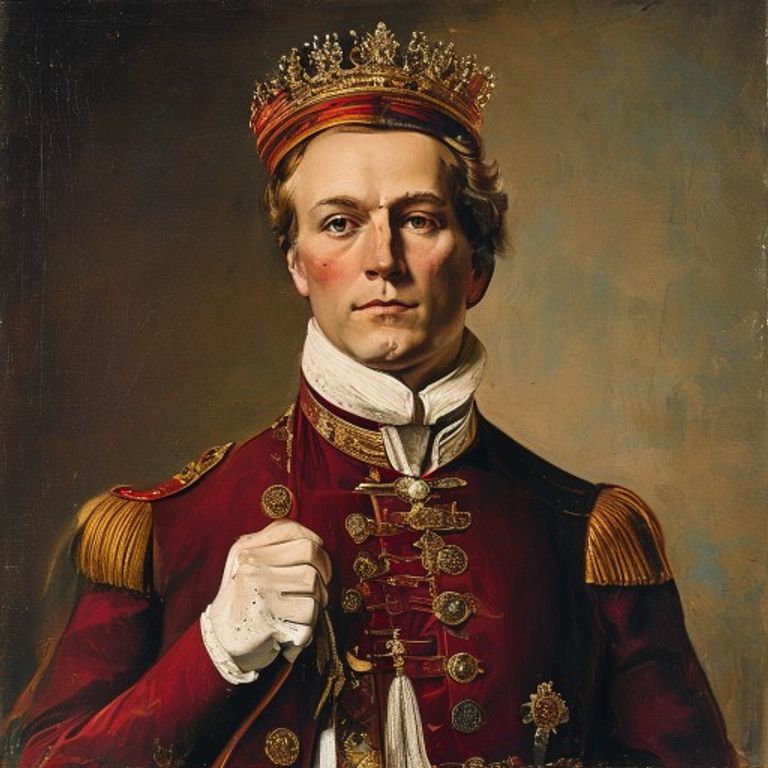
The Ghost of Cinema: Unraveling the Enigma of Louis Le Prince
The history of cinema is punctuated by visionary pioneers, but few disappearances are as shrouded in mystery as that of Louis Le Prince. A French inventor whose innovations in motion capture were poised to revolutionize how we perceive reality, Le Prince vanished without a trace in 1890, leaving behind a legacy of unanswered questions and enduring speculation.
1. The Context and the Incident: Where, When, and How the Mystery Began
Auguste-Marie Louis Nicolas Le Prince, born in 1841 in Metz, France, was a man of creative genius and scientific ambition. A naturalized British citizen, Le Prince dedicated years of his life to developing a device capable of capturing moving images, a true precursor to modern cinema. His demonstrations, such as the iconic "Roundhay Garden Scene" (filmed in 1888), were proof of his embryonic success.
The disappearance occurred on September 16, 1890, during a train journey from Dijon, France, to London, England. Le Prince boarded alone at the Dijon station, intending to visit his brothers in Paris and then reunite with his family in London. He promised to send a telegram upon his arrival in the French capital. This telegram, however, never arrived. Louis Le Prince simply evaporated.
2. Timeline of Events
- 1888: Le Prince films the earliest known sequences of moving images, such as the "Roundhay Garden Scene" and the "Leeds Bridge Scene."
- January 1890: Le Prince publicly demonstrates his innovations at the Royal Society in London, receiving considerable attention.
- September 1890: Le Prince travels from London to Paris to visit his brothers and give demonstrations of his technology.
- September 16, 1890: Louis Le Prince boards a train at Dijon station, bound for Paris. This is the last confirmed sighting of the inventor.
- Subsequent Days: His family in London, not receiving the promised telegram and hearing no news, begins to worry.
- October 1890: The French police are notified of the disappearance. An investigation is launched but yields no concrete results.
- Decades Later: Reports about Le Prince's disappearance circulate, fueling theories and the mystery.
3. The Main Theories
The silence that followed Louis Le Prince's 1890 train boarding gave rise to a spectrum of hypotheses, ranging from the mundane to the extraordinary.
Criminal and Financial Theories
- Murder for Financial/Professional Reasons: This is one of the most recurring theories. Le Prince was on the verge of a crucial presentation in New York, where he hoped to raise significant funds to expand his inventions. There were reports that he was facing financial difficulties and that his investors or rivals might have had motives to eliminate him. The Le Prince family even suspected the involvement of individuals like William Friese-Greene, a British inventor who was also developing cinema technologies and who would have had reasons to harm the competition. Others speculate about the participation of Edison's agents, who might have feared Le Prince's patent.
- Suicide: While less likely, the possibility of suicide has never been entirely ruled out. However, there is no concrete evidence to support this hypothesis, and friends and family described Le Prince as optimistic and enthusiastic about the future of his projects.
- Voluntary Disappearance: Some suggest that Le Prince may have staged his disappearance for personal reasons or to escape debts. However, his dedication to his family and his inventions makes this theory less plausible.
Alternative and Paranormal Theories
- Accident or Disaster: Although unlikely that an event of such magnitude would have gone completely unnoticed on a passenger train, some consider an unusual accident or an isolated event that led to his death and disappearance. However, the lack of any trace, body, or communication makes this hypothesis difficult to sustain.
- Time Travel: This is one of the more eccentric theories, but it has gained some popular traction, especially given the futuristic nature of Le Prince's inventions. The idea is that, somehow, the inventor himself might have become a victim of a temporal anomaly, disappearing into another era. This theory is purely speculative and devoid of any scientific basis or evidence.
- Involvement with Secret Societies or Occultism: Some more esoteric speculations suggest that Le Prince might have been involved in occult practices or secret societies, and his disappearance could be linked to these circles. However, there is no concrete evidence to support such claims.
4. Controversies and Blind Spots
The official investigation into Louis Le Prince's disappearance was remarkably superficial and riddled with inconsistencies, which fueled the persistence of the mystery.
- Ineffective French Police Investigation: The Dijon police conducted some searches, but they were limited and unsuccessful in finding any trace of Le Prince or his luggage. The lack of rigor and the apparent complacency of the French authorities are a point of contention.
- Lost or Ignored Evidence: There are reports that Le Prince's train ticket and luggage were found, but there is no clear and conclusive record of what happened to these items. His notebooks, which could have contained crucial clues, were never fully recovered or publicly analyzed.
- Conflicting Testimonies: The testimony of some of the last people to see Le Prince, such as his brothers in Paris, presented vague or inconsistent details, making it difficult to reconstruct his final moments accurately.
- Lack of Subsequent Official Interest: After the initial investigations failed, the case seemed to be quickly shelved, with little to no pressure for reopening, even with Le Prince's growing fame as a cinema pioneer.
- The Son's Possible Involvement: A more recent controversy, arising from later documents and analyses, suggests that Le Prince's own son, Adolphe Le Prince, may have orchestrated his father's disappearance. Adolphe would inherit the rights to his father's patents, and there are indications that he had financial disagreements with Louis and might have had an interest in taking control of the inventions. Adolphe himself was later reportedly seen in New York, claiming to have found his father and that he had died in a humiliating situation, an account considered dubious by many.
5. Curiosities and Legacy
The case of Louis Le Prince transcended the scope of police investigations and became a landmark in the folklore of unsolved mysteries and a fascinating chapter in the history of technology.
- The Father of Cinema Who Never Saw His Legacy: Le Prince's paradox is that he created the foundations of cinema but never witnessed the cultural explosion his invention unleashed. His contemporaries, such as the Lumière brothers and Thomas Edison, eventually reaped the rewards of similar innovations, often without due credit to Le Prince.
- Cultural Influence: The mystery of his disappearance has inspired countless books, documentaries, and speculations, making him an almost mythical figure in the world of science and art. The name "Le Prince" has become synonymous with a forgotten pioneer and a persistent enigma.
- Current Status: The case of Louis Le Prince remains officially unsolved. Although more recent theories, such as his son's involvement, are gaining traction based on new document analyses, no definitive proof has been presented to close the mystery. The disappearance of Louis Le Prince continues to be a ghost haunting the corridors of cinema history, a reminder that sometimes the greatest innovations are accompanied by the deepest enigmas.





