



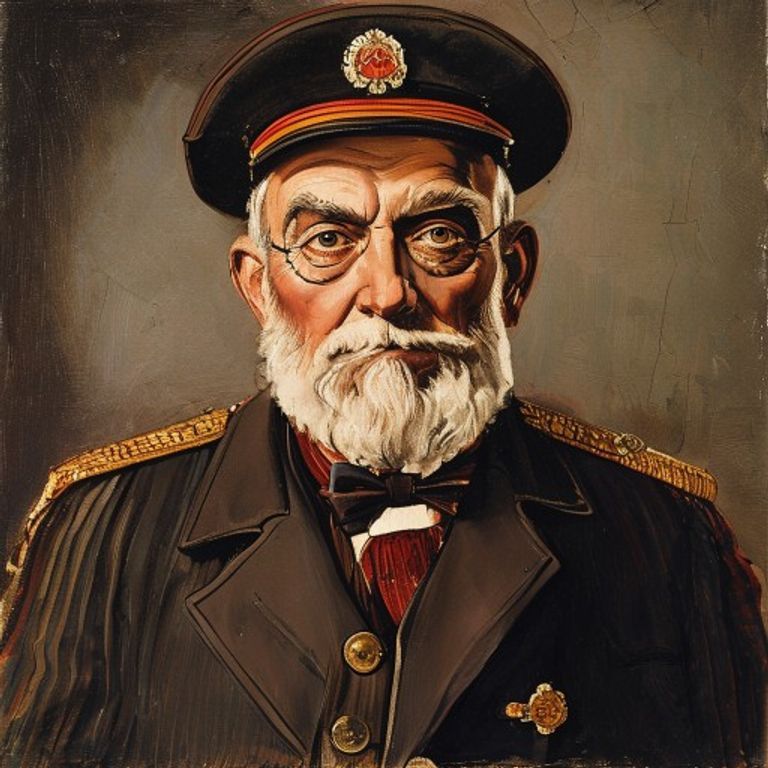
The British explorer who disappeared in Mato Grosso in 1925 while searching for a lost civilization he called 'Z', inspiring generations of adventurers.
⚠️ Research prepared with the aid of Deep Research is subject to referential ambiguity.
🖥️ Clean HTML code using a proprietary tool.
👥 Research by Guilherme Felipe, Curation by Sílvio Lôbo
The Disappearance of Percy Fawcett: The Wild Heart of the Unknown
In the intricate labyrinth of history, some mysteries echo with unsettling persistence. Among them, the disappearance of Colonel Percy Fawcett in 1925, in the depths of the Amazon jungle, remains one of the most fascinating and enduring enigmas of the 20th century. An audacious explorer and a visionary obsessed with lost civilizations, Fawcett ventured into unexplored territory in search of a mythical city, Z, and was never seen again, leaving behind a trail of legends, speculations, and a legacy of irreparable loss.
1. The Context and the Incident: The Call of the Forest
Percy Harrison Fawcett, a British officer and experienced geographer, had already carried out several expeditions to South America, mapping borders and exploring wild regions for the Royal Geographical Society. His fascination with the unknown, however, took him to a new level of ambition. Starting in 1920, Fawcett developed an obsession with the idea of an advanced civilization lost in the forests of Brazil, which he named "Z". This conviction was fueled by indigenous accounts and fragments of ancient maps that suggested the existence of monumental ruins. In 1925, funded by his family and with the support of some enthusiasts, Fawcett, accompanied by his eldest son, Jack Fawcett, and his friend Raleigh Rimell, set off on his final expedition in search of Z. The last communication occurred on May 29, 1925, from a location known as Dead Horse Camp, in the Mato Grosso region, Brazil. From then on, the silence was absolute.
2. Timeline of Events: The Shadow Lengthens
- 1906-1913: Fawcett carries out several cartographic expeditions for the Royal Geographical Society on the border between Bolivia and Brazil, where he begins to collect information on indigenous legends of lost cities.
- 1920: Fawcett publishes his book "Lost Trails, Lost Cities," detailing his theories on the existence of ancient civilizations in the Amazon.
- April 1925: Fawcett, Jack Fawcett, and Raleigh Rimell depart from Corumbá, Mato Grosso, on their expedition to find Z.
- May 29, 1925: Last known communication from Fawcett, sent from Dead Horse Camp, informing about his health status and the intention to move forward, heading north, into an as-yet-unexplored area.
- 1927: After years of silence, the Royal Geographical Society authorizes the first rescue expedition, led by George Dyott. The expedition returns without finding any traces of Fawcett.
- Following decades: Several other rescue and exploratory expeditions are carried out, with conflicting reports and no concrete proof of Fawcett's fate.
- 2014: The expedition team led by David Grann (author of the book "The Lost City of Z") finds a possible artifact left by Fawcett, a crucifix, but its authenticity is contested.
3. The Main Theories: Deciphering the Enigma
The absence of concrete evidence has opened up a range of speculations, from the most rational to the most fantastic:
3.1. Scientific and Police Hypotheses (Most Likely):
- Death by Accident or Disease: The most plausible cause, considering the extreme conditions of the jungle. Fawcett and his companions could have succumbed to tropical diseases (malaria, yellow fever), venomous animal bites, accidents (falls, drowning), or simply hunger and exhaustion. Later reports from indigenous tribes suggest a possible violent confrontation, but without confirmation.
- Murder by Indigenous Tribes: The most recurring theory among those who believe in a tragic end. Fawcett and his expedition could have entered the hostile territory of isolated tribes, leading to a fatal conflict. Some tribes were known for their resistance to outside contact. However, the exact nature of this possible conflict and the location remain uncertain.
3.2. Alternative and Conspiracy Theories:
- Integration with Indigenous Tribes: Some speculate that Fawcett and his companions did not die, but were taken in and integrated into an isolated indigenous tribe. This theory is fueled by some fragmented reports from missionaries who claimed to have found white men living among remote tribes.
- Encounter with a Lost Civilization: The hypothesis that fueled Fawcett's own search. He could have found Z (or something similar) and decided to stay, perhaps out of admiration or because he was prevented from returning. This theory, while romantic, lacks any concrete evidence.
- Paranormal/Esoteric Theories: Several less-founded theories suggest that Fawcett may have been taken by inexplicable phenomena, such as dimensional portals or extraterrestrial interference. These are widely considered speculations without scientific basis.
4. Controversies and Blind Spots: The Incomplete Trail
Official investigations and rescue expeditions were marked by failures and inconsistencies:
- Lack of Concrete Evidence: Despite decades of searching, no body, no definitive personal belongings of Fawcett, Jack, or Raleigh have been found. The few artifacts supposedly linked to them (such as the crucifix found by Grann) are of questioned authenticity.
- Conflicting Indigenous Testimonies: Reports from different indigenous tribes about Fawcett's fate were collected over the years, often contradictory to each other. Some spoke of a peaceful encounter, others of a violent confrontation, and still others of an unexplained disappearance. The difficulty of communication and the credibility of these sources are crucial blind spots.
- Limited Official Investigations: Official rescue expeditions, although well-intentioned, were limited by the vastness and danger of the jungle, the lack of resources, and, in some cases, the self-interest of their leaders. The Royal Geographical Society, after years of fruitless searching, eventually "shelved" the case.
- Loss of Documentation: Rumors about documents or maps that Fawcett might have left behind, but which were never found or were lost, add a layer of mystery to the lack of evidence.
5. Curiosities and Legacy: The Legend That Lives
The disappearance of Percy Fawcett transcended the field of exploration and became a cultural phenomenon:
- Literary and Cinematic Inspiration: Fawcett's story has inspired countless books, documentaries, and films, the most notable being "The Lost City of Z" by David Grann, which in turn originated the 2016 film directed by James Gray. These works perpetuate the fascination with the mystery and the utopian search.
- The Myth of Z: The legend of the lost city of Z continues to attract adventurers and archaeologists, fueling the idea that there are still secrets hidden in the depths of the Amazon.
- Impact on Expeditions: The Fawcett case served as a grim warning about the dangers of exploration in inhospitable territory and the importance of planning and respect for local cultures.
- Current Status: The case of Colonel Percy Fawcett remains officially unresolved. Although there are no active investigations underway by the authorities, the mystery continues to be the subject of research and speculation by historians, explorers, and mystery enthusiasts around the world. The Amazon jungle, guardian of so many secrets, seems to have swallowed Percy Fawcett and his search, leaving only the echo of a legend that refuses to die.





