



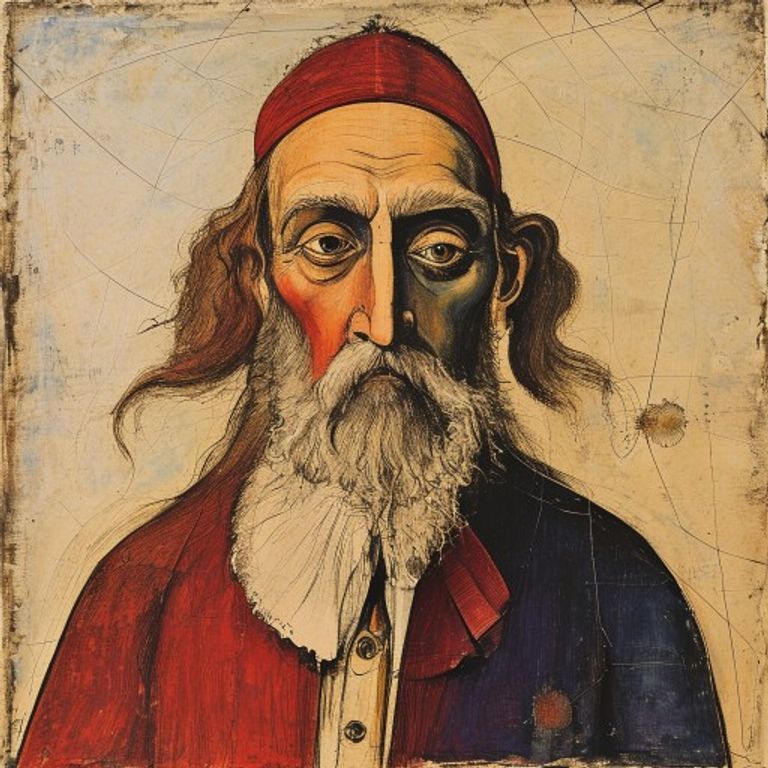
The world-renowned author of The Little Prince took off on a military reconnaissance flight during World War II and disappeared over the Mediterranean Sea without ever completing his mission.
⚠️ Research conducted with the assistance of Deep Research is subject to referential ambiguity.
🖥️ Clean HTML code using a proprietary tool.
👥 Research by Guilherme Felipe, Curation by Sílvio Lôbo
The Mystery of the Flying Pilot: The Disappearance of Antoine de Saint-Exupéry
On July 31, 1944, an aircraft vanished over the Mediterranean, taking with it one of France's most celebrated writers and aviators: Antoine de Saint-Exupéry. Aboard a Lockheed P-38 Lightning, Saint-Exupéry departed from Corsica on a photographic reconnaissance mission over occupied France. His aircraft never reached its destination, nor did it return to base. More than eight decades later, the fate of the author of "The Little Prince" remains an enigma shrouded in speculation, theories, and the melancholy of an interrupted legacy.
1. The Context and the Incident: The Last Flight on French Soil
World War II was in its twilight, with Allied forces preparing for the liberation of France. Antoine de Saint-Exupéry, already renowned for his literary work and his passion for aviation, was serving as a reconnaissance pilot for the Free French Air Forces. On the morning of July 31, 1944, he took off from Borgo airfield in Corsica on a solo reconnaissance flight over the Annecy region in the French Alps. The objective was to map German positions before the Allied landings. The aircraft, a P-38 Lightning, was a robust and reliable long-range twin-engine fighter, but even so, the territory it flew over was dangerous, patrolled by the German Luftwaffe.
2. Timeline of Crucial Events
- July 29, 1944: Saint-Exupéry writes his last letter to his publishers, expressing apprehension about the upcoming flight.
- July 31, 1944, morning: Saint-Exupéry receives his flight instructions and briefing for the reconnaissance mission. He departs from Borgo, Corsica.
- July 31, 1944, unknown: The P-38 Lightning aircraft, piloted by Saint-Exupéry, disappears.
- August 1944: Surface and aerial searches begin, proving fruitless.
- 1998: A fisherman finds an identification bracelet near the coast of Marseille, with the name "Antoine de Saint-Exupéry" engraved on it.
- 2000: Divers find wreckage of a P-38 Lightning at a considerable depth, near the island of Riou, off the coast of Marseille.
- 2003: The wreckage is recovered and positively identified as belonging to a P-38 Lightning. Parts, including a serial number, are linked to Saint-Exupéry's aircraft.
- 2008: Horst Rippert, a former Luftwaffe pilot, states in an interview that he may have shot down Saint-Exupéry's plane.
3. The Main Theories: From Accident to Conspiracy
The absence of a body and a definitive explanation has given rise to a myriad of theories:
Theory 1: Aerial Accident (Most Probable Scientific/Police Hypothesis)
This is the most plausible explanation, supported by the recovery of wreckage. Causes may include:
- Mechanical Failure: The P-38 Lightning, while robust, could have suffered a catastrophic failure during flight, especially under combat stress or in adverse weather conditions.
- Pilot Error: An incorrect maneuver, disorientation, or pilot fatigue on a long mission could have led to an accident.
- Adverse Weather Conditions: Sudden storms or strong winds over the Mediterranean could have caused the aircraft to crash.
Proven Fact: The recovery of P-38 Lightning wreckage in 2000 and 2003, containing parts identified with Saint-Exupéry's aircraft.
Theory 2: Shot Down by Anti-Aircraft Defense or German Fighters (Probable Scientific/Police Hypothesis)
The region flown over was Axis-controlled territory, and the P-38 Lightning was a target for German anti-aircraft artillery and Luftwaffe fighters.
- Confrontation with Luftwaffe Fighters: Horst Rippert's statement in 2008, claiming to have shot down a P-38 Lightning in the area on the day of Saint-Exupéry's disappearance, adds weight to this theory. Rippert stated that upon seeing the plane flying low and recognizing its model, he fired at it. He expressed regret for shooting down such a famous pilot, had he known who it was.
- Attack by Anti-Aircraft Artillery: German ground defenses could have hit the aircraft.
Proven Fact: The presence of German forces in Saint-Exupéry's operational area. Horst Rippert's statement (although independent confirmation of his claim is difficult).
Theory 3: Capture and Execution (Alternative Theory)
Some speculate that Saint-Exupéry was captured by the Germans and executed, possibly to prevent his information from falling into enemy hands or as an act of propaganda.
Proven Fact: No concrete evidence to support this theory has been presented in declassified archives or reliable testimonies.
Theory 4: Desertion or Voluntary Escape (Conspiracy Theory)
Given his discontent with the war and his idealism, some theorize that Saint-Exupéry might have planned his own "disappearance," seeking a life away from the conflict.
Proven Fact: No credible evidence corroborates this hypothesis. Letters and testimonies indicate his commitment to the Allied cause.
Theory 5: Paranormal or Mystical Hypotheses (Alternative Theory)
In a context of mystery and fascination with the author, more esoteric theories emerge, such as a "magical" or inexplicable disappearance by conventional means. These are purely speculative.
Proven Fact: Non-existent.
4. Controversies and Blind Spots
The original investigation into Saint-Exupéry's disappearance faced several limitations:
- Fruitless Initial Searches: Given the vast expanse of the Mediterranean and the intensity of the conflict, initial searches were limited and failed to locate the aircraft.
- Lack of Communication: Saint-Exupéry's absence of radio communication during the flight prevents triangulation of his position or identification of problems.
- Wreckage Identification: Although the wreckage recovered in 2000/2003 was identified as belonging to a P-38 Lightning and compatible with Saint-Exupéry's aircraft, absolute confirmation is difficult. Other P-38s were flying in the region.
- Horst Rippert's Testimony: Rippert's statement is crucial, but the lack of independent witnesses to his alleged downing and the passage of time make confirmation challenging. Rippert's flight log for that specific date needs careful examination.
- Ignored or Lost Clues: Amidst the chaos of war, it is possible that small clues or crucial information were lost or not properly investigated.
- Cargo Content: The exact type of reconnaissance film carried by the aircraft, and its potential strategic value, could influence the narrative of what might have happened.
5. Curiosities and Legacy: An Eternal Mystery
The case of Antoine de Saint-Exupéry transcends a mere investigation of a missing aircraft. It has become one of the great unsolved mysteries of the 20th century, fueling popular imagination and historical research.
- Cultural Impact: Saint-Exupéry's disappearance added a layer of tragedy and mystery to his already legendary figure. His premature absence left a void in literature and the collective imagination. The mystery intertwines with the melancholy of his works, which explore themes such as solitude, friendship, and the search for meaning.
- Current Status: Officially, the case remains a "disappearance in combat." Investigations have not been formally reopened as criminal cases, but the discovery of the wreckage and Rippert's statement have spurred new research and re-evaluations. The mystery persists, inviting new investigations and reflection on the limits of human knowledge in the face of historical enigmas.
- The Last Message: Saint-Exupéry's last letter to his publishers, where he expressed feelings of unease and a certain premonition, continues to be a focal point for those seeking clues about his final moments.
- The Identification Bracelet: The discovery of the bracelet in 1998 was a crucial moment, connecting the legend to physical evidence before the wreckage was located.
The disappearance of Antoine de Saint-Exupéry remains an open wound in the tapestry of history. As science and investigation continue to unravel fragments of truth, the figure of the aviator-writer, lost between the sky and the sea, continues to inspire us and to intrigue us with the persistence of his mysteries.





