



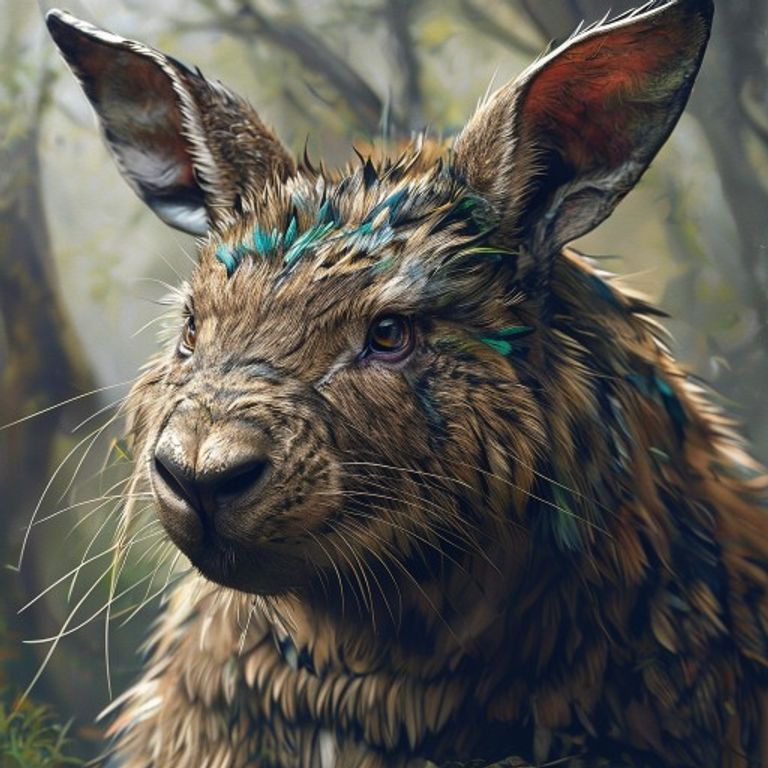
A mystical creature from Australian Aboriginal mythology described as an inhabitant of swamps and lakes, with modern reports of sightings suggesting the existence of an unknown animal.
⚠️ Research conducted with the aid of Deep Research is subject to referential ambiguity.
🖥️ Clean HTML code using a proprietary tool.
👥 Research by Guilherme Felipe, Curation by Sílvio Lôbo
The Lament of the Depths: Unraveling the Enigmatic Bunyip Case
In the mists of Australian history, a whisper of horror and mystery echoes: the Bunyip Case. An enigma that transcends the mere chronology of disappearances and sightings, entering the realm of the inexplicable, where reality blurs with folklore and science struggles to make sense of what eyes have seen—or believe they have seen.
1. The Context and the Incident: Where, When, and How the Mystery Began
The myth of the Bunyip, a terrifying aquatic creature present in the traditions of Australia's Aboriginal peoples, had been known for centuries. However, what would turn this legend into an investigative case of epic proportions was a series of disturbing incidents that emerged in the late 19th century and extended through the first decades of the 20th century. Initial reports converged on remote and swampy areas, especially around lakes and rivers with dark, deep waters in regions such as Victoria and New South Wales. The methodology of the "crime"—if we can call it that—was brutal and often inexplicable: sudden disappearances of people and animals, with very little physical evidence and, in some cases, reports of strange sounds and fleeting apparitions.
2. Timeline of Events: A Chronological Reconstruction of Key Facts
- 1840s-1850s: First reports written by European settlers regarding sightings of a strange creature in bodies of water, often associated with guttural and frightening sounds. The Aboriginal legend of the Bunyip gains new life from a Western perspective.
- 1859: The Hamilton Spectator newspaper in Victoria publishes a detailed report about an "aquatic monster" sighted in a nearby lake, describing its terrifying appearance and the panic it caused. This article is frequently cited as a turning point in the popularization of the case.
- Late 19th and Early 20th Century: A wave of disappearances and sighting reports intensifies in various regions. In 1893, an incident involving the disappearance of a cowboy and his cattle in a New South Wales swamp, with reports of "gigantic shadows" emerging from the water, gains prominence.
- 1920s-1930s: The case reaches the peak of its media attention. Reports from fishermen, farmers, and even travelers multiply. Local authorities, pressured by public opinion, initiate investigations, but with few concrete results.
- 1950s: The popularity of the case gradually wanes, although sporadic reports persist. The lack of conclusive evidence leads most official investigations to be archived.
- Recent Years: The Bunyip Case has resurfaced in public and academic interest, with new analyses of old reports, testimonies, and the possibility of revisiting occurrence sites with modern technology.
3. The Main Theories: Multiple Hypotheses for a Persistent Enigma
The absence of a definitive resolution to the Bunyip Case has given rise to a myriad of theories, ranging from rational and scientific explanations to more fantastic speculations.
3.1. Most Likely Scientific and Police Hypotheses:
- Natural Phenomena and Misperception: Many of the sightings can be attributed to known animals, such as crocodiles, otters, seals (in coastal areas), large fish, or even large waterfowl, whose shapes and movements in the water could be misinterpreted, especially in low-light or foggy conditions. The reported sounds could be echoes of animals, water currents, or even underground tremors.
- Unknown or Extinct Animals: The hypothesis that the Bunyip could be a prehistoric animal that survived, such as a large aquatic reptile or an unknown marine mammal, is suggested. Australia has a history of fascinating paleontological discoveries, and the idea of a forgotten creature is not entirely far-fetched for some.
- Hoaxes and Frauds: In some cases, the possibility of deliberate setups to attract attention or take advantage of popular fear cannot be ruled out. People who faked sightings or reported events that did not occur could have been motivated by personal gain or the desire to become famous.
- Predation by Known Wild Animals: The disappearances of cattle and even humans in swamp areas could be explained by attacks from dangerous predators like crocodiles, packs of dingoes, or even large snakes, depending on the specific local fauna.
3.2. Alternative, Conspiracy, or Paranormal Theories:
- The Legend of the Bunyip as a Real Creature: The most direct theory is that the Bunyip is a real creature, an animal unknown to modern science, that inhabits Australia's aquatic ecosystems. Reports from Aboriginal peoples, who describe the creature with consistent details over generations, are frequently cited as proof.
- Incursions from Other Dimensions or Parallel Worlds: A more mystical strand suggests that the Bunyip incidents are portals to other realities or that the creature itself is an extradimensional being that occasionally interacts with our plane of existence.
- Secret Experiments or Biological Weapons: In conspiracy theories, the Australian government (or foreign powers) could be involved in secret experiments that resulted in the creation or release of dangerous creatures, or that the government covered up incidents to avoid mass panic.
- Psychic or Elemental Beings: Some more esoteric strands suggest that the Bunyip may be a manifestation of collective psychic energies or an elemental being associated with bodies of water, which manifests physically in response to environmental disturbances.
4. Controversies and Blind Spots: Inconsistencies in Official Investigations
The Bunyip Case is full of controversies and blind spots that hinder its resolution:
- Lack of Concrete Physical Evidence: Despite countless reports of attacks and sightings, the scarcity of bodies, remains, footprints, or any physical trace that can be forensically analyzed is a monumental obstacle. What happened to the alleged victims? Where is the material evidence?
- Conflicting Testimonies: Witness accounts, although sometimes detailed, frequently present inconsistencies regarding the size, shape, and behavior of the creature, which can be attributed to suggestion, fear, or memory lapses.
- Superficial Investigations: Police investigations of the time were often limited by scarce resources, lack of training in specific areas (such as cryptozoology or the investigation of unusual phenomena), and the difficulty of accessing remote and dangerous locations. Official reports, when they exist, are often brief and inconclusive.
- Destruction or Loss of Evidence: In some cases, it is speculated that water samples, unusual footprints, or even photographs (if they existed) may have been lost over time, or, in darker theories, were deliberately destroyed to maintain the mystery.
- The Role of Folklore and Suggestion: The strong influence of Aboriginal legend and the dissemination of reports by newspapers may have created an environment of collective suggestion, where people saw or interpreted events in light of what they expected to find, even if the explanation was more mundane.
5. Curiosities and Legacy: Cultural Impact and Current Status
The Bunyip Case has transcended newspaper headlines to become an intrinsic element of Australian popular culture.
- Impact on Popular Culture: The Bunyip is now an iconic figure of Australian folklore, appearing in children's books, works of art, music, and even theme parks. Its image is a symbol of the continent's wild and mysterious nature.
- Inspiration for Works: Several books, documentaries, and even fiction films have been inspired by the Bunyip mystery, exploring the different theories and the atmosphere of suspense.
- Current Status of the Case: Officially, the Bunyip Case remains an unsolved mystery. Formal police investigations were archived decades ago due to a lack of progress. However, public fascination and the persistence of sporadic reports keep the case alive in the collective imagination.
- New Investigative Perspectives: Currently, the case is often approached by independent researchers, cryptozoologists, and historians who seek to reanalyze old reports, apply new investigative technologies, and explore the possibility that the Bunyip, or something similar, may still exist.
The Bunyip Case is a poignant reminder that, even in our increasingly mapped and understood world, there are still unfathomable depths and mysteries that defy logic and wait patiently for their truths to be revealed. The lament of Australia's dark waters continues to echo, a perpetual invitation to investigation.





