



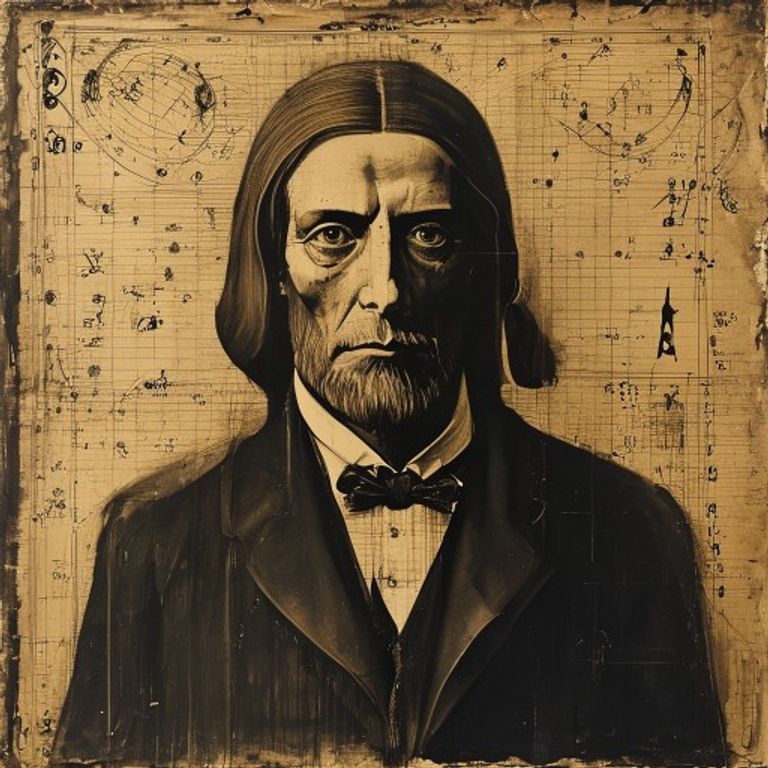
The Enigma of the Beale Cipher: Buried Treasure or Elaborate Hoax?
For decades, the name "Beale Cipher" has echoed in the halls of cryptography, history, and American folklore. It is a mystery that, if solved, would reveal a fabulous treasure, but which, to this day, remains a challenging enigma, fueling speculation ranging from the real to the fantastic. This article delves into the depths of this case, separating fact from fiction, in search of the truth behind one of the greatest unsolved treasure mysteries.
1. The Context and the Incident: Where, When, and How the Mystery Began
The Beale Cipher case has its roots in the mid-19th century, in a remote and little-explored region of the state of Virginia, in the United States. The story, as told in a pamphlet published in 1885, revolves around a man named Thomas J. Beale, an adventurer who, in 1817, allegedly discovered a vast deposit of gold and silver in a mine in the San Juan Mountains in Colorado. According to the narrative, Beale and his companions transported the treasure to a secret location in Bedford County, Virginia, for later division.
After years of exploration, Thomas J. Beale reportedly returned from his adventures, but fearing the skepticism of his friends and the possibility of theft, he decided to hide the exact location of the treasure. To do this, he allegedly created three distinct ciphers. The first cipher would describe the location of the treasure; the second, the names of his heirs; and the third, the names of the depositors themselves. Mysteriously disappearing, Beale entrusted the envelopes containing the ciphers to a local innkeeper named Robert Morriss, with instructions that they should only be opened in case of his death or if someone came to claim the treasure in his name.
Decades passed, and no one appeared. In 1822, Morriss, unable to decipher the ciphers and on his deathbed, handed the envelopes to a trusted friend, a man known only as "James B.". The identity of this "James B." and his fate are, in themselves, part of the mystery.
2. Timeline of Events: A Chronological Reconstruction of Key Facts
- 1817: According to the narrative, Thomas J. Beale discovers a large treasure in Colorado and transports it to Bedford County, Virginia.
- Subsequent years (post-1817): Beale hides the treasure and creates the three ciphers.
- Imprecise date (likely after 1817): Beale entrusts the cipher envelopes to the innkeeper Robert Morriss.
- 1822: Robert Morriss, feeling ill, hands the envelopes over to "James B.".
- 1845: An anonymous pamphlet is published, recounting the story and offering a reward for deciphering the ciphers. The exact publication date of the pamphlet is a point of debate, with some sources pointing to 1845 and others to 1885.
- 1862: The cipher describing the heirs is allegedly deciphered using the United States Declaration of Independence as a book key. The names of the supposed heirs are revealed.
- 1885: The original pamphlet, or an expanded version, is published by James B. Ward, the son of "James B.", detailing the complete story and the deciphered cipher, offering the remaining ciphers to the public.
- 20th and 21st Centuries: Various cryptographers, historians, and enthusiasts attempt to decipher the remaining ciphers without conclusive success.
3. Main Theories: Possible Explanations
The enigmatic nature of the ciphers and the lack of concrete evidence have given rise to a myriad of theories, varying in plausibility and sophistication.
3.1. Theory of Real Treasure (Main Hypothesis)
This is the theory that sustains the entire legend. It is believed that Thomas J. Beale truly existed, discovered a treasure, and hid it in Bedford County. The remaining ciphers would contain crucial information for its location. The failure to decipher would be attributed to the inherent difficulty of the ciphers or the lack of knowledge about the correct key.
3.2. Theory of Literary Hoax/Pamphlet Authorship
This theory suggests that the entire story of Thomas J. Beale and the treasure is an invention. The pamphlet, published decades after the events allegedly occurred, would be the work of a cunning author, possibly James B. Ward or even Robert Morriss himself (though the latter is less likely due to his advanced age), who created a fictional story for entertainment, fame, or even to draw attention to the Bedford region.
The logic behind this theory lies in the lack of independent evidence corroborating the existence of Thomas J. Beale or the discovery of the treasure. Furthermore, the publication of the pamphlet only in 1885, long after the alleged events, raises suspicions.
3.3. Theory of Cipher with Incorrect or Incomplete Key
The possibility that the ciphers are genuine, but that the key used to decipher them (the Declaration of Independence for the deciphered cipher) is not the correct key for the others. This could mean that Beale used another document, a specific book that has not been identified, or even a personal code that was lost over time.
3.4. Theory of Conspiracy/Third-Party Involvement
Some more elaborate theories suggest that the treasure was of a more controversial origin, perhaps linked to historical figures like Captain Kidd or even confidential treasures of other nations. Beale's story would merely be a veil to cover up the true origin and the true holders of the treasure, with the cipher being a means to confuse or misdirect searches.
3.5. Paranormal/Extraterrestrial Theories (Less Plausible)
In rare cases, the Beale Cipher mystery is associated with paranormal theories. The idea would be that the treasure is not a common material treasure, or that Thomas J. Beale was not a common human, or that the ciphers contain information of non-terrestrial origin. These theories lack any factual basis or evidence and fall into the realm of pure speculation.
4. Controversies and Blind Spots
The investigation of the Beale Cipher case is rife with gaps and inconsistencies, which fuel skepticism and reinforce hoax theories:
- Lack of Independent Evidence: The story of Thomas J. Beale relies almost entirely on the 1885 pamphlet. There are no reliable contemporary records confirming his existence, his expedition to Colorado, or his presence in Bedford County with a treasure.
- The Identity of "James B.": The figure of "James B." and his son, James B. Ward, are central to the dissemination of the story. However, the lack of concrete information about them and their motivations raises the possibility that they are fictional characters or that the story was staged by them.
- The Deciphered Cipher: The deciphered cipher, which allegedly reveals the names of the heirs, is a text in English with many grammatical and spelling errors, as if written by someone with limited knowledge of the language. This contrasts with the idea of an experienced adventurer.
- The Mystery of the Pamphlets: There is debate about the exact publication date of the pamphlet. Some research indicates an 1845 pamphlet, while others refer to an 1885 publication. The discrepancy suggests possible alterations or forgeries over time.
- Inconclusive Cryptographic Analyses: Despite numerous attempts by cryptography experts, no definitive and widely accepted solution for the remaining ciphers has been found. This could indicate that the ciphers are genuine but extremely complex, or that there is nothing to decipher.
5. Curiosities and Legacy
The Beale Cipher case has transcended the realm of lost treasure, becoming a cultural icon and a test of human intellect. Its influence can be seen in:
- Literature and Cinema: The mystery has inspired countless books, films, and documentaries that explore the various facets of the legend.
- Cryptographic Studies: The Beale Cipher is frequently cited in cryptography courses and books as an example of an unsolved cipher, challenging generations of cryptanalysts.
- Tourism and Folklore: The region of Bedford County, Virginia, has capitalized on the legend, attracting tourists interested in unraveling the mystery.
The current status of the case is one of persistent mystery. Although there are no ongoing official investigations, enthusiasts and researchers continue to debate and investigate, fueled by the hope that one day the truth about Beale's treasure will be revealed. Whether it is a real buried treasure, an elaborate century-old prank, or something entirely different, the Beale Cipher remains one of the most captivating enigmas in American history, a perpetual invitation to adventure and investigation.





