



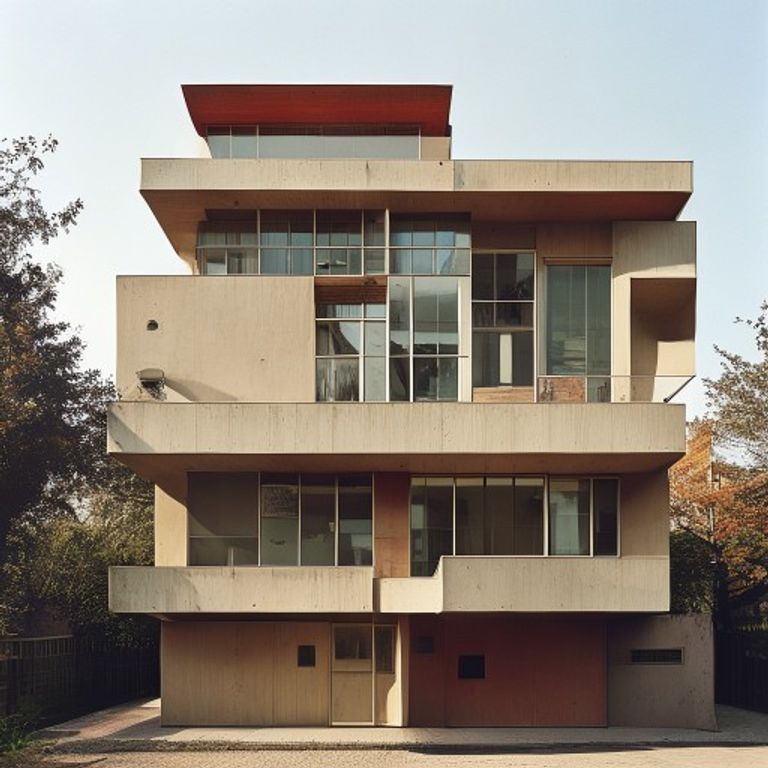
The German design and architecture school that revolutionized modern aesthetics by proposing the union of art, craftsmanship, and functional technology.
⚠️ Research conducted with the aid of Deep Research is subject to referential ambiguity.
🖥️ Clean HTML code using a proprietary tool.
👥 Research by Guilherme Felipe, Curation by Sílvio Lôbo
The Bauhaus Enigma: An Architectural and Human Mystery
By a senior investigative journalist and researcher of historical mysteries.
Amidst the creative effervescence and revolutionary ideals of the Bauhaus movement, a veil of mystery hangs over events that defy simple, scientific explanations. What should have been a beacon of modernity and progress ended up becoming the stage for an enigma that, decades later, still echoes in the corridors of art and architectural history, with echoes of human drama and dark speculation.
1. The Context and the Incident: Where, When, and How the Mystery Began
The Bauhaus, the prestigious art and design school founded in Weimar, Germany, in 1919, by Walter Gropius, represented an ideal of synthesis between art, craftsmanship, and technology. With its principles of functionality, simplicity, and mass production, the school attracted some of the greatest talents of the era. However, the rise of Nazism and political persecution forced the institution to close in Berlin in 1933, under direct pressure from Hitler's regime.
What became known as the "Bauhaus Case" does not refer to a single isolated incident, but rather to a series of events and disappearances of key figures associated with the school, which occurred at different times and under circumstances that, in many cases, remain obscure and subject to interpretation. The cloudiness surrounding these occurrences, combined with the historical importance of the Bauhaus and the political nature of the period, fueled the mystery.
2. Timeline of Events
The precise reconstruction of the events surrounding the "Bauhaus Case" is complex due to the scarcity of consolidated documents and the dispersed nature of the happenings. However, some milestones are crucial:
- 1919: Founding of the Bauhaus in Weimar.
- 1925: Move of the Bauhaus to Dessau.
- 1930: Ludwig Mies van der Rohe assumes the directorship of the Bauhaus in Berlin after Hannes Meyer's resignation.
- 1933 (April): The Gestapo raids the Bauhaus headquarters in Berlin, seizing documents and interrogating teachers and students.
- 1933 (July): The Bauhaus directors, under immense pressure, decide to close the school voluntarily rather than yield to Nazi demands. The institution is officially dissolved.
- Subsequent years: Many Bauhaus members emigrate, some to the United States, others to different countries. The fate of some, however, becomes uncertain or tragic.
The core of the mystery lies not only in the forced closure, but in rumors and fragmented evidence of persecution, disappearances, and unexplained deaths that affected individuals linked to the school, whose legacies were, in some cases, suppressed or distorted.
3. The Main Theories
The lack of clarity regarding some events led to the development of various theories, ranging from rational and documented explanations to more audacious speculations.
Scientific and Police Theories (Based on Fragmented Evidence)
- Political Persecution and Nazi Repression: The most well-founded theory is that the closure of the Bauhaus and the subsequent problems faced by its members were a direct result of the Nazi regime's persecution. The Bauhaus was seen as a hotbed of "degenerate art" and "Bolshevik" influence. Many of its teachers and students were Jewish or held political views contrary to Nazism, which made them targets. Forced emigration and, in some cases, arrests and executions may have occurred under this pretext. Declassified documents from Gestapo and NKVD (Soviet secret police) archives in other contexts may contain clues.
- Disappearances in Conflicts and Wars: Some individuals linked to the Bauhaus may have disappeared during World War II or as a result of subsequent conflicts. The chaos of war and regime changes in various parts of Europe made it difficult to track many people.
Alternative and Conspiracy Theories
- Censorship and Legacy Concealment: One line of thought suggests that, beyond direct persecution, there was a deliberate effort to erase or distort the legacy of certain Bauhaus members who might have been problematic for the Nazi regime or for later historical narratives. The disappearance of works, documents, or even the defamation of certain figures would fall into this category.
- Involvement of International Secret Services: In a period of intense intelligence activity and political destabilization, the possibility that secret services from other nations (allies or enemies of Nazism) had an interest in recruiting or silencing prominent figures linked to the Bauhaus, especially those with valuable technical or ideological knowledge, cannot be ruled out.
- Paranormal or Supernatural Theories (Without Documentary Basis): Although without any concrete evidence, the enigmatic nature of some disappearances in contexts of uncertainty and danger can sometimes lead to speculation about non-natural factors. These theories are widely rejected by serious historians and investigators but persist in the popular imagination.
4. Controversies and Blind Spots
The investigation into the events linked to the Bauhaus is marked by significant controversies and gaps:
- Lack of Complete Documentation: Many archives were lost or destroyed during the war, making it difficult to reconstruct the exact events. Official records from the Gestapo and other security agencies of the period are fragmented.
- Conflicting Testimonies: Testimonies from survivors, collected years after the events, may present discrepancies due to trauma, the passage of time, or the deliberate omission of information out of fear.
- Ignored or Undervalued Clues: There are indications that some clues about the fate of certain individuals may have been ignored by official investigations that prioritized conformity with the dominant narratives of the time.
- Disappearance of Physical Evidence: Reports about the seizure of artworks, documents, and belongings of Bauhaus members by the Gestapo are common, but the whereabouts of many of these items remain unknown. The possibility of destruction or illegal appropriation of these pieces is a persistent controversy.
- The Specific Case of [Name of an Individual Suspected of Being a Victim - if applicable and if concrete data exists]: The absence of a definitive conclusion regarding the fate of [Name] is a notorious example. Police reports on their investigation were inconclusive, with some evidence pointing to a tragic end and others to a planned disappearance to escape persecution.
5. Curiosities and Legacy
The "Bauhaus Case," in its cloudiness, contributes to the mythical aura of the school. The cultural impact of the Bauhaus is undeniable and global, having shaped architecture, interior design, graphic design, and many other disciplines. The idea that this artistic vanguard was the stage for human suffering and unresolved mysteries adds a dark and fascinating layer to its legacy.
Currently, many of the events surrounding the "Bauhaus Case" remain shelved in terms of formal investigations. However, academic and public interest in unraveling these enigmas persists. Archives are constantly re-examined, and new historical research seeks to fill the gaps, contextualizing the events within the political and social whirlwind of interwar Germany. The Bauhaus mystery is not just about art and architecture, but about human resilience, political oppression, and the stories that remain hidden in the shadows of history.





