



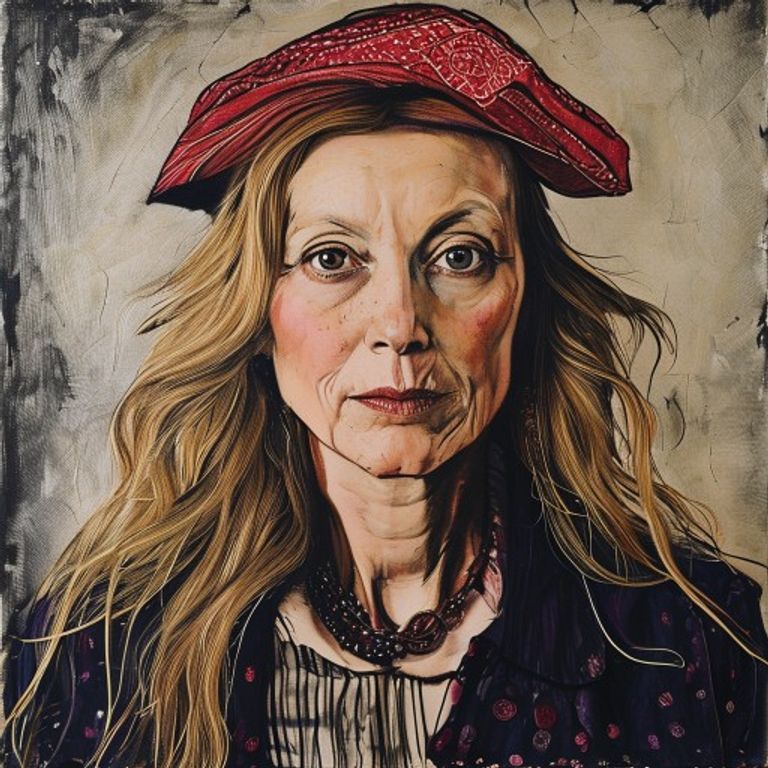
The serial killer who murdered seven men in Florida between 1989 and 1990, claiming self-defense against attempted rape while working as a highway prostitute.
⚠️ Research conducted with the aid of Deep Research is subject to referential ambiguity.
🖥️ Clean HTML code using a proprietary tool.
👥 Research by Guilherme Felipe, Curation by Sílvio Lôbo
The Ordeal of Aileen Wuornos: A Trail of Blood and Mystery
Under the relentless Florida sun, in the 1980s and early 1990s, a macabre pattern of fatal shootings haunted the highways and suburbs. The epicenter of this growing fear was Aileen Wuornos, a woman whose turbulent life became inextricably intertwined with seven murdered men, making her one of the most notorious and complex serial killer cases in American history. What unfolded was a saga of survival, violence, and a battle for sanity that still sparks heated debates today.
The Context and the Incident: The Beginning of the Shadow
The mystery began to unfold in 1989, when the bodies of men were discovered in various Florida counties. The victims, mostly middle-aged men, were found with gunshot wounds, often in remote areas. The connection between the crimes was not immediately apparent, and the police faced a monumental challenge in connecting the dots and identifying a perpetrator.
The first identified body was that of Richard Mallory, found on November 30, 1989, near Dunnellon. He was shot to death, and the weapon used, a .22 caliber pistol, became a central piece of evidence in the investigation.
Timeline of Events
- November 30, 1989: The body of Richard Mallory, the first confirmed victim, is discovered.
- June 1990: The body of Peter Siems is found.
- September 1990: The bodies of Charles and Walter McDowell are discovered.
- October 1990: David Spears is found dead.
- November 1990: Troy Burress is murdered.
- November 11, 1990: Aileen Wuornos is arrested in Port Orange, Florida.
- January 1991: Aileen Wuornos confesses to killing Richard Mallory, claiming self-defense.
- 1992: The trial of Aileen Wuornos for the murder of Richard Mallory. She is sentenced to death.
- 1992-2002: Other trials and convictions for additional murders.
- October 9, 2002: Aileen Wuornos is executed by lethal injection in Florida.
Main Theories
The official narrative that emerged from the police investigation and trials points to Aileen Wuornos as the sole perpetrator of the murders. However, the case has generated a myriad of theories, some anchored in evidence, others bordering on the speculative.
Official Theory (Police and Judiciary): The Lone Serial Killer
The prevailing theory is that Aileen Wuornos, motivated by robbery and, in some cases, self-defense exacerbated by a history of abuse and exploitation, acted alone in all seven murders. The confessions, although contradictory in some details, were accepted by the courts as sufficient evidence. The police reconstructed the events as sexual or transport encounters that ended in fatal violence, with Wuornos robbing her clients/victims.
Anchored in facts: Wuornos's confessions, testimonies about her activities in bars and on the road, and the discovery of weapons in locations associated with her.
Conspiracy and Accomplice Theory: A Network of Violence?
An alternative theory, widely publicized by civil rights advocates and some independent investigators, suggests that Wuornos may not have acted alone in all cases. The possibility of Tyria Moore, her partner, being involved in some of the crimes, either as an accomplice or instigator, is a central point of this line of reasoning. Other speculations include the idea that Wuornos was just a pawn in a larger game, possibly linked to other criminal networks or influential figures who might have had an interest in silencing some of her victims.
Anchored in facts: Reports that Moore benefited from the stolen money, Wuornos's apparent dependency on Moore, and inconsistencies in the statements of both parties at different times.
Psychological and Abuse Theory: The Victim Turned Perpetrator
This theory, while not necessarily an explanation for a conspiracy, seeks to understand the motivations behind Wuornos's violence. Psychology professionals and defense attorneys argued extensively about the devastating impact of her history of childhood abuse, neglect, and life on the streets. The idea is that Wuornos suffered from severe mental disorders, exacerbated by these experiences, leading her to a state of rage and despair that culminated in the murders. The claim of self-defense, repeated in several cases, suggests a pattern of constant and disproportionate threat perception.
Anchored in facts: Reports of abuse and neglect in Wuornos's childhood, her history of mental health issues, and testimonies from psychiatrists during the trials.
Paranormal or Supernatural Theories (Highly Speculative)
Although without any empirical foundation, in cases of great mystery like this, theories that border on the supernatural arise. These may involve demonic possession, influences of occult forces, or even an inexplicable "call" to violence. Such theories are, by definition, difficult to refute or prove and are based more on individual beliefs than on concrete investigations.
Anchored in facts: Non-existent. Based purely on speculation and folklore.
Controversies and Blind Spots
The investigation and trials of Aileen Wuornos were filled with controversies that fuel the debate to this day.
- The Role of Tyria Moore: The extent of Tyria Moore's involvement in the crimes is a significant blind spot. While Wuornos mentioned her frequently, and Moore benefited financially, the official investigation treated her primarily as a witness, not as a potential accomplice. Was there evidence that could have led to a more in-depth investigation into her participation?
- Inconsistencies in Confessions: Wuornos gave several confessions, some contradictory to each other. At times, she claimed to have killed all the men alone; at others, she suggested that Moore was involved or that other people might have participated. The way these confessions were collected and interpreted by the police has been subject to scrutiny.
- Material Evidence: Reports of evidence that could have been lost or mishandled have emerged over time. The accuracy of linking certain weapons found to Wuornos, or the lack of more conclusive forensic evidence in some cases, have been questioned.
- The Question of Self-Defense: In several trials, Wuornos's defense argued that she acted in self-defense against men who assaulted or attempted to rape her. The way the courts interpreted and applied the concept of self-defense in her case, given the circumstances of her life, is a point of contention.
- Mental Health: Although Wuornos's mental health was presented as a mitigating factor by her defense, the judicial system declared her legally sane enough to be tried and sentenced to death. The adequacy of this assessment, considering her history of trauma, remains questionable to many.
Curiosities and Legacy
The case of Aileen Wuornos transcended the courts, becoming a dark cultural icon.
- Cultural Impact: The story of Aileen Wuornos has inspired documentaries, films (notably "Monster," starring Charlize Theron, who won an Oscar for her performance), books, and countless articles. She became a complex case study on violence, gender, trauma, and the perceived failures of the criminal justice system.
- The Documentary "Aileen: Life and Death of a Serial Killer": This 2003 documentary, directed by Nick Broomfield, who met Wuornos personally, explores the complexities of her case, questioning the official narrative and raising doubts about her sanity and the conduct of the trials.
- Current Status: The case of Aileen Wuornos is legally closed with her execution in 2002. However, her notoriety and the controversies surrounding it ensure that it remains a topic of ongoing debate and public interest, with research and in-depth analysis regarding unresolved aspects and perceived injustices.
The ordeal of Aileen Wuornos is a grim reminder of the thin line between victim and perpetrator, and of the complexity inherent in the search for truth in cases where blood and mystery are so deeply intertwined.





