



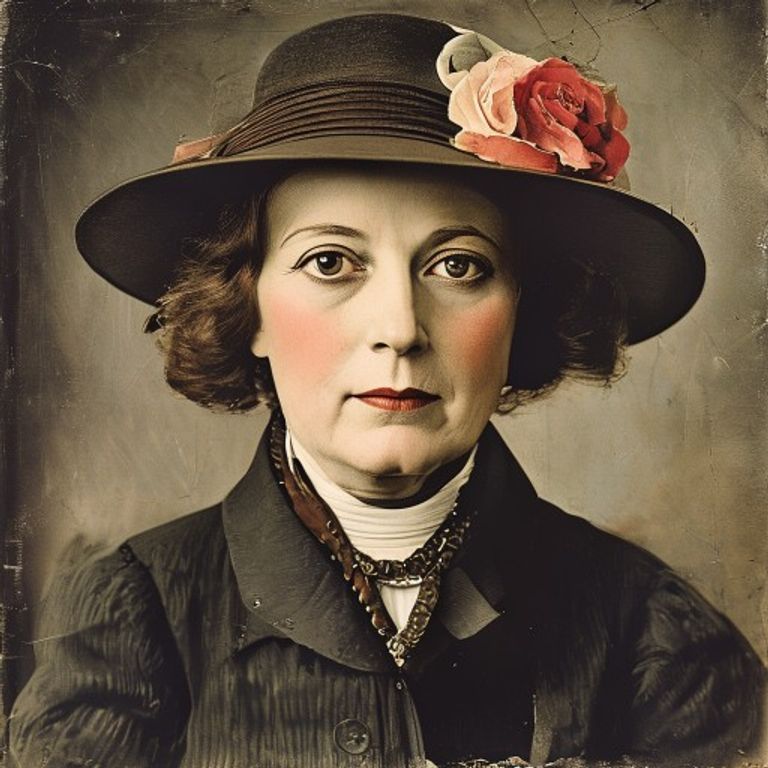
The murder of an upper-class couple planned by their own daughter and executed by the Cravinhos brothers in 2002, shocking public opinion due to the cold-blooded nature of the crime.
⚠️ Research prepared with the aid of Deep Research is subject to referential ambiguity.
🖥️ Clean HTML code using a proprietary tool.
👥 Research by Guilherme Felipe, Curation by Sílvio Lôbo
Blood in the Mansion: Unraveling the Mysteries of the Suzane von Richthofen Case
On October 31, 2002, the quiet city of São Paulo was shaken by a crime that has echoed in the annals of Brazilian criminality ever since. The brutality of the murder of the couple Manfred von Richthofen and Marísia von Richthofen, in their own residence within a luxury gated community, cast a shadow of disbelief and shocked society. But what began as a shocking crime quickly turned into a complex puzzle, filled with twists, controversial confessions, and questions that persist to this day. How does a case apparently solved by the judicial system still generate so many unanswered questions?
Timeline of Events: The Dark Sequence of Facts
A meticulous reconstruction of the events that culminated in and followed the double homicide is crucial to understanding the complexity of the case.
- 2002, early hours of October 31: The murder of Manfred and Marísia von Richthofen occurs at the family residence in Campo Belo, São Paulo. The living room door was unlocked, and there were no signs of forced entry.
- Morning of October 31, 2002: The bodies are discovered by household staff. The police are called.
- Days following the discovery: The police investigation begins. Attention quickly turns to Suzane von Richthofen, the couple's daughter, and her boyfriend, Daniel Cravinhos.
- Early November 2002: Suzane and Daniel are interrogated. Initially, they deny involvement, claiming they were at their respective homes.
- November 15, 2002: Christian Cravinhos, Daniel's brother, is arrested. His arrest brings new information to light.
- November 20, 2002: Under pressure and after multiple versions, Suzane von Richthofen and Daniel Cravinhos confess to the crime. The confession, detailed and chilling, describes the participation of both and Christian.
- Trial and Convictions: Years of legal proceedings follow, with several twists. Suzane von Richthofen and Daniel Cravinhos are convicted of double qualified homicide. Christian Cravinhos is also convicted.
Main Theories: Multiple Perspectives on a Dark Crime
The official resolution of the case points to planning and execution premeditated by Suzane, Daniel, and Christian. However, the complexity of the event and the nature of the confessions opened space for various interpretations and theories:
-
Official Theory: The Planned Passion Crime
This is the line of reasoning that prevailed in the courts. The theory maintains that Suzane von Richthofen, dissatisfied with the control exerted by her parents and wishing to inherit the family fortune, orchestrated the murder with the help of her boyfriend, Daniel Cravinhos, and his brother, Christian Cravinhos. According to this version, Suzane planned her parents' death to have free access to the money and live a relationship without impediments. The defendants' confession, detailing how they broke into the house and committed the murders with clubs and, subsequently, an iron bar, is the basis of this theory. Forensics confirmed the use of extreme violence.
-
Theory of Coercion and Influence
Some speculate that Suzane von Richthofen, then 19 years old, may have been coerced or strongly influenced by Daniel Cravinhos, who would have been the intellectual mentor of the crime. It is argued that Suzane's youth and apparent immaturity could have been manipulated by Daniel, who would have had greater planning capacity and cold-bloodedness. This theory attempts to mitigate Suzane's exclusive responsibility, suggesting an unbalanced power dynamic in the relationship.
-
Conspiracy Theory: Involvement of Third Parties?
Although widely dismissed by official investigations, conspiracy theories point to the possibility of others involved. Questions arise about the ease of access to the residence, the apparent absence of more intense struggles by the victims, and the speed with which the crime was executed. However, there is no concrete evidence to support the participation of third parties. The financial motivation, centered on the inheritance, is the main pillar of the official theory.
-
Alternative/Paranormal Theories (Pure Speculation)
In a case of such commotion, it is natural that speculations of a paranormal nature or involving occult forces arise. These theories, without any scientific or legal basis, are often based on "energies" of the location, reports of strange sensations by neighbors or employees, or mystical interpretations of events. However, it is essential to emphasize that these are pure conjectures and have no foundation in investigations or forensics.
Controversies and Blind Spots: The Gaps in the Investigation
Despite the conviction of Suzane von Richthofen and her accomplices, the case carries a series of questions and points that, for some, were never fully clarified.
-
The Confession and its Multiple Versions
The confessions of Suzane and Daniel were not linear. There were changes in versions and details that were revealed gradually. The psychological pressure during interrogations is a factor that always hangs over the validity of confessions in complex cases. Police reports from the time indicate long and exhausting interrogations.
-
The Exact Dynamics of the Crime
Although the official version describes the execution of the crime with clubs and an iron bar, the exact dynamics of the events inside the residence, the exact moment the victims were killed, and whether there was any attempt at defense, remain with nebulous details for the general public. The crime scene forensics, however, sought to reconstruct the scenario.
-
The Role of Christian Cravinhos
The participation of Christian Cravinhos in the execution of the crime is a point of debate. While the justice system convicted him, the extent of his direct involvement in the death of the victims, compared to Daniel, is a detail that is sometimes minimized in popular narratives.
-
The Presence of Ignored Clues?
Investigators and forensic analysts, years after the crime, have raised the hypothesis that some initial clues could have been misinterpreted or neglected in the heat of the investigation. The absence of forced entry into the residence and the way the bodies were found are points that, at the time, generated different interpretations.
Curiosities and Legacy: The Indelible Mark on Brazilian Culture
The Suzane von Richthofen case transcended the courts and became a landmark in Brazilian popular culture, fueling debates about morality, family relationships, media influence, and human nature itself.
-
Media Fascination
The case generated an unprecedented media frenzy. Television programs, newspapers, magazines, and, later, the internet dedicated extensive coverage, turning those involved into almost legendary figures. This constant exposure contributed to the perpetuation of myths and the construction of narratives that often stray from proven facts.
-
Impact on the Perception of Justice
The long judicial discussions, the appeals, and the different sentences imposed on the defendants fueled the debate about the effectiveness of the Brazilian judicial system. The slowness of the processes and the constant presence of the media in the courts left a mark on the public perception of justice.
-
Cultural Legacy: Films, Books, and Documentaries
The case inspired countless works of fiction and non-fiction, including films, series, books, and documentaries, which seek to retell the story from different perspectives. These productions, although with varying degrees of fidelity to the facts, solidify the case as a permanent element in the Brazilian cultural imagination.
-
Current Status
Suzane von Richthofen and Daniel Cravinhos have served their sentences and were released. Christian Cravinhos also served his sentence. The case, for the judicial system, is closed. However, for society, the questions about the motives, the execution, and the impact of the crime continue to resonate, keeping the "Suzane von Richthofen Case" alive in the collective memory as one of the darkest and most intriguing mysteries in Brazil.





