



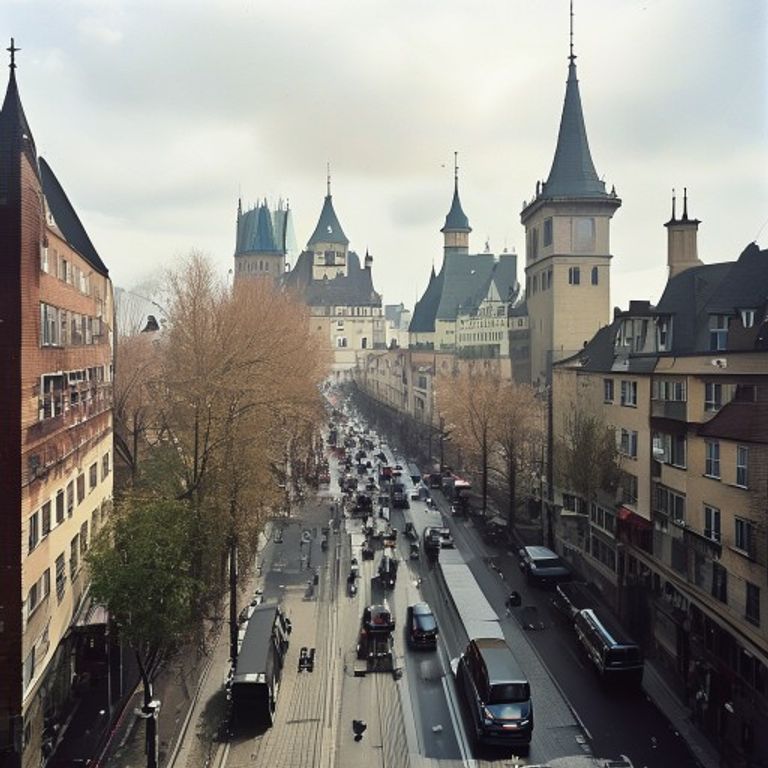
Residents of the German city in the sixteenth century recorded in the sky an immense anomalous battle involving giant spheres, crosses, and cylinders flying erratically.
⚠️ Research conducted with the aid of Deep Research is subject to referential ambiguity.
🖥️Clean HTML code using a proprietary tool.
👥 Research by Guilherme Felipe, Curation by Sílvio Lôbo
The Silence of Nuremberg: A Mystery Without Answers
Amidst the ruins and the shadow of World War II, the city of Nuremberg, once the stage for grand Nazi demonstrations, became the epicenter of an enigma that defies logic and sanity: the so-called "Nuremberg Incident." This is not a crime of passion or a espionage scheme, but an event that, in its uniqueness and brutality, echoes through the decades as one of the most disturbing unsolved mysteries of modern history.
1. The Context and the Incident: Where, When, and How the Mystery Began
The incident took place on the night of April 27, 1967, on a small, isolated farm on the outskirts of Nuremberg, West Germany. The property belonged to Hans and Greta Schmidt, an elderly couple, and their two adult children, Klaus and Erika. The family's apparent peace was violently interrupted by an event that would leave behind only destruction, questions, and the deafening silence of tragedy.
The first information reached the authorities through a neighbor, alarmed by the absence of lights and the unusual quietness on the farm the following morning. Upon arrival, the police found the house in a state of complete chaos: overturned furniture, broken objects, and a strange, penetrating odor hanging in the air. The most shocking, however, was the discovery of the bodies. Hans, Greta, Klaus, and Erika Schmidt were found lifeless, arranged in a peculiar manner in different rooms of the house, but most disturbing was the absence of any visible injuries or signs of struggle.
Initial reports described a scene of horror and disorientation, where violence seemed to have been more psychic than physical. What actually happened that night remains an impenetrable veil over the police investigation and the popular imagination.
2. Timeline of Events
Reconstructing the timeline of the Nuremberg Incident is intrinsically difficult due to the inexplicable nature of the events. However, based on fragmented testimonies and preliminary reports, we can outline some crucial points:
- Afternoon of April 27, 1967: The Schmidt family was last seen alive by neighbors, engaged in their daily activities.
- Night of April 27, 1967: The period when the incident is estimated to have occurred. Neighbors reported hearing strange noises and seeing unusual lights coming from the property, but these reports are vague and inconsistent.
- Morning of April 28, 1967: The lack of activity on the farm leads a neighbor to alert the authorities.
- Morning of April 28, 1967: Police arrive at the farm and discover the macabre scene.
- Following days and weeks: The beginning of the police and forensic investigation, marked by difficulties and a lack of definitive conclusions.
3. Main Theories
The bizarre nature of the Nuremberg Incident has given rise to a myriad of theories, ranging from scientific pragmatism to the most fantastic speculation. Below, we present the most prominent ones, with the analytical rigor the case demands:
Scientific and Police Theories (Most Probable)
- Gas or Toxic Substance Poisoning: This is the hypothesis most discussed by authorities at the time. The presence of a strange odor could indicate the release of a poisonous gas, possibly of natural origin (underground gas leak) or accidental (from some chemical compound used on the farm). However, subsequent autopsies did not confirm the presence of lethal gases in concentrations sufficient to cause the death of the entire family simultaneously and without traces of struggle or obvious poisoning. The arrangement of the bodies also does not fully fit this theory.
- Elaborate Murder and Staging: Another line of investigation considered the possibility that a serial killer or a group of criminals committed the murders and then orchestrated the scene to appear as an inexplicable event. The lack of signs of forced entry on the property, however, raises questions about how the perpetrators would have gained access and escaped undetected. Furthermore, the absence of clear motives and the difficulty in identifying suspects make this theory difficult to prove.
- Collective Accident with Unknown Elements: A rare and extreme type of accident could have occurred, perhaps involving some agricultural equipment or an unforeseen chemical reaction inside the house, resulting in the occupants' deaths in a non-violent and peculiar manner. The lack of evidence of explosion or fire makes this theory less likely, but not entirely ruled out.
Alternative, Conspiracy, or Paranormal Theories
- Paranormal or Supernatural Phenomena: Given the absence of conventional explanations, the hypothesis of paranormal intervention is frequently raised. Some theorize about the presence of vengeful spirits, an evil entity, or even a supernatural manifestation that attacked the family. The arrangement of the bodies in specific locations of the house, in some versions of the story, is cited as a "symbol" left by unknown forces.
- Secret Scientific Experiment or Weapon Test: In a post-war context, the idea that the incident could have been the result of a secret scientific experiment or a top-secret weapon test by governments or obscure organizations gains traction. The use of some cutting-edge technology, unknown to the public, could explain the deaths without visible signs of violence.
- Alien Abduction or Extraterrestrial Intervention: The most extravagant, but recurring speculation in inexplicable cases, involves the possibility that extraterrestrial beings were responsible. The idea that the family was taken or that an event of an alien nature occurred on the property fits the lack of clues and the peculiar nature of the incident. Reports of strange lights and unusual sounds on the night of the events fuel this line of thought.
- Government Conspiracy or Illuminati Theories: Some theories suggest that the incident was intentionally covered up or manipulated to hide an inconvenient truth related to clandestine government activities or power groups. The lack of a definitive resolution can be seen as evidence of a cover-up.
4. Controversies and Blind Spots
The official investigation of the Nuremberg Incident was marked by several failures and contradictions, which fueled mystery and distrust:
- Absence of Conclusive Evidence: Despite extensive autopsies, no definitive cause of death was established for the members of the Schmidt family. Toxicological reports did not show significant anomalies that would explain the outcome.
- Conflicting Testimonies: Neighboring accounts of sounds and lights on the night of the incident vary considerably, making it difficult to establish a coherent narrative of events outside the farm.
- Ignored or Lost Clues: There are unconfirmed reports that some minor clues, which could have led to new lines of investigation, were discarded or lost in the initial chaos of the crime scene.
- Pressure for a Quick Resolution: The local community and the media pressured for answers, which may have led to a hasty conclusion or the acceptance of a less in-depth explanation.
- Lack of Transparency in Archives: Although some police files have been declassified over the years, there is a persistent allegation that crucial documents may still be hidden or inaccessible, fueling cover-up theories.
5. Curiosities and Legacy
The Nuremberg Incident, despite occurring in a small community and not receiving the same global media attention as other famous cases, has left a legacy of fascination and apprehension. Its elusive nature and the absence of a definitive answer have transformed it into a cautionary tale about the limits of human knowledge and the persistence of the inexplicable.
- Cultural Impact: The case has served as inspiration for various works of fiction, from novels to documentaries and television series episodes about unsolved mysteries. The narrative evokes a primal fear of the unknown, the fragility of life, and the possibility of forces that transcend our understanding.
- Current Status: Officially, the Nuremberg Incident remains a case filed as "unsolved." There are no recent records of an official reopening of the investigation by German authorities. However, the mystery continues to live on in online discussion forums, groups of unsolved case enthusiasts, and in the collective memory of those who delve into the enigmas of history.
- The "Void" of Nuremberg: The term "void" is often used to describe the lack of tangible answers. The tragedy of the Schmidt family is a somber reminder that, sometimes, the truth can be more elusive than darkness itself.
The Nuremberg Incident remains a blind spot in the tapestry of history. A reminder that, even in a world saturated with information and technology, there are still "zones of silence" where investigation exhausts itself and speculation reigns. The Schmidt farm may have been silenced in 1967, but the echo of its questions continues to resonate, challenging us to look beyond the obvious and confront the limits of what we can truly know.





